

Why Stainless Steel Water Bottles Are Essential for Daily Commuting and Work?
2026-10-15
From crowded morning trains to long office hours and business travel, convenient access to drinking water makes everyday routines easier to manage. Stainless Steel Water Bottles offer a reusable option for commuters and professionals who want a durable container that fits into a work bag, backpack, or car cup holder. Their practical advantages include corrosion resistance, easy cleaning, a range of capacities, and the availability of insulated designs for maintaining beverage temperature. At Yongkang Jianyang Metal Co.,Ltd., we focus on the product features that matter in daily use, including material selection, lid construction, bottle dimensions, and finish quality. Understanding these details helps buyers choose a bottle that meets their routine rather than paying for features they rarely use.
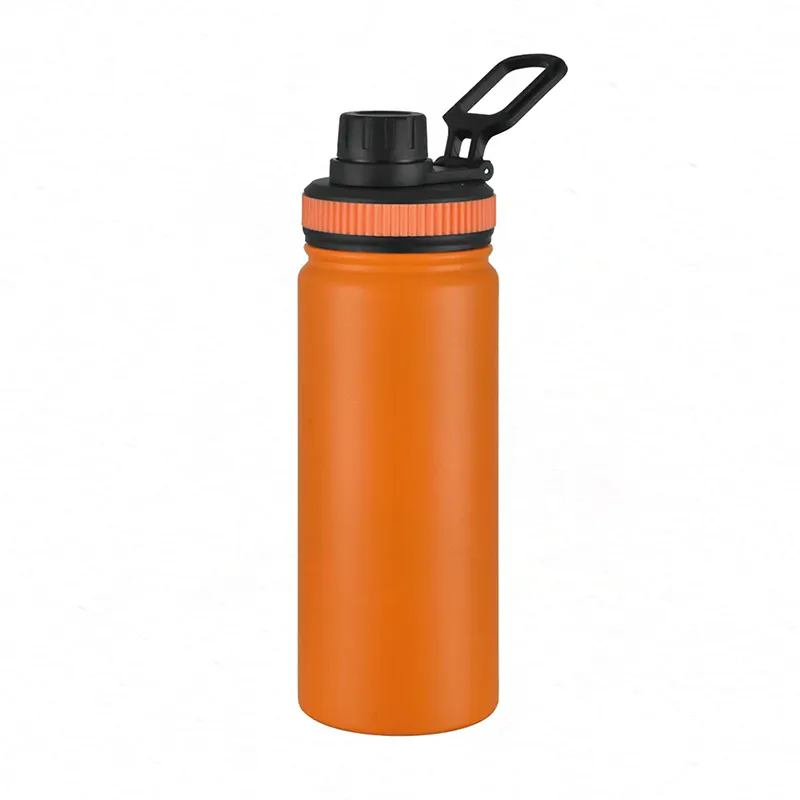
What Makes Stainless Steel a Practical Choice for Commuters?
Commuting places different demands on a drinking bottle than occasional use at home. A bottle may be carried upright in a tote bag, placed horizontally in a backpack, moved between a desk and meeting room, or exposed to frequent handling throughout the day. Stainless steel is widely used for reusable drinkware because it offers a useful combination of mechanical durability, corrosion resistance, and a non-porous surface when properly manufactured and maintained.
Food-contact suitability depends on the actual steel grade, manufacturing process, and applicable regulatory requirements. Many reusable bottles use food-contact stainless steel such as 304, while other designs may use different grades according to the intended application. Grade 304 is commonly selected for its balance of corrosion resistance and manufacturability. Grade 316 offers enhanced resistance to certain chloride-containing environments, but it is not automatically necessary for ordinary drinking-water use.
Material selection should also account for the inside of the bottle. A stainless steel exterior does not establish the composition of every component in the product. The inner wall, lid, drinking spout, seals, and any coatings or decorative finishes should all be evaluated for their intended food-contact use. Our product specifications should clearly identify the materials used in the relevant components instead of relying on a general description such as premium stainless steel.
Compared with disposable drink containers, a reusable bottle can reduce the need to purchase single-use packaging when it is used repeatedly over time. Its overall environmental benefit depends on how long it remains in service, how it is cleaned, and what products it replaces. For office workers and regular commuters, a well-chosen bottle can become a dependable part of a daily routine.
Which Product Specifications Matter Most During Daily Use?
The best bottle is not necessarily the largest or the one with the longest advertised insulation time. Capacity, empty weight, dimensions, opening design, lid security, and cleaning access determine whether a bottle is convenient in everyday situations. Buyers sourcing drinkware for employees, retail distribution, promotional programmes, or private-label collections should compare these characteristics before confirming an order.
| Product parameter | Common options or reference | Why it matters |
| Body material | Food-contact stainless steel, commonly grade 304 | Influences corrosion resistance, durability, and suitability for beverage contact |
| Alternative material grade | Grade 316 where the application justifies it | Provides enhanced resistance to certain corrosive environments, although not always needed for everyday water storage |
| Capacity | Approximately 350 ml, 500 ml, 750 ml, or 1,000 ml | Smaller sizes suit light bags and short commutes; larger sizes reduce refill frequency |
| Insulation construction | Single-wall or double-wall vacuum insulated | Determines whether the bottle is primarily designed for portability or temperature retention |
| Lid design | Screw cap, flip-top, or drinking spout | Affects access speed, cleaning, carrying convenience, and spill control |
| Seal material | Food-contact silicone or another specified suitable material | Helps control leakage when the lid and seal are correctly fitted |
| Exterior finish | Polished, brushed, powder-coated, or other specified finish | Influences appearance, grip, scratch visibility, and branding options |
| Dimensions and weight | Confirmed according to the selected model | Determines compatibility with backpacks, desk spaces, and vehicle cup holders |
These values describe common market options rather than a confirmed specification for every model. Actual capacity, dimensions, weight, steel grade, insulation performance, and available finishes must be confirmed against the selected product drawing or technical data sheet. Our factory can use these requirements as a starting point when assessing a suitable configuration for a particular market or customer brief.
Capacity deserves particular attention. A 350 ml to 500 ml bottle can be convenient for a short commute or a compact handbag. A 750 ml bottle may be more practical for a full workday, while a 1,000 ml model can reduce refill trips for users with longer shifts or limited access to drinking water. Larger capacity also increases the weight of the filled bottle, so portability and hydration needs should be considered together.
For insulated models, buyers should request a defined temperature-retention test method and the associated test conditions. Performance depends on initial beverage temperature, ambient conditions, filling level, lid design, and how frequently the bottle is opened. A clearly documented test is more useful than an unsupported claim that a bottle keeps drinks hot or cold for a particular number of hours.
How Do Insulation and Leak Prevention Improve the Working Day?
Temperature control is particularly useful for people who prepare coffee before leaving home, carry cold water during a summer commute, or spend several hours away from a kitchen. A double-wall vacuum insulated bottle uses a vacuum space between its inner and outer walls to reduce heat transfer. This construction can slow the warming of cold drinks and the cooling of hot beverages compared with a typical single-wall metal bottle.
Insulation does not mean that a drink maintains its starting temperature indefinitely. The actual result depends on construction quality, the temperature difference between the drink and the surroundings, and the number of times the lid is opened. Users should follow the manufacturer's instructions for hot liquids, especially when a narrow opening or sealed lid could create a burn risk from splashing or pressure buildup.
Leak prevention is equally important for commuting. A bottle that spills inside a laptop bag can damage electronics, documents, and personal belongings. A secure screw cap or well-designed flip-top closure, combined with a properly seated seal, helps reduce this risk. However, the term leakproof should be supported by a defined test and correct-use instructions rather than assumed from the appearance of the lid.
Before carrying a new bottle alongside electronic equipment, users should check that the lid is fully closed and the seal is correctly positioned. A practical quality assessment can include repeated opening and closing, inspection of the sealing surface, and leakage testing under the conditions specified for the model. Pressure changes during air travel, carbonated beverages, damaged seals, and incorrect assembly can affect leakage performance.
At Yongkang Jianyang Metal Co.,Ltd., product evaluation should consider the bottle body and closure as one system. A strong metal body cannot compensate for a poorly fitted cap, and a high-quality seal cannot guarantee performance if the threads or mating surfaces are damaged. For buyers, requesting details about lid materials, seal replacement, and leakage-test procedures provides a more complete basis for comparing suppliers.
How Can Buyers Match Bottle Designs to Commuting and Office Needs?
Different daily routines call for different bottle configurations. An employee who travels by train and walks between stations may value a lightweight model with a narrow profile. A driver may prefer a base diameter that fits a vehicle cup holder. Office staff who frequently attend meetings may benefit from a simple drinking opening that allows controlled sipping without removing a large cap.
- For public transport: Consider a compact body, secure closure, comfortable carrying weight, and dimensions suitable for a backpack side pocket.
- For desk use: Prioritise a stable base, a practical capacity, easy-to-clean surfaces, and a lid that suits frequent drinking.
- For business travel: Check the manufacturer's carrying and cleaning instructions, closure security, and compatibility with the intended bag or luggage.
- For outdoor breaks: Consider insulation, grip, surface durability, and capacity appropriate for the expected time between refills.
- For company gifts: Review colour options, logo application, packaging, order quantities, and the consistency of product specifications across the batch.
Cleaning requirements should influence the purchase decision as well. A wide mouth can make it easier to add ice cubes and reach the inner surface with a suitable bottle brush. Narrow-neck designs may be easier to drink from while walking but can require more attention during cleaning. Removable seals and lids can improve access to areas where moisture or beverage residue may accumulate, provided the parts can be safely reassembled after washing.
Most stainless steel bottles are suitable for hand washing, but dishwasher compatibility varies by model. Vacuum insulation, powder coatings, printed logos, plastic components, and lid seals may have different care requirements. Buyers should not assume that every bottle is dishwasher-safe or suitable for microwave use. The product's care instructions should state which cleaning methods are permitted and whether hot liquids, acidic drinks, or carbonated beverages require special precautions.
For commercial purchasing, the specification should extend beyond appearance. A useful supplier assessment includes material documentation, product dimensions, net weight, capacity verification, leakage testing, insulation testing where applicable, packaging protection, and inspection procedures. For customised orders, confirm logo placement, print durability, colour consistency, sample approval, and production tolerances before mass production begins.
Our approach to product selection centres on matching design features with actual use. A commuter who drinks plain water may not need the same lid construction as someone carrying coffee throughout the morning. Similarly, a promotional bottle intended for occasional use may have different cost and packaging priorities from a model intended for daily use over several years. Clear requirements help buyers avoid unnecessary features while retaining the performance that matters most.
What Should Users Check Before Choosing and Maintaining a Bottle?
A reliable purchase starts with a clear list of needs. Confirm the intended beverage, daily capacity, preferred carrying method, insulation requirement, cleaning routine, and expected frequency of use. Then compare the material specification, lid design, dimensions, and documented performance of the shortlisted models.
For manufacturers and wholesale buyers, quality checks should be agreed upon before an order is placed. These may include verifying material grades, measuring capacity and dimensions, inspecting the internal surface, testing closure operation, checking seals, and conducting leakage tests. Insulated models may also require a defined thermal-performance test. The acceptance criteria should be appropriate to the product and recorded in the purchase specification.
Regular maintenance helps preserve usability. Empty the bottle after use, clean it according to the care instructions, and allow the interior and removable components to dry thoroughly. Check the cap and sealing ring for residue, deformation, cracks, or wear. Replace damaged seals or closures where replacement parts are available, and stop using any bottle with significant damage, persistent contamination, or an internal surface that has deteriorated.
Odour or discolouration should not automatically be attributed to poor steel quality. Beverage residue, insufficient drying, and deposits around the lid can contribute to unpleasant smells. Appropriate cleaning usually addresses routine residue, but persistent changes in the internal surface or unexplained contamination should be investigated rather than ignored. Avoid harsh cleaning chemicals or abrasive tools unless the manufacturer specifically permits them.
For branded and wholesale products, Yongkang Jianyang Metal Co.,Ltd. can be approached with a defined product brief covering material grade, capacity, insulation, lid configuration, finish, logo requirements, and packaging. The final specification should be confirmed against the selected model and supporting documentation so that purchasing decisions are based on verifiable product details.
Frequently Asked Questions About Daily Bottle Use
Why are stainless steel bottles suitable for commuting and office use?
They combine a durable metal body with reusable construction and a choice of portable capacities and closure designs. Insulated models can help maintain beverage temperature, while a properly designed lid and seal can reduce the risk of spills in a work bag. The most suitable model depends on its verified material specification, dimensions, weight, cleaning requirements, and performance under normal use.
Is a vacuum insulated stainless steel bottle better than a single-wall bottle for work?
A vacuum insulated model is generally more suitable when retaining the temperature of hot coffee or cold water is important, because its double-wall construction reduces heat transfer. A single-wall model can be lighter and simpler for carrying water at ambient temperature. Neither design is universally better; capacity, weight, cleaning, cost, and the intended beverage should guide the choice.
Which specifications should businesses verify before ordering reusable bottles in bulk?
Businesses should confirm the steel grade, food-contact suitability, capacity, dimensions, net weight, lid and seal materials, leak-test criteria, and insulation performance where applicable. They should also verify finish options, logo durability, packaging, production tolerances, and the inspection documents supplied with the order. Approving a production sample and written specification before mass production helps reduce differences between the agreed design and the delivered goods.
How Can the Right Bottle Support Everyday Convenience?
A suitable reusable bottle makes it easier to carry drinking water between home, public transport, the office, and business appointments. The strongest purchasing decisions come from balancing material suitability, practical capacity, insulation, closure security, cleaning access, and verified quality rather than focusing on a single marketing claim.
Yongkang Jianyang Metal Co.,Ltd. welcomes enquiries from businesses looking for drinkware configurations that fit their target users and purchasing requirements. Share your preferred capacity, material grade, insulation needs, lid style, finish, and customisation requirements to discuss an appropriate product specification for your next order.