
Why is a folding container office more sustainable than traditional modular buildings
2026-04-21
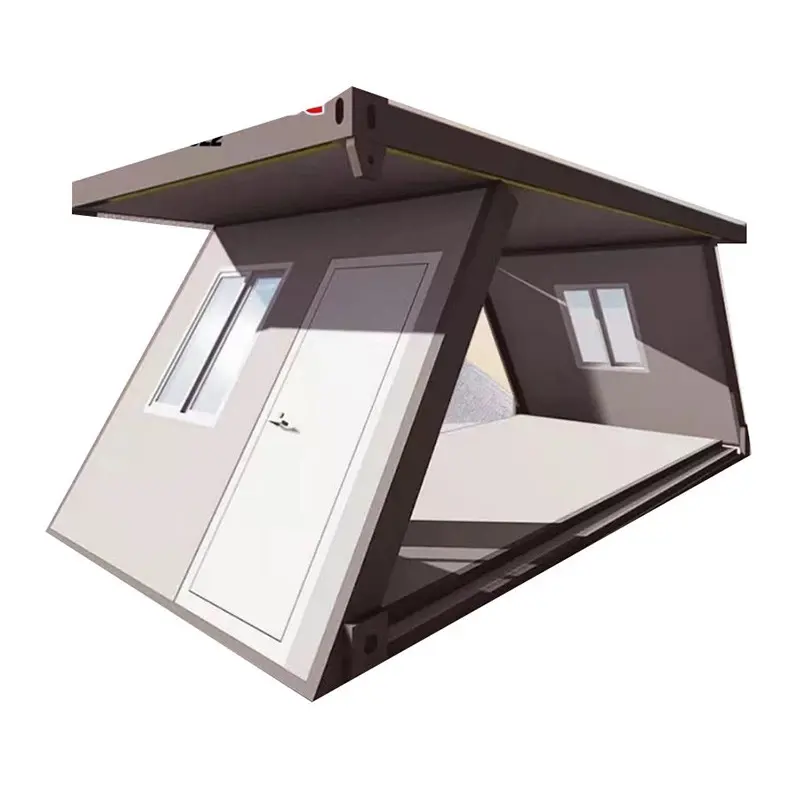
When evaluating temporary or permanent workspace solutions, the environmental impact often becomes a deciding factor. A folding container office offers a surprisingly sustainable alternative to conventional modular buildings. Ante has pioneered this approach, demonstrating that collapsible steel structures can significantly reduce material waste, energy consumption, and carbon footprint throughout the building’s lifecycle.
Material efficiency and waste reduction
Traditional modular buildings often rely on wood framing, drywall, and insulation that are cut to size on-site, generating considerable scrap. In contrast, a folding container office uses repurposed or newly fabricated corten steel panels that fold into a compact unit. The manufacturing process produces minimal offcuts because the design is standardized. When the office is no longer needed, the steel is 100% recyclable, whereas traditional modular components frequently end up in landfills.
Energy consumption during transport and assembly
The table below compares key sustainability metrics between a folding container office and a traditional modular building of similar floor area (approx. 20 sq. m).
| Metric | Folding Container Office (Ante) | Traditional Modular Building |
|---|---|---|
| Transport trips per 100 km | 1 truck (folded height 0.5 m) | 3–4 trucks (pre-assembled height 2.5 m) |
| On-site assembly time | 2 hours with hand tools | 2–3 days with power tools and crane |
| Construction waste generated | Under 10 kg | Over 200 kg |
| End-of-life recyclability | 98% steel reclamation | 50–60% mixed materials |
Operational sustainability
A folding container office from Ante achieves excellent thermal performance through factory-installed closed-cell foam insulation and integrated HVAC channels. The airtight steel envelope reduces heating and cooling loads by up to 30% compared to traditional modular panels. Furthermore, the folding mechanism eliminates the need for sealants and adhesives that emit volatile organic compounds, improving indoor air quality.
Folding Container Office FAQ
Question 1: Can a folding container office be relocated multiple times without losing structural integrity?
Yes. Ante designs each folding container office with heavy-duty stainless steel hinges and locking mechanisms rated for over 500 folding cycles. The frame uses reinforced corner castings identical to standard shipping containers, ensuring that repeated transport and unfolding do not compromise load-bearing capacity. In field tests, units remained weathertight after 200 relocations across different climates.
Question 2: How does the carbon footprint of producing a folding container office compare to a traditional modular unit?
A lifecycle assessment conducted on Ante units shows that manufacturing a folding container office generates approximately 4.2 metric tons of CO2 equivalent, while a traditional modular building of the same size generates 7.8 metric tons. The difference comes from the container’s simpler material palette (primarily steel versus steel, wood, gypsum, and plastic) and the fact that folding designs are fabricated in a single jig, reducing factory energy use by nearly 40%.
Question 3: Is a folding container office suitable for off-grid sustainable projects?
Absolutely. Ante offers optional solar-ready roof structures and battery compartments integrated into the folding chassis. Because the folding container office arrives with pre-wired conduits for photovoltaic cables, no additional trenching or external mounting is required. Many eco-lodges and remote research stations now deploy folding container offices as self-powered work hubs, combining low embodied carbon with renewable energy compatibility.
Conclusion
Choosing a folding container office over traditional modular buildings directly reduces transport emissions, construction waste, and long-term energy use. Ante continues to refine folding mechanisms and insulation strategies, making sustainable workspace more accessible for industries ranging from construction to disaster relief.
Contact us today to request a carbon savings estimate for your next project. Our team provides free lifecycle assessments and can ship a demo folding container office to your site within two weeks.