

Why Does a High Volume Centrifugal Blower Sometimes Experience Surge and How Can It Be Prevented
2026-05-27
In heavy-duty industrial environments, a High Volume Centrifugal Blower is indispensable for ventilation, material conveying, and combustion air supply. However, operators occasionally encounter a dangerous phenomenon known as surge. At Ketong, we have analyzed hundreds of blower installations and identified the root causes of surge alongside proven prevention strategies.
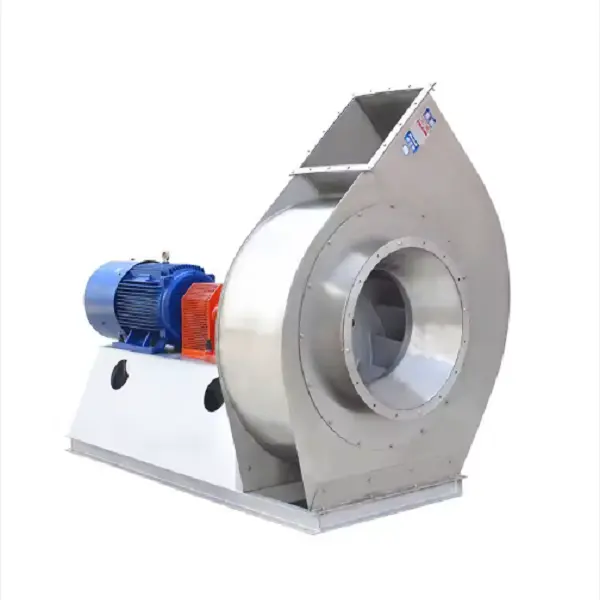
Understanding Surge in a High Volume Centrifugal Blower
Surge occurs when the blower operates at a flow rate lower than its minimum stable threshold. This creates a periodic breakdown of airflow: the impeller pressurizes air but cannot discharge it, causing reverse flow. The result is violent vibrations, loud pulsating noises, temperature spikes, and potential mechanical destruction.
Primary Causes of Surge
| Cause Category | Specific Trigger | System Impact |
|---|---|---|
| System Resistance | Clogged filters, closed dampers, or blocked ducts | Increases back pressure beyond blower curve |
| Speed Mismatch | Variable frequency drive (VFD) set too low | Reduces volumetric flow below surge limit |
| Incorrect Sizing | Blower selected for higher flow than actual demand | Forces operation into unstable region |
| Rapid Demand Changes | Sudden valve closure or process shutdown | Creates instantaneous flow reversal |
How to Prevent Surge Effectively
Prevention focuses on keeping the operating point away from the surge line on the blower performance curve. Implement these engineering controls:
-
Install a Minimum Flow Bypass Line – Recirculates a portion of the discharge back to the inlet when system demand drops, maintaining stable flow through the High Volume Centrifugal Blower.
-
Use Active Surge Control Systems – Real-time monitoring of pressure and flow differentials allows automated VFD adjustments or blow-off valve actuation before surge conditions develop.
-
Perform Regular System Inspections – Clean inlet filters, check duct integrity, and verify damper positions weekly. A pressure drop increase of more than 15% signals potential surge risk.
-
Select Correct Blower Sizing – Ketong engineers recommend plotting the system curve against the blower characteristic curve to ensure a minimum 20% safety margin from the surge line across all expected operating points.
High Volume Centrifugal Blower FAQ
Q1: What is the first sign that my High Volume Centrifugal Blower is approaching surge?
A1: The earliest indicator is a sudden drop in discharge pressure accompanied by a rhythmic whooshing or thumping sound. Simultaneously, the amperage on the motor drive will oscillate erratically. If you observe these signs, immediately open a blow-off valve or increase system demand by partially opening bypass dampers. Continued operation under these conditions for more than 30 seconds can cause impeller fatigue cracks or bearing failures.
Q2: Can a variable frequency drive completely eliminate surge in a High Volume Centrifugal Blower?
A2: No, a VFD alone cannot eliminate surge because surge depends on both speed and system resistance. While reducing speed lowers the surge limit value, an excessively closed discharge damper can still push operation into surge at any speed. Effective prevention requires either a minimum flow bypass line or a surge controller that modulates a bleed valve based on real-time pressure-to-flow ratio measurements.
Q3: What maintenance schedule prevents surge caused by gradual system degradation?
A3: Ketong recommends a three-tier schedule. Weekly: inspect and clean inlet filters, measure filter pressure drop. Monthly: verify all dampers and valves move freely and return to calibrated positions. Quarterly: perform a full system curve test by recording pressure and flow at three different operating points. If the actual system resistance has increased by more than 10% compared to the baseline, clean ductwork and replace any clogged components before surge risk escalates.
Partner with Ketong for Reliable Blower Performance
Surge is preventable with proper engineering, regular monitoring, and quality equipment. Ketong provides custom-engineered High Volume Centrifugal Blower solutions with integrated surge protection packages, including bypass systems, control algorithms, and performance testing.
Contact us today for a free surge risk assessment of your current blower system. Our engineers will deliver a detailed report with retrofit recommendations or new unit specifications tailored to your exact process requirements.