

Why Do Transport Robot Systems Still Struggle With Unstructured Environments
2026-06-10
While Transport Robot technology has advanced rapidly in controlled settings like warehouses, real-world success remains inconsistent. Luckyram has observed that even sophisticated fleets face major hurdles when leaving predictable paths. Understanding these limitations is key to realistic deployment.
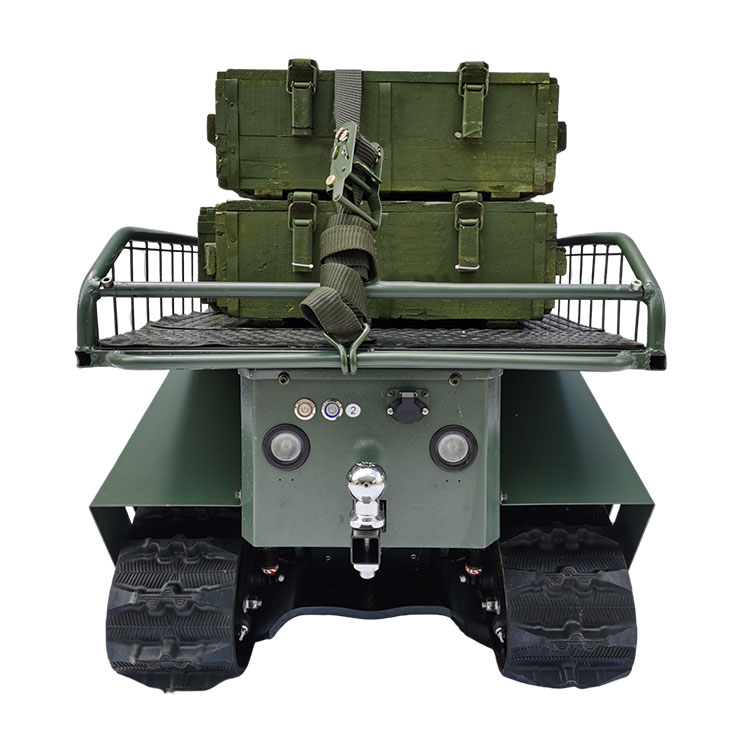
Core Challenges in Unstructured Environments
| Challenge | Impact on Transport Robot | Example Scenario |
|---|---|---|
| Dynamic Obstacles | Frequent unscheduled stops | People or carts moving unpredictably in a hospital corridor |
| Poor or Changing Lighting | Sensor degradation | Sun glare through a loading bay door at different times of day |
| Inconsistent Surfaces | Traction and balance issues | Gravel, puddles, or uneven pavement in a construction yard |
| Ambiguous Semantic Cues | Wrong navigation decisions | A temporary "wet floor" sign misinterpreted as a physical barrier |
Unlike structured factory floors with marked lanes and controlled lighting, unstructured environments demand real-time adaptation that current algorithms still cannot guarantee. Luckyram focuses on bridging this gap with hybrid navigation systems.
Transport Robot FAQ – Common Questions
Q1: Why can’t a Transport Robot reliably detect all obstacles outdoors?
A: Outdoor environments introduce infinite variability. A Transport Robot trained on standard obstacles (boxes, pallets, walls) may fail to recognize a tree branch fallen across a path, a puddle reflecting sky as "drivable space," or steam rising from a vent. Sensors also struggle with direct sunlight and rain. Luckyram addresses this with multi-spectral sensor fusion, combining radar, LiDAR, and thermal imaging to reduce blind spots.
Q2: Do Transport Robot systems require constant internet to navigate unstructured areas?
A: Not necessarily, but most do require stable connectivity for map updates and fleet coordination. However, many unstructured environments (underground mines, rural logistics hubs) have poor connectivity. A robust Transport Robot must handle "edge cases" with onboard processing. Luckyram robots store local 3D maps and run decision-making models offline, syncing only when connections are restored.
Q3: How long does it take to train a Transport Robot for a new unstructured site?
A: Typically 2 to 6 weeks, depending on site complexity. A Transport Robot needs to map the area during different times of day (changing shadows, traffic patterns) and be exposed to rare events like sudden spills or temporary barriers. Luckyram has reduced this to under 10 days using transfer learning from prior unstructured deployments, though each site still requires manual validation of high-risk zones.
Final Thoughts
The gap between controlled automation and real-world chaos is where many Transport Robot projects stall. Luckyram continues to invest in robust perception and adaptive control to close this gap.
Contact us today to discuss how Luckyram can help your Transport Robot deployment succeed in even the most challenging environments.