

Which Salt for Water Softeners Delivers Reliable Performance?
2026-10-30
Salt for water softeners is an essential consumable used in ion-exchange water treatment systems. It helps regenerate resin beads by preparing a concentrated brine solution that removes accumulated calcium and magnesium ions. However, different salt products vary in purity, physical form, dissolution characteristics, and insoluble content. Selecting an unsuitable product may contribute to sediment accumulation, salt bridging, equipment maintenance, and inconsistent system operation. This guide explains how water softener salt works, compares common salt types, identifies important purchasing specifications, and provides practical advice for choosing a reliable supplier. Whether you are a water treatment equipment manufacturer, distributor, importer, or industrial buyer, understanding these factors can help you make better sourcing decisions.
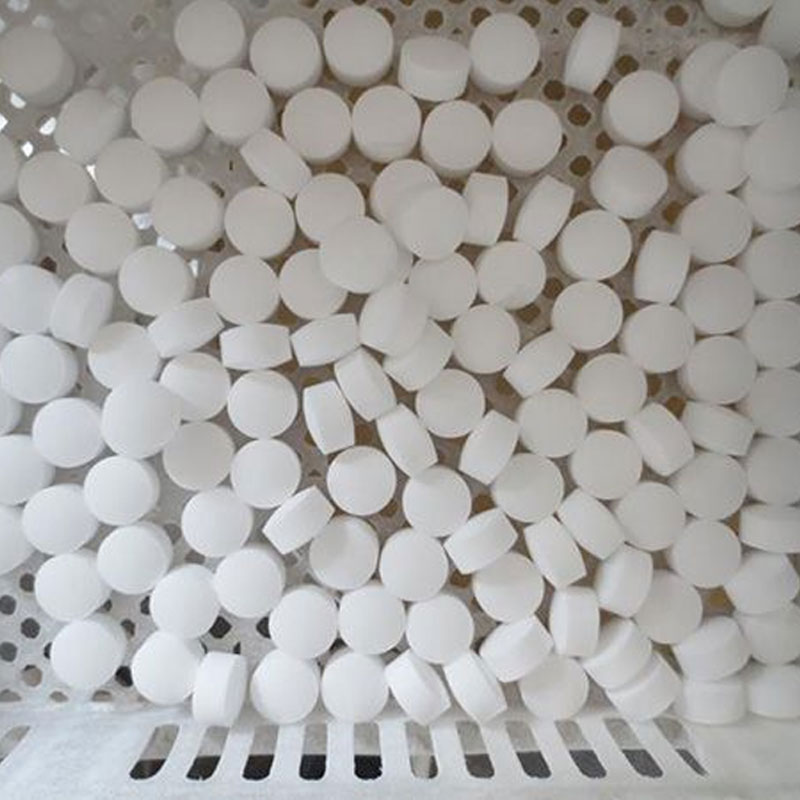
- Understand the role of salt in ion-exchange water softening.
- Compare evaporated salt, solar salt, rock salt, and potassium chloride.
- Evaluate purity, insoluble matter, particle size, and product consistency.
- Identify common operational problems and their prevention methods.
- Explore commercial applications and wholesale purchasing requirements.
- Learn how to assess suppliers, packaging, and delivery reliability.
What Is Salt for Water Softeners?
Hard water is a common challenge in residential, commercial, and industrial water systems. It contains dissolved minerals, primarily calcium and magnesium, which can cause scale formation in pipes, boilers, heat exchangers, washing equipment, and other water-using installations.
Salt for water softeners is a specially selected salt product used in salt-based water softening systems. Its primary function is to produce brine for regenerating the ion-exchange resin inside a water softener.
Unlike ordinary table salt, water softener salt is supplied in forms and specifications intended for water treatment equipment. Depending on the application, it may be available as pellets, crystals, granules, or specially designed blocks.
Sodium chloride (NaCl) is the most commonly used regeneration salt. Potassium chloride (KCl) is another option for certain systems where reducing additional sodium in softened water is a consideration.
For buyers, the important factors include more than the chemical name. Purity, water-insoluble matter, physical consistency, packaging, and compatibility with the intended softener all influence product suitability.
How Does Salt Work in a Water Softener?
Most conventional salt-based water softeners operate through an ion-exchange process. Understanding this process helps buyers recognize why salt quality and correct regeneration are important.
Step 1: Hard Water Enters the Resin Tank
Incoming water passes through a tank containing ion-exchange resin beads. These beads are initially loaded with sodium ions or, in some systems, potassium ions.
Step 2: Calcium and Magnesium Are Captured
As hard water moves through the resin bed, calcium and magnesium ions are exchanged for sodium ions attached to the resin. The treated water then leaves the tank with reduced hardness.
Step 3: The Resin Becomes Exhausted
After treating a certain volume of water, the resin gradually accumulates calcium and magnesium. Its softening capacity decreases, and regeneration becomes necessary.
Step 4: Salt Produces Regeneration Brine
Water in the brine tank dissolves the salt to create a concentrated solution. During regeneration, this brine flows through the resin bed, helping displace accumulated hardness ions and restore the resin's sodium form.
Step 5: Rinsing Prepares the System for Operation
The system rinses the resin and sends regeneration wastewater to the drain. Once the regeneration cycle is completed, the softener can resume treating incoming hard water.
This process explains why the salt must dissolve appropriately and why excessive insoluble impurities can create operational difficulties. Salt quality is one factor in system performance, alongside resin condition, water hardness, regeneration settings, and equipment design.
What Are the Main Types of Salt for Water Softeners?
Water softener salt is available in several forms. Each has different manufacturing characteristics, purity profiles, and application considerations. The best option depends on the equipment manufacturer's instructions and the requirements of the water treatment system.
1. Evaporated Salt
Evaporated salt is produced by dissolving salt and removing water through an evaporation process, allowing sodium chloride crystals to form. It is commonly available as compressed pellets or other processed forms.
Its relatively high purity and low insoluble content make it a popular option for applications where reduced residue and predictable brine preparation are important.
- Typically offers high sodium chloride purity.
- Generally produces less insoluble residue than less-refined salt.
- Available in pellet and other suitable product forms.
- Often selected for residential and commercial softening systems.
2. Solar Salt
Solar salt is produced by allowing seawater or natural brine to evaporate, primarily through solar energy. The resulting crystals are collected, processed, and packaged for different applications.
It can be supplied as crystals or processed into other physical forms. Its quality depends on the source brine, harvesting methods, washing, and subsequent processing.
- Uses natural evaporation as a major production method.
- Available in crystal and pellet forms.
- Can offer an economical option for suitable softener designs.
- Requires attention to insoluble content and product cleanliness.
3. Rock Salt
Rock salt is mined from underground natural salt deposits. It is generally less processed than evaporated salt and may contain greater amounts of insoluble minerals and other impurities.
Although its initial purchase price may be attractive, accumulated insoluble material can increase cleaning requirements. It should only be considered when the softener manufacturer permits its use and the product meets the necessary quality specifications.
4. Potassium Chloride
Potassium chloride is an alternative regeneration material used in certain ion-exchange water softeners. It performs a similar regeneration function but introduces potassium rather than sodium into the treated water through the exchange process.
It is not interchangeable with sodium chloride in every system. Equipment settings may need adjustment, and its suitability should be confirmed with the manufacturer. People with medical conditions requiring potassium restrictions should consult their healthcare professionals before relying on this option.
| Salt Type | Production Method | Key Characteristics | Purchasing Considerations |
|---|---|---|---|
| Evaporated Salt | Dissolution and evaporation | High purity and low insoluble content | Suitable grade and particle form |
| Solar Salt | Solar evaporation of brine | Crystal-based product with variable specifications | Cleanliness and insoluble matter |
| Rock Salt | Underground mining | Natural mineral salt with varying impurities | Compatibility and tank cleaning requirements |
| Potassium Chloride | Mineral processing | Alternative regeneration compound | Equipment compatibility and operating cost |
Why Does Salt Purity Matter for Water Softeners?
Salt purity is one of the most important purchasing considerations for water softening applications. A product containing a high proportion of sodium chloride and limited insoluble matter can help support cleaner brine tanks and more predictable operation.
Reduce Insoluble Residue
Mineral impurities that do not dissolve in water may settle at the bottom of the brine tank. Excessive accumulation can require more frequent cleaning and may interfere with components involved in brine withdrawal.
Support Consistent Brine Preparation
Consistent product composition helps buyers and equipment operators maintain predictable regeneration conditions. Variations in salt quality may affect consumption, residue levels, and maintenance requirements.
Help Reduce Salt Bridging
Salt bridging occurs when a hardened layer forms across the salt tank, leaving an empty space beneath it. The system may appear to contain sufficient salt even though the material cannot properly contact the water.
Moisture, temperature fluctuations, storage conditions, tank design, and salt characteristics can all contribute to this problem. Appropriate salt selection and correct filling practices help reduce the risk.
Improve Maintenance Planning
Using a product suitable for the equipment can help control residue accumulation and make routine maintenance more manageable. However, even high-purity salt does not eliminate the need for regular inspection.
Which Specifications Should Buyers Evaluate Before Purchasing?
For importers, wholesalers, water treatment equipment manufacturers, and industrial users, a clear technical specification is essential. It helps prevent product mismatches and makes supplier quotations easier to compare.
Sodium Chloride Content
NaCl content indicates the proportion of the principal salt component. The required purity should be defined according to the product grade and intended application rather than assuming that every water softener requires an identical specification.
Water-Insoluble Matter
This parameter measures material that does not dissolve under the specified test conditions. Lower insoluble content is generally desirable for reducing sediment accumulation in the brine tank.
Moisture Content
Excess moisture can influence storage behavior, product flowability, and the tendency of salt particles to stick together. Buyers should establish an acceptable moisture range and verify it through product testing.
Particle Size and Physical Form
Salt pellets, crystals, and granules have different physical properties. The appropriate form depends on the brine tank design, dissolution behavior, and equipment manufacturer's requirements.
Appearance and Packaging
Uniform appearance, clean packaging, and consistent product weight are also important commercial considerations. Packaging should protect the salt from moisture and contamination during transportation and storage.
| Specification | What It Indicates | Why Buyers Should Check It |
|---|---|---|
| NaCl Content | Main salt component percentage | Confirms the requested purity grade |
| Insoluble Matter | Undissolved impurities | Helps assess residue potential |
| Moisture | Water content in the product | Supports storage and handling control |
| Particle Size | Physical dimensions of salt particles | Confirms compatibility with equipment |
| Packaging | Bag material and weight specifications | Supports transport and inventory planning |
For B2B transactions, buyers should request a product specification sheet and COA for the actual product grade. Testing methods and acceptance limits should be agreed upon before production or shipment.
Common Water Softener Salt Problems and Practical Solutions
Even a suitable salt product may encounter operational problems when storage, filling, or system maintenance is not properly managed. Recognizing common issues can help operators avoid unnecessary downtime.
Problem 1: Salt Bridging
A hard crust forms above the water level, creating an empty space underneath. The softener cannot draw the expected brine even though salt remains visible in the tank.
Possible solutions: Inspect the salt tank, carefully follow the equipment manufacturer's cleaning instructions, avoid overfilling, and keep the storage area within the recommended temperature and humidity conditions.
Problem 2: Salt Mushing
Fine salt particles or accumulated residue may form a dense layer at the bottom of the tank. This can interfere with normal brine movement.
Possible solutions: Check product particle consistency, inspect the tank for accumulated residue, and clean it when required according to the manufacturer's instructions.
Problem 3: Excessive Sediment
Insoluble impurities may accumulate after repeated regeneration cycles. This is particularly relevant when salt with a high insoluble content is used.
Possible solutions: Select an appropriate high-purity product, monitor sediment levels, and arrange periodic tank inspections.
Problem 4: Soft Water Performance Declines
Water may remain hard even when salt is available in the tank. Potential causes include insufficient brine formation, incorrect regeneration settings, exhausted or damaged resin, blocked components, or untreated water quality problems.
Possible solutions: Check salt availability, system settings, brine draw, resin condition, and incoming water quality. Consult a qualified water treatment technician if the problem continues.
Problem 5: Salt Consumption Is Higher Than Expected
Excessive consumption may result from high incoming water hardness, increased water usage, incorrect regeneration settings, system leakage, or inefficient equipment operation.
Possible solutions: Review water hardness measurements, regeneration frequency, system settings, and operating records. Salt quality alone cannot explain every case of excessive consumption.
Industrial and Commercial Applications of Water Softener Salt
Water softening is used in many industries where controlling calcium and magnesium is important for equipment protection, process consistency, and maintenance planning.
1. Industrial Boilers
Hardness minerals can contribute to scale formation in boiler systems. Water softening helps reduce the hardness entering the boiler feedwater treatment process. It is normally one component of a broader water treatment program.
2. Commercial Laundries
Softened water can help improve detergent efficiency and reduce mineral deposits on washing equipment and fabrics. Commercial laundry facilities therefore rely on properly maintained water conditioning systems.
3. Hotels and Commercial Buildings
Hotels, restaurants, and large buildings may use water softeners to manage hardness in hot water systems, laundry facilities, and other water-consuming equipment.
4. Food and Beverage Processing
Water quality is an important consideration in food and beverage manufacturing. Softening may be used as part of a treatment process, depending on product requirements and applicable regulations.
5. Textile and Dyeing Industries
Hardness minerals can interfere with certain washing, dyeing, and finishing processes. Water conditioning helps manufacturers manage water quality and improve process consistency.
6. Water Treatment Equipment Manufacturers
Manufacturers and distributors of water softening equipment may source suitable regeneration salt for resale, system packages, or ongoing customer supply programs. Consistent product specifications and reliable packaging are especially important for these B2B buyers.
How to Choose a Reliable Salt for Water Softeners Supplier
For wholesale and industrial procurement, selecting a supplier is not simply about finding the lowest quotation. Product consistency, documentation, packaging, communication, and delivery capability all influence the total purchasing cost.
Check Manufacturing and Supply Capabilities
Understand whether the supplier manufactures the product directly or sources it from other producers. Ask about production capacity, product grades, quality management procedures, and the ability to maintain consistent specifications across repeat orders.
Request Technical Documents
Reliable sourcing should be supported by clear technical information. Request a product specification sheet, recent COA, and any applicable quality or management certifications. Verify the scope and validity of certificates rather than relying only on logos or general statements.
Evaluate Customization and Packaging
Different markets have different packaging preferences. Buyers may require small retail bags, standard industrial bags, bulk packaging, private-label printing, or customized labeling.
Before confirming an order, specify packaging material, bag weight, printing requirements, palletization, and labeling information.
Compare Total Purchasing Costs
Unit price is only one part of the sourcing decision. Consider packaging, transportation, customs clearance, storage, product losses, and any additional maintenance costs associated with unsuitable product quality.
Confirm Delivery and Communication
Ask suppliers to clarify production schedules, shipping arrangements, lead times, payment terms, and procedures for handling quality complaints. Written specifications and order confirmations help reduce misunderstandings.
Work with an Experienced Chemical Supplier
Kunyang is a chemical supplier whose business information can be explored through its official company website. For buyers investigating salt and water treatment-related products, direct communication is recommended to confirm the available product range, applicable specifications, packaging options, and export requirements.
When evaluating Kunyang or any potential supplier, request product-specific documentation and compare it against your technical and commercial requirements before placing a bulk order.
How Should Water Softener Salt Be Stored and Handled?
Proper storage helps preserve product quality between delivery and use. Salt is generally stable under appropriate conditions, but moisture and contamination can affect its physical condition and handling performance.
Keep Products in a Dry Environment
Store salt in a dry, well-ventilated area. Avoid direct exposure to rain, standing water, and excessive humidity. Moisture may cause particles to stick together or form hardened masses.
Use Suitable Packaging
Packaging should protect the product during storage, loading, and transportation. Check that bags are properly sealed and free from damage before accepting shipments.
Prevent Cross-Contamination
Keep water softener salt separate from unrelated chemicals, dirt, oils, and other materials. Clean storage surfaces and handling equipment regularly.
Apply Inventory Management
Use a first-in, first-out inventory approach where appropriate. Label storage batches with product names, batch numbers, delivery dates, and relevant quality records.
Follow Safe Handling Practices
Use appropriate lifting methods and protective equipment when handling heavy bags or bulk containers. Follow the supplier's handling instructions and local workplace safety requirements.
A Practical Bulk Purchasing Checklist for Water Softener Salt
Before issuing a purchase order, procurement teams should confirm the following details with the supplier:
- Product type: Sodium chloride or potassium chloride.
- Salt form: Pellets, crystals, granules, or blocks as required by the equipment.
- Purity: Required NaCl or KCl content and acceptable impurity limits.
- Insoluble matter: Defined maximum content and testing method.
- Moisture: Agreed product moisture specification.
- Particle size: Suitable dimensions and physical consistency.
- Documentation: COA, specification sheet, and applicable certificates.
- Packaging: Bag weight, packaging material, labeling, and pallet requirements.
- Order quantity: Minimum order quantity and volume-based pricing.
- Delivery: Production lead time, shipping method, and destination arrangements.
- Quality agreement: Inspection requirements and procedures for handling nonconforming products.
For long-term supply relationships, buyers should also establish a consistent product specification and request batch records for repeat shipments. This makes it easier to compare incoming products and identify quality variations.
Frequently Asked Questions About Salt for Water Softeners
1. What is the best salt for water softeners?
High-purity evaporated salt pellets are commonly recommended for many conventional water softeners because they generally contain fewer insoluble impurities. However, the best option depends on the specific equipment design and manufacturer instructions.
2. Can ordinary table salt be used in a water softener?
Ordinary table salt is not generally recommended unless the equipment manufacturer explicitly approves it. Its particle size, additives, and other characteristics may not be suitable for the brine tank and regeneration system.
3. What is the difference between solar salt and evaporated salt?
Solar salt is produced primarily through natural evaporation of seawater or brine, while evaporated salt is made by dissolving salt and removing water through a controlled evaporation process. Their purity and insoluble content depend on the specific manufacturing and processing methods.
4. How pure should water softener salt be?
The required purity depends on the equipment and application. Many equipment manufacturers recommend high-purity products, sometimes specifying at least 99% sodium chloride. Buyers should follow the system manufacturer's requirements and verify the actual product specification through a COA.
5. What causes salt bridging in a water softener?
Salt bridging occurs when salt particles form a hardened layer inside the brine tank. Humidity, temperature changes, overfilling, and product characteristics may contribute to this issue. It can prevent proper brine formation and interfere with regeneration.
6. How often should a water softener be refilled with salt?
Refilling frequency depends on water hardness, daily water consumption, system capacity, regeneration settings, and salt efficiency. Checking the tank approximately once a month is a useful starting point, but the equipment manual should determine the appropriate operating level.
7. Can potassium chloride replace sodium chloride?
Some water softeners can use potassium chloride as an alternative regeneration material. However, the system may require adjustments, and operating costs can differ. Always confirm compatibility with the equipment manufacturer before switching.
8. Does water softener salt remove calcium and magnesium directly?
No. The ion-exchange resin removes calcium and magnesium from incoming water. Salt prepares the brine solution used to regenerate that resin so the system can continue operating.
9. What documents should wholesale buyers request?
Buyers should generally request a technical specification sheet and a batch-specific Certificate of Analysis. Depending on the application and market, additional quality certifications, safety documentation, and traceability information may also be necessary.
10. How can I purchase water softener salt in bulk from Kunyang?
Contact Kunyang through its official website to discuss your intended application, required salt type, technical specifications, packaging preferences, and estimated order quantity. Confirm product availability, documentation, quotations, and delivery arrangements directly with the company.
Looking for a Reliable Salt Supply Partner?
Choosing the right salt for water softeners is essential for consistent water treatment performance and effective equipment maintenance. Whether you are a water treatment equipment manufacturer, chemical distributor, wholesaler, or industrial buyer, reliable product specifications and stable supply are important to your business.
Kunyang welcomes inquiries from international buyers interested in discussing product specifications, bulk purchasing requirements, packaging solutions, and potential long-term cooperation.
Have a specific water treatment salt requirement? Share your target specifications, estimated quantity, and destination market with our team.
Contact Us for Business InquiriesContact Kunyang to discuss your sourcing requirements and explore suitable product solutions.