

What Should You Consider When Selecting 35kV High Voltage Switchgear for Your Substation
2026-10-26
Selecting the right 35kV High Voltage Switchgear is one of the most consequential decisions in substation design. The equipment you choose directly affects operational safety, fault clearance capability, maintenance costs, and long-term reliability. At Hagoe, we have supported utilities, industrial plants, and renewable energy projects in specifying 35kV High Voltage Switchgear for demanding environments. This guide outlines the critical factors that should shape your selection process.
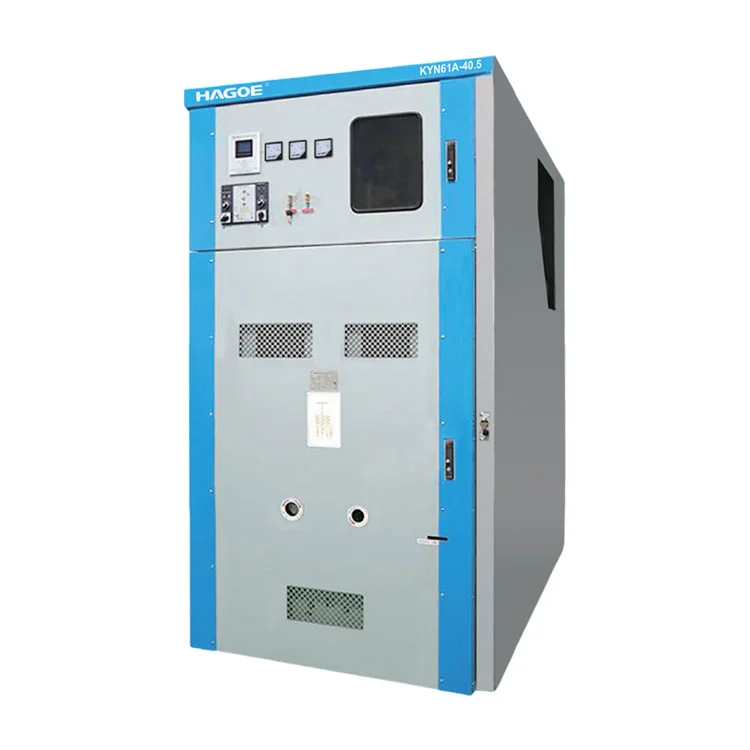
Key Selection Criteria for 35kV High Voltage Switchgear
1. Rated Parameters and System Conditions
The 35kV High Voltage Switchgear must match your network's actual operating conditions, not just nominal voltage.
| Parameter | What to Verify | Typical Consideration |
|---|---|---|
| Rated voltage | 36 kV / 40.5 kV compatibility | System grounding method |
| Rated current | Busbar and feeder ratings | Future load growth margin |
| Short-circuit withstand | 25 kA / 31.5 kA / 40 kA | Upstream transformer impedance |
| Power frequency withstand | 95 kV (or per local standard) | Insulation coordination |
| Lightning impulse withstand | 185 kV / 200 kV | Surge arrester placement |
2. Standards and Certification
Confirm that the 35kV High Voltage Switchgear is type-tested to IEC 62271-200 (metal-enclosed) or IEC 62271-203 (gas-insulated), and that arc fault classification (IAC) is documented. Hagoe supplies units with full type-test reports, routine test certificates, and third-party verification.
3. Insulation Technology: AIS vs. GIS
| Feature | Air-Insulated (AIS) | Gas-Insulated (GIS) |
|---|---|---|
| Footprint | Larger | Compact |
| Maintenance access | Easy | Requires trained personnel |
| Best for | Indoor rooms with space | Space-constrained or harsh sites |
| Cost profile | Lower initial cost | Higher initial, lower lifecycle |
4. Switching Device Configuration
Decide between vacuum circuit breakers with withdrawable trucks and fixed-mounted designs. Withdrawable configurations simplify maintenance and reduce downtime, while fixed designs suit compact layouts. Ensure the 35kV High Voltage Switchgear offers mechanical and electrical interlocks that prevent incorrect operation.
5. Protection, Control, and Monitoring
Modern 35kV High Voltage Switchgear should integrate digital relays, temperature monitoring, and partial discharge sensors. Verify communication protocols (IEC 61850, Modbus) and whether the design supports condition-based maintenance.
6. Environmental and Site Constraints
Check altitude derating, ambient temperature limits, humidity, seismic requirements, and IP ratings. Outdoor enclosures require different corrosion protection than indoor installations. Hagoe engineers review site data before finalizing any configuration.
7. Safety and Arc-Fault Performance
Arc-rated 35kV High Voltage Switchgear protects personnel during internal faults. Confirm IAC classification, pressure relief ducting, and clear labeling of arc-protected zones.
8. Lifecycle Cost and Service Support
Evaluate spare parts availability, factory training, commissioning support, and warranty terms. A lower-priced unit with weak service support often costs more over twenty years of operation.
Frequently Asked Questions
What is the difference between 35kV High Voltage Switchgear and 33kV switchgear?
They are similar in function but differ in rated voltage and insulation levels; 35kV equipment is typically rated for 36 kV or 40.5 kV systems and must be selected according to your actual system voltage and local grid code.
How often should 35kV High Voltage Switchgear be maintained?
Routine inspections are generally recommended every six to twelve months, with partial discharge testing and contact resistance checks annually or per manufacturer guidance; condition monitoring can extend intervals where justified by operating history.
Can 35kV High Voltage Switchgear be used for renewable energy applications?
Yes, it is widely used in wind and solar collector substations; verify short-circuit ratings, harmonic environment, and outdoor enclosure protection when integrating inverter-based generation.
Conclusion
Choosing 35kV High Voltage Switchgear requires balancing electrical ratings, standards compliance, insulation technology, safety performance, and lifecycle support. A structured specification review early in the project prevents costly redesigns later. Hagoe provides engineering consultation, type-tested equipment, and commissioning support for substations worldwide.
Contact us today to discuss your 35kV High Voltage Switchgear requirements and receive a tailored technical proposal from the Hagoe team.