

What Permits Are Required to Operate a 100kg Medical Waste Incinerator
2026-06-11
Operating a 100kg Medical Waste Incinerator is a highly regulated activity. Medical waste contains pathogens, sharps, and pharmaceutical residues, so environmental agencies enforce strict permitting. Hongsheng, a trusted manufacturer in the incineration field, consistently advises buyers to secure full legal clearance before installation. Failure to obtain the correct permits can lead to facility shutdowns or heavy fines.
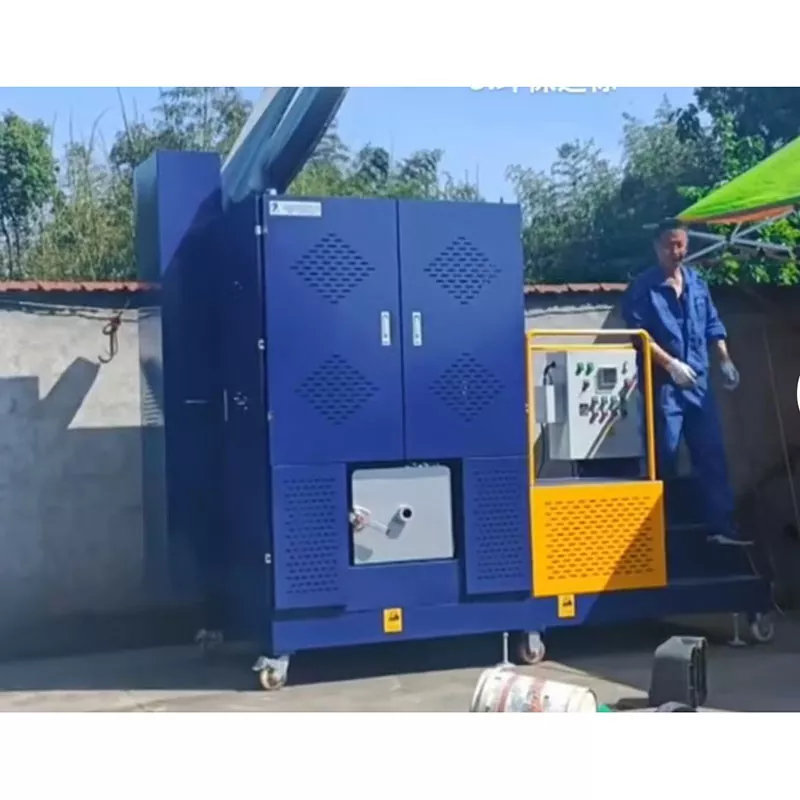
Core Permits for a 100kg Medical Waste Incinerator
The exact requirements vary by country and state, but the following five permits are almost universally mandatory.
| Permit Type | Issuing Authority | Typical Validity |
|---|---|---|
| Environmental Impact Assessment (EIA) | Environmental Protection Agency | Project-specific |
| Air Emission License | Local Air Quality Board | 1–5 years |
| Waste Management License | Health & Waste Regulator | 3 years |
| Construction & Operation Permit | Municipal Planning Dept | 2–10 years |
| Ash Disposal Authorization | Hazardous Waste Division | Annual |
1. Environmental Impact Assessment (EIA)
Before purchasing a 100kg Medical Waste Incinerator, an EIA is required. This document evaluates potential air, soil, and water pollution. Hongsheng provides emission test reports to help customers complete this step faster.
2. Air Emission License
This is the most critical permit. It sets limits on dioxins, particulate matter, CO, and HCl. A 100kg Medical Waste Incinerator must meet WHO or local stack emission standards. Continuous monitoring systems are often mandatory.
3. Waste Management License
This license certifies that the operator can handle clinical waste. It covers storage, feeding, and record-keeping. Hongsheng units include automatic log systems to simplify compliance.
4. Construction & Operation Permit
Local zoning laws require this before installation. It verifies that the 100kg Medical Waste Incinerator is placed away from residential areas and water sources.
5. Ash Disposal Authorization
Bottom ash and fly ash from medical waste incineration are often classified as hazardous. This permit dictates how to store, transport, and landfill the residues.
100Kg Medical Waste Incinerator FAQ – Common Questions
Q1: Can I operate a 100kg Medical Waste Incinerator without an air emission license if my clinic is very small?
A1: No. Regardless of size, any 100kg Medical Waste Incinerator that burns pathological or infectious waste must hold a valid air emission license. Small clinics are not exempt. Environmental agencies consider the waste type, not just the quantity. Without this license, operation is illegal. Hongsheng always includes stack testing ports to help users pass official inspections.
Q2: How long does it take to obtain all permits for a 100kg Medical Waste Incinerator?
A2: The full permitting process typically takes 4 to 8 months. The EIA takes 60–90 days, followed by 30–45 days for the air license. Local operation permits may add another 30 days. However, working with an experienced supplier like Hongsheng can shorten this timeline because we provide pre-tested emission data, engineering drawings, and compliance checklists that regulators recognize.
Q3: Does the seller (manufacturer) need to have any special permits to sell a 100kg Medical Waste Incinerator?
A3: Yes, the manufacturer must hold an ISO 14001 (environmental management) and ISO 9001 (quality management) certification. In many regulated markets, the supplier also needs a local distributor license for medical waste equipment. Hongsheng maintains full ISO certification and can provide factory audit reports upon request. Buying from an uncertified seller will cause your permit application to be rejected.
Best Practices for Permit Approval
-
Start permit applications before purchasing the machine.
-
Keep a logbook of waste input, combustion temperatures, and ash output.
-
Use Hongsheng’s technical files to prove secondary combustion chamber temperatures exceed 1100°C.
Contact Us
Navigating the legal requirements for a 100kg Medical Waste Incinerator can be complex. Hongsheng helps clients from permit application to final commissioning. Contact our compliance team today for a site-specific permit checklist and a free consultation on your project timeline.