

What Materials Can a High Precision Bevel Cutting Machine Handle Efficiently
2026-10-22
Selecting the right equipment begins with understanding material compatibility, and this is where a High Precision Bevel Cutting Machine from Xianjin proves its value across demanding fabrication environments. From mild steel to exotic alloys, the capability of a High Precision Bevel Cutting Machine directly determines weld quality, edge finish, and overall production efficiency. Xianjin has engineered its bevel cutting systems to deliver consistent accuracy across a broad material spectrum, helping fabricators reduce rework and improve joint preparation. This guide breaks down material performance, cutting parameters, and practical selection criteria.
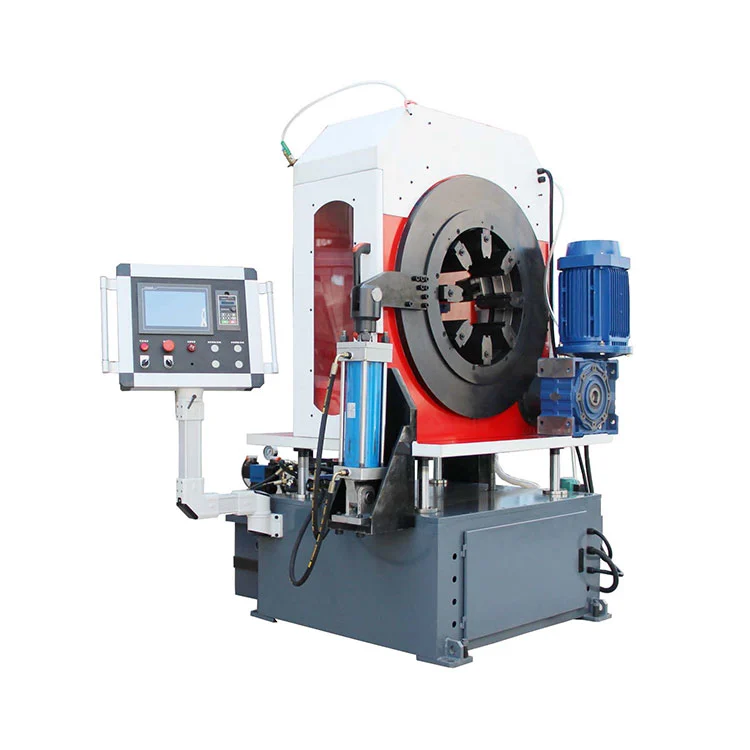
Material Compatibility Overview
The table below summarizes how a High Precision Bevel Cutting Machine performs across common industrial materials.
| Material | Typical Thickness Range | Bevel Quality | Key Considerations |
|---|---|---|---|
| Carbon Steel | 5–100 mm | Excellent | Stable arc, minimal dross |
| Stainless Steel | 3–50 mm | Very Good | Requires optimized gas/plasma settings |
| Aluminum Alloy | 3–40 mm | Good to Very Good | Higher thermal conductivity needs speed control |
| Low Alloy Steel | 6–80 mm | Excellent | Preheat may be required for thick sections |
| Duplex Steel | 5–40 mm | Very Good | Controlled heat input preserves properties |
| Nickel Alloys | 3–30 mm | Good | Precision parameter tuning essential |
What Makes Xianjin Systems Efficient Across Materials
-
Adaptive cutting parameters automatically adjust speed, gas flow, and power for each material grade.
-
Rigid machine structure minimizes vibration, preserving bevel angle accuracy in thick plate.
-
Multi-process capability supports plasma, oxy-fuel, and laser configurations on one platform.
-
Advanced CNC control stores material-specific recipes, reducing setup time and operator error.
-
Real-time compensation corrects kerf and angle deviation during cutting.
Material-Specific Performance Notes
Carbon steel remains the most common application, where a High Precision Bevel Cutting Machine achieves clean V-grooves and Y-grooves with minimal post-processing. Stainless steel demands careful gas selection to avoid oxidation, and Xianjin systems provide preset parameters for this. Aluminum requires faster travel speeds due to heat dissipation, while duplex and nickel alloys benefit from controlled heat input to preserve metallurgical integrity.
FAQ
Q: Can a High Precision Bevel Cutting Machine cut stainless steel without oxidation?
A: Yes. With the correct plasma gas mixture or laser configuration, a High Precision Bevel Cutting Machine minimizes oxidation on stainless steel. Xianjin systems include dedicated stainless steel parameter sets that control gas flow and cutting speed to produce clean, weld-ready bevels with minimal discoloration.
Q: What is the maximum thickness a High Precision Bevel Cutting Machine can handle?
A: Thickness capacity depends on the cutting process selected. Oxy-fuel configurations on a High Precision Bevel Cutting Machine can handle carbon steel up to 100 mm or more, while plasma and laser processes are suited to thinner ranges. Xianjin offers multiple configurations to match specific thickness requirements.
Q: Does a High Precision Bevel Cutting Machine require different settings for aluminum versus steel?
A: Absolutely. Aluminum has higher thermal conductivity and reflectivity, so a High Precision Bevel Cutting Machine must adjust speed, power, and gas selection accordingly. Xianjin CNC controls store separate material recipes, allowing operators to switch between aluminum and steel with minimal setup time.
Conclusion
Matching material to machine capability is the foundation of efficient bevel preparation, and Xianjin delivers a High Precision Bevel Cutting Machine engineered for versatility across carbon steel, stainless steel, aluminum, and specialty alloys. Contact Xianjin today to discuss your material requirements and receive a tailored configuration recommendation for your fabrication operation.