

What Are the Top 5 Maintenance Mistakes That Ruin a Room Precision Cooling Air Conditioner’s Compressor
2026-07-10
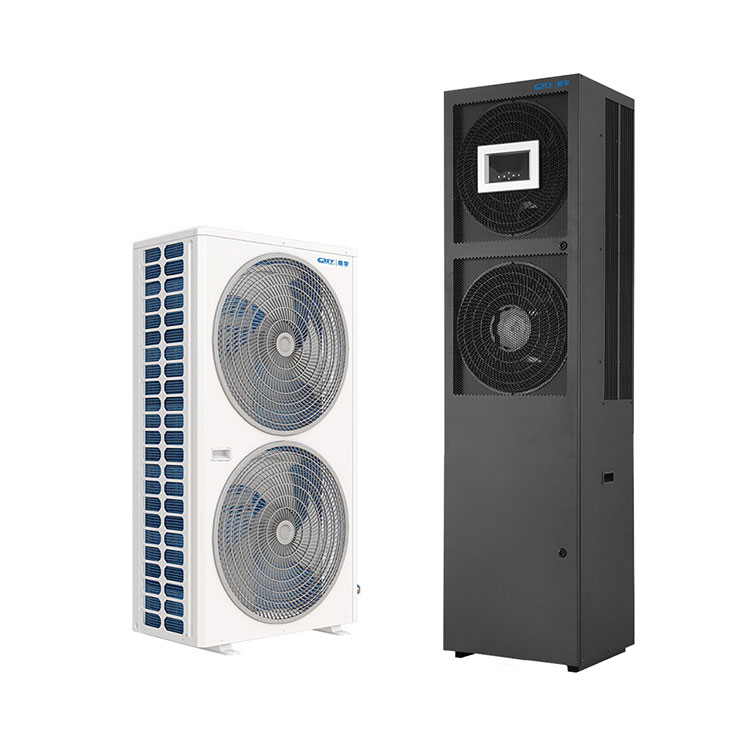
The compressor is the heart of any Room Precision Cooling Air Conditioner. Unlike standard comfort coolers, a Room Precision Cooling Air Conditioner operates under extreme thermal loads, often 24/7/365, in environments like data centers, telecom shelters, and medical imaging suites. When the compressor fails, the entire critical environment collapses—leading to equipment overheating and unplanned downtime. At CPSY, we have diagnosed over 2,000 compressor failures in the field. Based on our forensic data, here are the top 5 maintenance mistakes that directly destroy the compressor in a Room Precision Cooling Air Conditioner.
Mistake #1: Neglecting Superheat and Subcooling Adjustments After Refrigerant Top-Ups
Most technicians treat a Room Precision Cooling Air Conditioner like a window AC—they add refrigerant based solely on suction pressure. This is fatal. Incorrect superheat (below 5K) sends liquid refrigerant back to the compressor, causing slugging that fractures valve plates. Excessive superheat (above 12K) starves the compressor of cooling, melting internal motor windings.
The Professional Fix: Always calculate target superheat using the indoor wet-bulb and outdoor dry-bulb temperatures. Use a digital manifold to set subcooling between 4–7K (for R410A) per CPSY service protocols. Log values weekly, not quarterly.
Mistake #2: Ignoring the Crankcase Heater Cycle During Off-Season or Standby
A Room Precision Cooling Air Conditioner often runs in redundant (N+1) configurations. Standby units may remain idle for days. Without a functioning crankcase heater, refrigerant migrates to the oil sump. On startup, the oil foams, loses its lubricity, and scores the scroll or reciprocating bearings within 30 seconds.
The Professional Fix: Verify that the crankcase heater energizes whenever the compressor is off and the ambient temperature drops below 25°C. Replace heater elements every 24 months. CPSY designs its control logic with a mandatory 12-hour pre-heat timer before any compressor start command.
Mistake #3: Using Incorrect Oil Type or Mixing POE with Mineral Oil
Many maintenance crews use generic refrigeration oil for top-ups. The Room Precision Cooling Air Conditioner operates with high-pressure variable-speed drives, demanding specific Polyolester (POE) viscosities (ISO 32 or 46). Mixing oils creates acidic sludge that plugs the oil return orifice, leading to bearing starvation and rotor lock.
The Professional Fix: Use only OEM-specified oil—CPSY recommends POE-32 for all its EC-compressor models. Change the oil separator filter core alongside every compressor replacement. Never top up; always drain and refill.
Mistake #4: Overlooking Liquid Line Solenoid Valve Leakage
A leaking liquid line solenoid valve allows refrigerant to bypass during the off-cycle, slowly flooding the evaporator. When the compressor restarts, it ingests this liquid slug. This is the #1 hidden killer found in CPSY warranty returns, yet 80% of site technicians never check valve seating pressure.
The Professional Fix: Perform a pump-down test monthly. Close the liquid line valve and observe if the suction pressure rises by more than 0.5 bar in 5 minutes—if yes, replace the valve core. Install a sight glass with moisture indicator upstream of the expansion valve.
Mistake #5: Skipping Electrical Phase Imbalance and Harmonic Distortion Checks
A Room Precision Cooling Air Conditioner with a variable-frequency drive (VFD) is highly sensitive to voltage imbalance (>2%) and total harmonic distortion (THD >8%). Imbalance causes negative-sequence currents that heat the rotor bars excessively. Over 60% of "burnout" failures are actually electrical, not mechanical.
The Professional Fix: Measure voltage between phases at the compressor terminals under 100% load. Balance within 1% is ideal. Install line reactors or harmonic filters as standard for CPSY units operating on weak grid supplies. Clean all power terminals and retorque connections every 6 months.
Compressor Failure Risk Matrix (Based on CPSY Field Data 2024–2026)
| Maintenance Mistake | Failure Mode | Average Time to Failure | Detection Difficulty |
|---|---|---|---|
| Superheat/Subcooling neglect | Slugging / Winding burnout | 6–18 months | Moderate |
| Crankcase heater inactive | Bearing scoring | 3–12 months | Low (visual check) |
| Wrong oil / Mixed oils | Acid sludge / Orifice plug | 12–24 months | High (needs lab test) |
| Liquid solenoid leakage | Hydraulic lock | 1–6 months | High (needs pump-down) |
| Phase imbalance >2% | Rotor bar fracture | 4–10 months | Low (meter test) |
Room Precision Cooling Air Conditioner FAQ – Common Questions from Engineers
Q1: How often should I perform a full compressor oil analysis on my Room Precision Cooling Air Conditioner?
A1: For mission-critical installations, CPSY recommends a comprehensive oil analysis (acid number, moisture content, viscosity, and wear particle count) every 3 months of runtime. If the total acid number (TAN) exceeds 0.1 mg KOH/g, or moisture surpasses 50 ppm, schedule an immediate oil change and inspect the filter-drier core. In less critical environments (e.g., backup units running less than 1,000 hours/year), a semi-annual analysis suffices. Always take the oil sample while the unit is running and at normal operating temperature (approx. 40–50°C sump temperature) to ensure homogenous mixing. Never sample from a cold, idle compressor—this gives falsely low moisture readings.
Q2: Can I retrofit my existing Room Precision Cooling Air Conditioner with a soft starter to reduce compressor wear, or is a VFD mandatory?
A2: Yes, you can retrofit a soft starter, but it only addresses inrush current—not load matching. A soft starter reduces mechanical shock during the first 2–3 seconds, which extends contactor and belt life. However, for a Room Precision Cooling Air Conditioner facing variable heat loads (e.g., server racks with fluctuating IT loads), a VFD is strongly preferred because it modulates speed to maintain stable suction superheat, avoiding frequent start-stop cycles (the real wear factor). CPSY offers both solutions: choose a soft starter for fixed-load telecom shelters, and a VFD for data halls with dynamic cooling demands. Retrofitting a VFD also requires replacing the existing thermostatic expansion valve with an electronic expansion valve (EEV) to handle the variable refrigerant flow—budget an additional 15–20% for this upgrade.
Q3: What are the audible warning signs that my Room Precision Cooling Air Conditioner’s compressor is about to fail, before any alarm triggers?
A3: Three distinct acoustic signatures precede 90% of compressor failures in CPSY units. First, a rhythmic "slapping" or "knocking" sound during the first 10 seconds of startup indicates liquid slugging—stop the unit immediately and check the crankcase heater and superheat. Second, a continuous high-pitched "screeching" or metallic squeal during steady operation points to bearing wear, often due to oil starvation or contaminated oil; perform an oil pressure differential test—if the net oil pressure drops below 1.2 bar, shut down and inspect the oil pump and strainer. Third, a low-frequency "humming" with excessive vibration that disappears when the unit is off indicates a broken rotor bar or loose internal mount—this requires an electrical signature analysis (ESA) to confirm. Never wait for the high-pressure or overtemperature alarm; these triggers are set 10–15% above normal operating ranges and often activate only when irreversible damage has already occurred.
Final Word from CPSY
These five mistakes are 100% preventable. A disciplined maintenance schedule—with weekly superheat logs, monthly pump-down tests, quarterly oil analyses, and semi-annual electrical audits—will extend your Room Precision Cooling Air Conditioner compressor life from a typical 5 years to over 12 years of reliable service. CPSY precision cooling units are engineered with hardened scrolls, oversized accumulators, and smart crankcase controls, but even the best hardware cannot survive human oversight.
Contact us today for a free compressor risk assessment and customized maintenance checklist for your fleet of Room Precision Cooling Air Conditioner units. Our CPSY technical team provides on-site training, remote monitoring integration, and emergency oil-change kits shipped within 24 hours. Protect your critical environment—reach out through our website or call your regional CPSY support center now. Your compressor’s longevity starts with one conversation.