

What are the Standards for Partial Discharge Testing in High Voltage Equipment
2025-12-22
Ensuring the reliability and longevity of high-voltage assets is paramount for any power utility or industrial operator. A critical tool in this preventative maintenance strategy is the Partial Discharge Test. Adhering to recognized international standards is not just about compliance; it's about ensuring safety, accuracy, and consistency in your diagnostic program. At Weshine, we engineer our advanced partial discharge detection systems to meet and exceed these rigorous global benchmarks, providing you with trusted data for decisive action.
Key international standards governing Partial Discharge Testing include IEC 60270, which defines the conventional electrical measurement method, and IEEE 1291, which covers the use of acoustic emission techniques. Compliance ensures your testing is repeatable and your results are globally comparable.
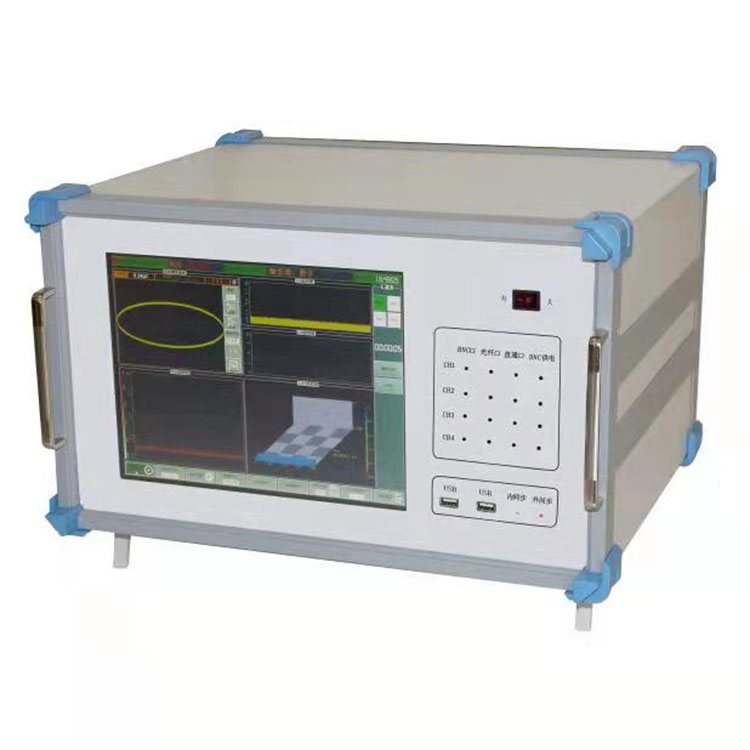
Weshine PD Analysis System Core Parameters:
Our flagship system, the Weshine PD-8000, is designed for the most demanding field and lab environments. Its parameters are benchmarked against the highest standards.
-
Measurement Frequency Range: 30 kHz to 1 GHz (Ultra-Wideband for superior sensitivity and noise rejection).
-
Minimum Detectable PD Level: < 0.1 pC (Picocoulomb) as per IEC 60270 calibration.
-
Integrated Sensors: Supports TEV, HFCT, UHF, and Acoustic sensors for multi-method analysis.
-
Certifications: Compliant with IEC 62478, IEEE C57.127, and CE certified for safety.
The following table compares key standard requirements with Weshine system capabilities:
| Standard / Guideline | Primary Focus | Weshine PD-8000 Compliance Feature |
|---|---|---|
| IEC 60270 | Conventional Electrical PD Measurement | Full-integrated calibrator & measurement chain for precise pC-level quantification. |
| IEEE 1291 | Acoustic Emission Testing for PD | Built-in AE sensor input with advanced pattern recognition software. |
| IEC 62478 | UHF PD Measurement for GIS | High-sensitivity UHF (300-1500 MHz) detection channel for Gas-Insulated Switchgear. |
Partial Discharge Test FAQ
-
Q: What is the acceptable PD level for a 33kV power transformer?
-
A: There is no single "safe" level for all equipment; it depends on the asset type, insulation system, and standard applied. For example, IEC 60076 may recommend trend-based evaluation. Weshine software provides historical trending and alarm thresholds based on industry guidelines to help you interpret site-specific data effectively.
-
-
Q: Can we perform online PD testing without shutting down equipment?
-
A: Absolutely. Online or continuous Partial Discharge Test monitoring is a core application. Weshine systems use non-intrusive sensors like TEV and HFCT that can be installed on live equipment, allowing for real-time condition assessment and early fault warning without costly downtime.
-
-
Q: How do we differentiate true PD from electrical noise during a test?
-
A: This is a critical challenge. Weshine analyzers employ advanced hardware filtering and software algorithms (like PRPD pattern analysis and phase-resolved mapping) to separate genuine PD pulses from common noise sources (e.g., radio, corona), ensuring your diagnostic conclusions are accurate and reliable.
-
Protecting your high-voltage infrastructure requires tools built on a foundation of standards and precision. Don't rely on guesswork. Choose the diagnostic clarity that comes with a Weshine partial discharge detection solution.
Contact us today to schedule a consultation and request a detailed technical specification sheet for our standards-compliant PD systems.