

What Are the Most Common Causes of Compressor Failure in an Air Cooled Screw Chiller
2026-07-13
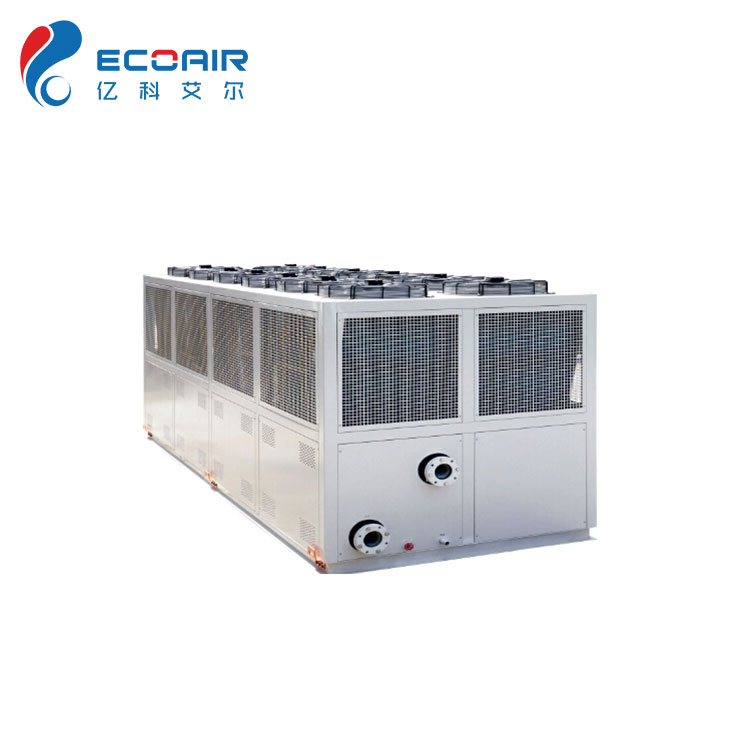
The compressor functions as the central processing unit of any Air Cooled Screw Chiller. When this critical component fails, the entire cooling system grinds to a halt, leading to production stoppages, spoiled inventory, and expensive emergency repairs. Understanding why compressors fail is not just technical knowledge—it is a financial imperative. At Ecoair, our decades of service data reveal that over 80% of premature compressor failures are preventable. This guide examines the primary failure mechanisms, offers diagnostic tables, and answers the most frequently asked questions about protecting your Air Cooled Screw Chiller investment.
1. Liquid Slugging (Refrigerant Floodback)
Liquid slugging occurs when liquid refrigerant returns to the compressor instead of superheated vapor. Because liquids are incompressible, the screw rotors attempt to compress a fluid that cannot be compressed, resulting in immediate mechanical shock. This bends rotor lobes, fractures bearing cages, and can snap the drive coupling within milliseconds.
Primary causes:
-
Oversized expansion valves allowing excessive refrigerant flow
-
Defective suction line accumulators
-
Low superheat settings (below 5°F)
-
Rapid load reductions without corresponding unloader response
2. Oil Starvation and Lubrication Breakdown
The twin-screw design relies on a continuous oil film to separate the male and female rotors. Without adequate lubrication, metal-to-metal contact generates frictional heat exceeding 400°F, which welds rotor surfaces together. Ecoair engineers emphasize that oil starvation accounts for nearly 30% of all warranty claims.
Common triggers:
-
Clogged oil filters (differential pressure > 25 PSI)
-
Failed oil pump or check valve
-
Incorrect oil viscosity (using R-134a oil in R-410a systems)
-
Extended operation below minimum oil pressure setpoint
3. Electrical Faults (Single-Phasing, Voltage Imbalance, and Phase Reversal)
Electrical issues are insidious because they damage compressors gradually. A voltage imbalance exceeding 2% causes negative-sequence currents that overheat motor windings. Single-phasing—where one power leg drops out—can burn out a compressor in under 30 seconds. Phase reversal, often occurring after facility rewiring, runs the compressor backward, destroying the non-reversible thrust bearings.
4. High Discharge Temperature (Superheat Runaway)
Discharge temperatures above 225°F break down the synthetic oil into carbonaceous sludge. This sludge plates the rotor housing, reduces clearances, and eventually seizes the moving parts. High discharge temperatures typically stem from:
-
Non-condensable gases (air or nitrogen) in the system
-
Fouled condenser coils (reducing heat rejection)
-
Low refrigerant charge causing suction superheat to spike
5. Frequent Cycling and Short-Cycling
Short-cycling—where the Air Cooled Screw Chiller starts and stops more than six times per hour—floods the motor windings with inrush current six to eight times higher than running current. This thermal stress degrades insulation and fatigues the starter contacts. The root cause is often an improperly sized buffer tank or a malfunctioning anti-recycle timer.
Diagnostic Reference Table: Failure Mode vs. Field Indicators
| Failure Mode | Primary Indicator | Secondary Indicator | Confirmation Test |
|---|---|---|---|
| Liquid Slugging | Suction superheat < 5°F | Fluctuating suction pressure | Inspect rotor tips for impact marks |
| Oil Starvation | Oil differential pressure > 25 PSI | Bearing temperature > 200°F | Oil analysis for wear metals (iron, copper) |
| Electrical Fault | Voltage imbalance > 2% | Motor winding resistance imbalance | Megger test (insulation resistance < 1 MΩ) |
| High Discharge Temp | Discharge temp > 225°F | Oil color dark brown/black | Acid test kit (total acid number > 0.5) |
| Short-Cycling | Starts per hour > 6 | Evaporator temperature swings | Check anti-recycle timer & buffer tank volume |
Preventive Maintenance Schedule (Recommended by Ecoair)
| Interval | Action | Target Parameter |
|---|---|---|
| Daily | Log suction/discharge pressures and temperatures | Superheat 8–12°F; Discharge 180–210°F |
| Weekly | Inspect sight glass for moisture/ bubbles | Clear, dry indicator; no flashing |
| Monthly | Clean condenser coil fins (compressed air/water) | Approach temperature < 10°F above ambient |
| Quarterly | Change oil filter and perform oil analysis | Wear metals below OEM thresholds |
| Annually | Full electrical inspection (megger, contactor, overloads) | Insulation > 2 MΩ; contactor pitting < 20% |
Air Cooled Screw Chiller FAQ – Common Questions from Facility Managers
Q1: How can I tell if my Air Cooled Screw Chiller is about to experience compressor failure before it actually stops?
A: The compressor telegraphs its distress through three early warning signals. First, a gradual increase in suction superheat (above 15°F) indicates a falling refrigerant charge, which forces the compressor to run hotter. Second, an unusual rattling or metallic knocking during startup suggests bearing wear or loose rotor clearances—this noise is distinctly different from normal screw chiller hum. Third, monitor the oil differential pressure; if it rises steadily over a week (e.g., from 18 PSI to 24 PSI), the oil filter is clogging, and starvation is imminent. Ecoair recommends installing continuous vibration sensors and oil debris detectors on any Air Cooled Screw Chiller running 24/7 operations. Do not wait for the high-pressure cutout to trip—that is a last-resort safeguard, not a diagnostic tool.
Q2: What is the single most cost-effective measure to extend compressor life in an existing Air Cooled Screw Chiller?
A: Based on Ecoair field data spanning 15 years, the most impactful measure is maintaining a clean condenser coil and proper refrigerant charge simultaneously. These two factors control discharge pressure and temperature. A fouled coil raises condensing pressure by 15–25 PSI, which forces the compressor to work harder and raises discharge temperature by 10–15°F. Combine that with a 10% undercharge, and the suction superheat climbs, further elevating discharge heat. The solution costs very little: monthly coil cleaning with a non-corrosive foaming cleaner and quarterly subcooling checks using a digital manifold gauge set. For every 10°F reduction in discharge temperature, you gain approximately 15% longer bearing life. This simple discipline adds 3–5 years to the compressor’s operational lifespan without any capital expenditure.
Q3: Is it safe to replace a failed compressor with a remanufactured unit, or should I always buy new OEM?
A: This depends entirely on who performs the remanufacturing. A reputable remanufacturer that replaces all bearings, re-grinds the rotor profiles, installs new shaft seals, and dynamically balances the rotor assembly can deliver a unit that performs at 97–99% of OEM efficiency—typically at 40–50% lower cost. However, avoid "exchange" units that simply clean and repaint old cores without metallurgical testing. Ecoair supplies both OEM-new and certified-remanufactured compressors; our reman program includes a full dynamometer test report and a 24-month warranty. The critical caveat: regardless of new or reman, you must flush the system, replace the liquid-line filter-drier, and install a new suction filter before starting the replacement compressor. Failing to clean the system guarantees that the new compressor will fail from the same contamination that killed its predecessor within 6–12 months.
Conclusion
Compressor failure in an Air Cooled Screw Chiller is rarely a random event—it is the predictable outcome of neglected superheat settings, contaminated oil, electrical imbalances, or inadequate condenser maintenance. Each of these causes has clear warning signs and proven countermeasures. By implementing a rigorous daily logging routine, monthly coil cleaning, quarterly oil analysis, and annual electrical audits, facility teams can reduce unplanned downtime by over 70%. Ecoair has built its reputation on helping customers transition from reactive firefighting to proactive reliability engineering for every Air Cooled Screw Chiller in their plants.
Contact Us – Do not wait for a catastrophic failure to disrupt your production schedule. Ecoair offers free on-site compressor health assessments, including vibration analysis, oil sampling, and electrical harmonic screening for your entire chiller fleet. Our service engineers are available 24/7 to design a customized maintenance plan tailored to your load profile and ambient conditions. Reach out through our website or call your regional Ecoair representative today—because every hour of unplanned downtime costs far more than a properly maintained compressor. Let us help you keep your Air Cooled Screw Chiller running reliably for decades, not just years.