

What are the Common Defects in Plastic Decorative Plates Produced by Vacuum Coating Machines
2026-05-27
When operating a Plastic Decorative Plate Vacuum Coating Machine, manufacturers often encounter surface flaws that compromise product aesthetics and durability. At Kerun, we have analyzed thousands of production runs to identify the most frequent defects. Understanding these issues is the first step toward achieving mirror-like, scratch-resistant finishes on decorative plastic components.
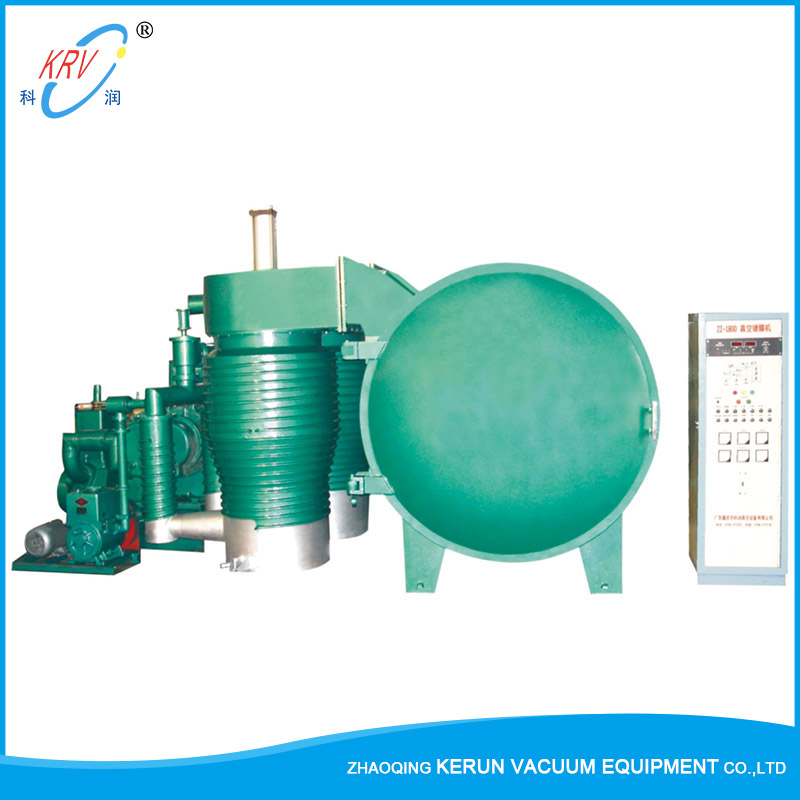
Primary Defects and Their Root Causes
The table below outlines the most common defects observed in vacuum-coated plastic decorative plates, along with their primary triggers.
| Defect Type | Visual Appearance | Typical Cause |
|---|---|---|
| Pinholes | Tiny, crater-like voids on the coated surface | Dust particles or outgassing from plastic substrate |
| Poor Adhesion | Peeling or flaking coating, especially at edges | Insufficient plasma pre-treatment or contaminated surface |
| Orange Peel | Uneven, bumpy texture resembling citrus skin | Incorrect evaporation rate or improper substrate temperature |
| Color Inconsistency | Visible shade variation across the plate | Non-uniform deposition thickness or unstable power supply |
| Cracking | Fine lines or web-like fractures on the decorative layer | Excessive coating thickness or thermal expansion mismatch |
Detailed Analysis of Frequent Failures
Kerun has found that pinholes account for nearly 40% of rejections in decorative plating. This defect occurs when residual moisture or trapped air escapes from the plastic during vacuum deposition. Another common challenge is poor adhesion on complex geometries, which often stems from inadequate surface activation before the coating cycle.
Plastic Decorative Plate Vacuum Coating Machine FAQ
Q1: Why do my plastic decorative plates show rainbow-like stains after vacuum coating?
A1: Rainbow stains typically indicate an uneven thickness of the metallic or oxide layer. This often happens when the Plastic Decorative Plate Vacuum Coating Machine’s rotating fixtures are not balanced, causing some plates to receive more coating material than others. Solutions include recalibrating the planetary rotation system and checking the uniformity of the evaporation source. Kerun recommends performing a thickness mapping test every 200 production cycles.
Q2: How can I prevent edge peeling on square decorative plates processed in a vacuum coating system?
A2: Edge peeling is directly linked to insufficient plasma cleaning on sharp corners. Increase the argon plasma treatment time to 3–5 minutes before deposition. Additionally, ensure that the Plastic Decorative Plate Vacuum Coating Machine’s bias voltage is set between 400V and 600V for optimal edge coverage. For high-aspect-ratio plates, Kerun advises using a multi-axis rotation fixture to expose all edges uniformly.
Q3: What is the maximum allowable coating thickness to avoid cracking on ABS plastic decorative plates?
A3: For ABS plastic, the total coating stack (including primer, metallic layer, and topcoat) should not exceed 1.2 microns. Cracking occurs when the Plastic Decorative Plate Vacuum Coating Machine deposits more than 0.3 microns of aluminum or chromium in a single cycle. Kerun’s systems incorporate real-time thickness monitors that automatically stop deposition when the optimal range (0.8–1.0 microns) is reached, eliminating post-production cracking.
Process Optimization Checklist
To minimize defects, Kerun recommends the following workflow:
-
Pre-treatment: Bake plastic plates at 50–60°C for 2 hours to remove moisture.
-
Cleaning: Use ultrasonic degreasing followed by ionized air blow-off.
-
Plasma Activation: Apply low-pressure argon plasma for 2–5 minutes.
-
Deposition: Maintain pressure below 5×10⁻³ Pa and use a stepped ramp-up rate.
-
Post-coating: Allow 30 minutes of cooling in vacuum before venting.
Final Word and Contact
Defect-free decorative plates require both a well-maintained Plastic Decorative Plate Vacuum Coating Machine and a scientifically controlled process. Kerun provides full technical audits to identify hidden variables in your production line.
Contact us today for a free root-cause analysis of your coating defects and a customized improvement plan.