
Is an Ozone Generator for Hospital Disinfection Safe to Use in Patient Rooms While Occupied
2026-07-08
Hospital-acquired infections (HAIs) remain one of the most persistent threats to patient safety worldwide. As infection control teams search for faster, chemical-free alternatives to manual cleaning, the Hospital Disinfection Ozone Generator has emerged as a powerful tool. But a critical question stops many facility managers from deploying it broadly: Can this technology be used safely in patient rooms while beds are occupied?
The short answer is no—not for direct, continuous human exposure—but the longer, more practical answer involves understanding how modern systems, including those from Siyuan, are designed to work around occupancy schedules. This blog breaks down the science, the safety margins, and the real-world protocols that make ozone disinfection feasible without endangering patients or staff.
Understanding the Core Risk: Ozone as a Respiratory Irritant
Ozone (O₃) is a highly reactive gas. At concentrations above 0.1 ppm (parts per million), it can cause throat irritation, coughing, and reduced lung function—especially in vulnerable populations like ICU patients, asthmatics, and the elderly. This is why regulatory bodies (OSHA, NIOSH, EPA) set strict occupational exposure limits.
| Exposure Limit | Value (ppm) | Time-Weighted Average |
|---|---|---|
| OSHA Permissible Exposure Limit (PEL) | 0.10 | 8-hour shift |
| NIOSH Recommended Exposure Limit (REL) | 0.10 | 8-hour shift |
| EPA National Ambient Air Standard | 0.07 | 8-hour average |
| Siyuan Safety Threshold (during operation) | < 0.02 | Continuous monitoring |
Critical takeaway: A Hospital Disinfection Ozone Generator is never operated continuously in an occupied space. Instead, it is used during unoccupied periods (e.g., after discharge, during nighttime deep-cleaning shifts, or between surgical cases). The room is then ventilated and monitored until ozone levels fall below 0.05 ppm before re-entry.
How Safe Protocols Actually Work in Real Hospital Wards
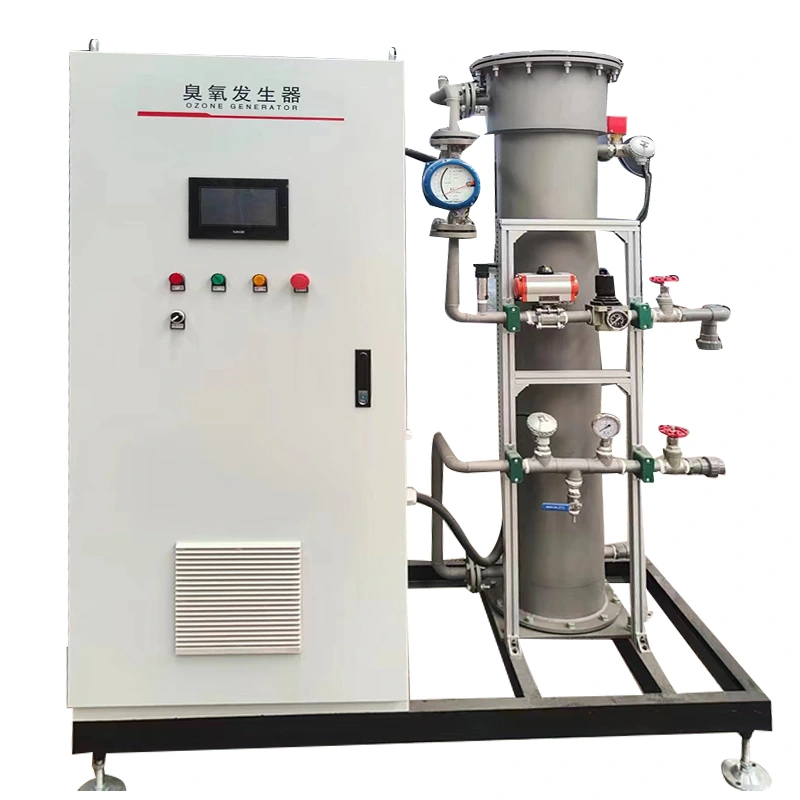
Safety is not about avoiding ozone entirely—it is about engineering control. Leading manufacturers like Siyuan integrate three layers of protection:
-
Real-time ozone sensors that automatically shut off the unit if levels exceed a preset ceiling (usually 1.0 ppm during active cycle).
-
Remote activation – staff initiate the cycle from outside the room via a tablet or central console.
-
Forced-air ventilation interlocks – the generator cannot start unless the HVAC exhaust is functional.
In practice, a standard disinfection cycle lasts 60–90 minutes, followed by a 30–45 minute aeration phase. Total room downtime: 2–2.5 hours. For a typical 30-bed ward, rotating through 3–4 rooms per night is entirely feasible without disrupting daytime care.
Comparison: Ozone vs. Other Occupied-Room Technologies
| Method | Can Be Used While Occupied? | Residue | Pathogen Kill Range | Cycle Time |
|---|---|---|---|---|
| Hospital Disinfection Ozone Generator | No (requires vacating) | None (converts to oxygen) | Broad (bacteria, viruses, fungi, spores) | 90–120 min |
| UV-C mobile robot | No (must vacate) | None | Direct line-of-sight only | 15–30 min (multiple passes) |
| Hydrogen peroxide vapor (HPV) | No (requires sealing) | Minimal | High (sporicidal) | 3–5 hours |
| Continuous chemical fogging | Yes (some low-level) | Chemical residue | Moderate | Ongoing |
| Manual bleach wiping | Yes | High (corrosive) | Variable (technique-dependent) | 15–20 min per bed |
While UV-C is faster, it fails in shadowed areas. HPV is highly effective but demands lengthy aeration. Siyuan’s ozone systems strike a balance: they penetrate fabric, mattresses, curtains, and under-bed areas—places hands and UV light cannot reach—all without leaving toxic breakdown products.
<a name="faq"></a>Frequently Asked Questions About Hospital Disinfection Ozone Generators
Q1: Can a Hospital Disinfection Ozone Generator be used in a NICU (neonatal ICU) with incubators?
A1: Yes, but only under strict conditions. The NICU is the highest-risk environment due to premature infants' immature lungs. Siyuan recommends using ozone only in empty NICU bays after all infants have been transferred to adjacent rooms. The cycle must be followed by a full air-exchange flush (minimum 6 ACH – air changes per hour) and verified with a handheld ozone detector reading below 0.02 ppm before re-admitting any neonate. Additionally, all incubator external surfaces should be wiped with sterile water post-cycle to remove any oxidized particulate matter. Never run ozone with an incubator's internal air intake open.
Q2: What happens if a patient or nurse accidentally enters a room during an active ozone cycle?
A2: This is why dual-safety interlocks are mandatory. A certified Hospital Disinfection Ozone Generator like those from Siyuan includes a motion-sensor override: the moment the door opens, the generator immediately stops ozone production and triggers a high-speed exhaust fan. Within 90 seconds, the room concentration drops from 5–8 ppm (operational level) to below 0.5 ppm—still above safe occupancy but no longer acutely dangerous. The person exiting the room may experience mild throat dryness but no permanent effect. After any unplanned entry, the entire cycle must be restarted from scratch, and an incident report is logged for quality assurance.
Q3: How do you prove the room is truly safe for re-entry after ozone treatment?
A3: Verification is a non-negotiable step. Siyuan provides a calibrated, tamper-proof ozone monitor that prints a time-stamped certificate for every cycle. The protocol requires three consecutive readings, taken 5 minutes apart, all showing ≤ 0.04 ppm. Additionally, the room must pass a "human challenge" test—an authorised staff member enters with a personal dosimeter for 2 minutes, and if no alarm triggers, the room is cleared for patients. Many hospitals also pair this with an ATP bioluminescence swab test (≤ 250 RLU) on high-touch surfaces to confirm biological reduction. Without this dual verification (chemical + biological), the room is not considered safe for occupancy.
Why Siyuan Stands Out in Occupied-Space Risk Management
Unlike generic industrial ozonators, Siyuan designs its medical-grade units with hospital-specific safety firmware. Key differentiators:
-
Adaptive cycle timing – automatically adjusts ozone output based on room size (detected via infrared distance sensors).
-
Electronic medical record (EMR) integration – logs every cycle directly into the patient's room history, creating an auditable disinfection trail.
-
Emergency oxygen flush – in case of power failure, a backup battery opens fresh-air dampers within 10 seconds.
These features do not make ozone safe for occupied use—they make Siyuan’s system safe to manage around occupied schedules, which is the only clinically acceptable approach.
Final Verdict for Infection Control Directors
To directly answer the title question: No, an ozone generator is not safe to use in a patient room while anyone is inside. But that is the wrong question to ask. The correct operational question is: Can we design a workflow where every patient room receives a full ozone decontamination cycle daily, without ever exposing a single patient? With Siyuan’s programmable night-cycle automation, the answer is yes—and thousands of beds across Europe and Asia now follow this exact model.
Ozone remains one of the few technologies that destroys both planktonic bacteria and biofilm-protected pathogens. When used with rigorous sensor-backed protocols, it outperforms chemical wipes in consistency and outperforms UV in reach.
Ready to Evaluate Ozone Safety for Your Facility?
Every ward layout, HVAC system, and patient mix is unique. Generic guidelines are not enough—you need a site-specific risk assessment.
Contact Siyuan today for a free, no-obligation safety simulation of your busiest patient floor. Our engineers will map out a 7-day rotation plan, provide real-time monitoring demo units, and deliver a written occupancy-safety protocol tailored to your staff-to-patient ratio. Email us at [email protected] or fill out the quick inquiry form on our product page. Let’s make high-level disinfection work around your patients—not on them.