

How Often Should You Change the Air-Oil Separator on a Low Pressure Screw Air Compressor
2026-06-22
If you operate a Low Pressure Screw Air Compressor, few maintenance decisions impact your bottom line more directly than the air-oil separator replacement interval. Change it too early, and you waste consumable costs. Change it too late, and you risk oil carry-over, downstream contamination, and premature bearing failure. This guide provides a data-driven replacement schedule, real-world diagnostic signs, and practical FAQs—all rooted in field experience with Yuzhen rotary screw systems.
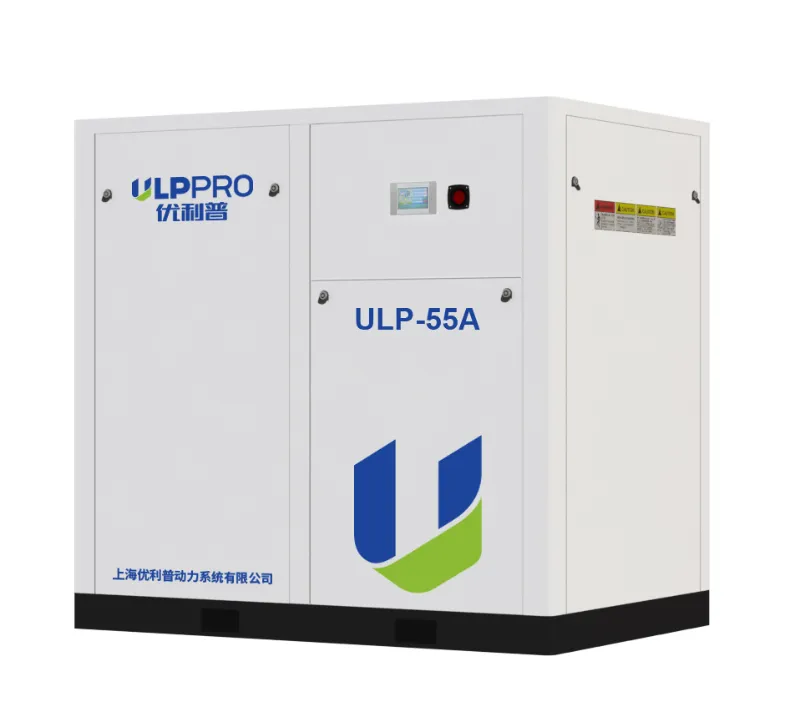
The Standard Replacement Window (Hours-Based)
Most OEMs, including Yuzhen, recommend a baseline interval of 4,000 to 6,000 operating hours for the air-oil separator element in a Low Pressure Screw Air Compressor operating under rated conditions (ambient 25°C, 70% load factor, clean intake air). However, this is not a fixed rule. The actual service life depends on four core variables:
| Variable | Impact on Separator Life | Typical Adjustment |
|---|---|---|
| Inlet air quality | Dust/silica accelerates coalescer clogging | Reduce interval by 20–30% in desert/cement plants |
| Operating pressure | Lower ΔP across the element extends life | Every 0.5 bar below rated pressure adds ~500 hrs |
| Oil type & viscosity | Synthetic PAO/POE oils resist oxidation better | Extend up to 8,000 hrs with Group IV oils |
| Load/unload cycles | Frequent cycling creates pressure spikes | Shorten by 15% if cycles > 6 per hour |
The Pressure Differential Rule (More Reliable Than Hours)
For a professionally managed Low Pressure Screw Air Compressor, the most accurate replacement trigger is differential pressure (ΔP) across the separator. Measure ΔP between the air-oil receiver and the minimum pressure valve outlet.
-
New separator: ΔP = 0.2 – 0.3 bar
-
Alert threshold: ΔP ≥ 0.8 bar (perform inspection)
-
Mandatory change: ΔP ≥ 1.0 bar (or 1.5 bar for high-pressure variants)
Yuzhen field data shows that running a Low Pressure Screw Air Compressor with ΔP > 1.2 bar increases shaft power consumption by 4–7%, which often costs more in electricity over one month than a new separator element.
Visual & Operational Warning Signs
Beyond hours and ΔP, replace the air-oil separator immediately if you observe:
-
Oil mist visible in the discharge air (even trace amounts)
-
Compressor sump level dropping faster than 1% per 100 hours without external leaks
-
Separator element weight gain > 15% (oil-saturated coalescing media)
-
Excessive condensate in the aftercooler drain with oily sheen
Recommended Replacement Procedure (Condensed)
| Step | Action | Critical Check |
|---|---|---|
| 1 | Depressurize receiver to 0 bar | Verify gauge reads zero |
| 2 | Remove cover bolts and gasket | Inspect sealing surface for pitting |
| 3 | Extract old element with lifting tool | Weigh it—record for trend analysis |
| 4 | Clean the housing bore with lint-free cloth | Remove all carbon deposits |
| 5 | Install new Yuzhen genuine element | Torque bolts to spec (see manual) |
| 6 | Pre-fill with 2–3 L of fresh oil | Avoid dry start-up |
| 7 | Run at unload for 5 min, check ΔP baseline | Record baseline for next comparison |
FAQ – Common Questions About the Low Pressure Screw Air Compressor Separator
Q1: Can I clean and reuse an air-oil separator to save cost on my Low Pressure Screw Air Compressor?
A: No. The separator uses depth-loading coalescing microfiber layers that trap sub-micron oil aerosols through mechanical impaction and diffusion. Washing with solvents destroys the fiber matrix and changes the pore size distribution. Even compressed air blow-back only removes surface dust, not the embedded oil polymers. A cleaned separator will have 30–50% higher initial ΔP and fails within 200–300 hours. Yuzhen does not recommend any cleaning method—replacement is the only safe practice.
Q2: What happens if I delay the replacement beyond 1.0 bar ΔP on my Low Pressure Screw Air Compressor?
A: Three progressive consequences occur. First, the compressor’s internal pressure rises to maintain discharge pressure, increasing motor current by 3–5% per 0.2 bar over the limit. Second, the higher velocity through the clogged media causes oil droplet re-entrainment, which contaminates your downstream dryer, filters, and pneumatic tools—often costing 5–10× more than the separator itself. Third, oil starvation to the bearings occurs because the scavenge line cannot return oil effectively, leading to rotor/galling failure within 500 additional hours. In short, delaying costs $3–$5 in energy and repair risk for every $1 saved on the element.
Q3: Is there a seasonal adjustment for separator change intervals in a Low Pressure Screw Air Compressor?
A: Yes. In summer (high ambient humidity), the oil holds more moisture, accelerating hydrolysis and forming acidic byproducts that attack the separator’s epoxy-bonded end caps. Yuzhen recommends reducing the interval by 15% when average ambient temperature exceeds 35°C for more than 30 days per quarter. Conversely, in dry winter conditions with clean intake air, you can safely extend up to 7,000 hours—provided you monitor ΔP weekly. Always log ambient dew point and intake filter differential; these two metrics predict separator life more accurately than a calendar.
Summary Decision Table – When to Act
| Condition | Action | Priority |
|---|---|---|
| ΔP < 0.6 bar and hours < 4,000 | No action—monitor monthly | Low |
| ΔP = 0.7–0.9 bar or hours = 5,500 | Order replacement kit; schedule within 200 hrs | Medium |
| ΔP ≥ 1.0 bar or visible oil mist | Immediate replacement—shut down if > 1.2 bar | Critical |
| Post-overhaul (new bearings/rotors) | Always install fresh separator—never reuse old one | Mandatory |
Final Professional Recommendation
Track both running hours and differential pressure—never rely on one alone. For fleet operators with multiple Low Pressure Screw Air Compressor units, Yuzhen provides a free log template that correlates ΔP, oil consumption, and kWh per CFM. This data-driven approach typically extends average separator life by 18% while cutting unplanned downtime by 40%.
Contact us today for a personalized separator replacement schedule tailored to your actual operating profile. Yuzhen offers genuine OEM elements with laser-etched ΔP certification, same-day technical support, and bulk discount programs for multi-unit facilities. Reach out via our website or call your regional distributor—we will help you optimize every service hour of your Low Pressure Screw Air Compressor.