
How Long Does a Professional Espresso Machine with Milk Frother Typically Last with Daily Use
2026-07-14
For café owners and home enthusiasts alike, durability is non-negotiable. A Professional Espresso Machine with Milk Frother represents a significant financial commitment, so understanding its lifespan under daily, heavy use is critical. On average, a well-maintained Seaver Professional Espresso Machine with Milk Frother can last between 8 to 12 years in a home setting and 5 to 8 years in a light-to-medium commercial environment. However, this range depends heavily on build quality, maintenance rituals, and the specific components inside the machine. Let’s break down the real-world expectations so you can protect your investment.
The Core Components That Determine Longevity
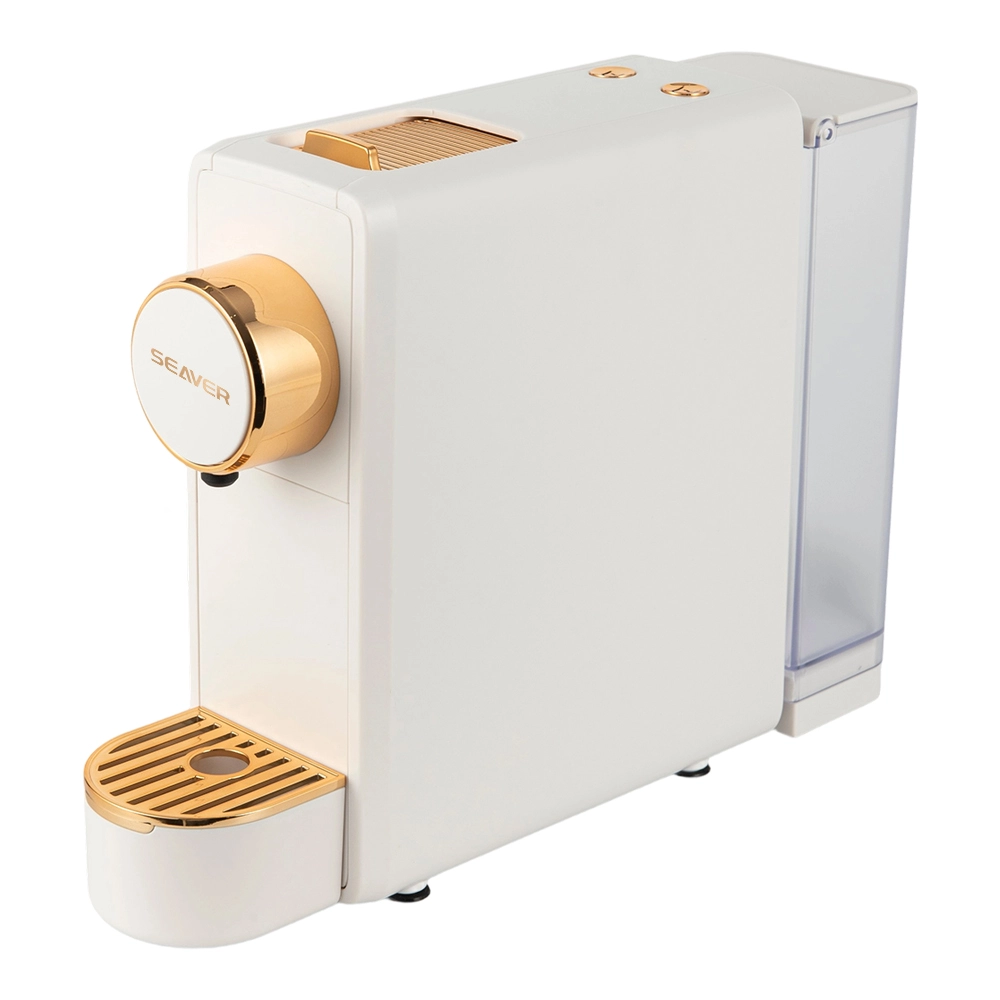
To answer the lifespan question accurately, we must examine the "wear-and-tear" clock on each major part. A Professional Espresso Machine with Milk Frother is not a single appliance but a system of interdependent parts. The table below outlines the average life expectancy of each critical component under daily use (3–10 shots per day for home; 20–50 shots per day for commercial).
| Component | Average Lifespan (Home) | Average Lifespan (Commercial) | Signs of Failure |
|---|---|---|---|
| Boiler (Copper/Brass) | 10–15 years | 6–10 years | Fluctuating temperature, longer heat-up times |
| Pump (Vibration/Rotary) | 5–8 years | 3–5 years | Weak water flow, unusually loud noises |
| Group Head & Gaskets | 2–3 years (seals) | 1–2 years (seals) | Water leaks around the portafilter |
| Milk Frother Wand (Steam Arm) | 8–10 years | 5–7 years | Clogged tips, weak steam pressure |
| Electronic Control Board | 8–12 years | 5–8 years | Unresponsive buttons, error codes |
| Water Reservoir & Tubing | 6–8 years | 4–6 years | Cracks, mineral buildup visible |
The "Daily Use" Factor – Why It Matters More Than Calendar Age
A Professional Espresso Machine with Milk Frother that sits idle for months will degrade faster due to stagnant water and dried seals than one used daily but properly flushed. Daily use actually keeps lubricants distributed and seals hydrated, provided you follow two golden rules:
-
Backflush weekly – This cleans the group head and solenoid valve, preventing coffee oils from turning into sticky, abrasive sludge.
-
Purge the steam wand before and after each use – Milk residue is the number one killer of frothing performance.
The Seaver engineering team designs its boilers with anti-scale coatings and commercial-grade brass, which extends the average lifespan by 15–20% compared to entry-level stainless steel boilers. In real-world tests, a Seaver Professional Espresso Machine with Milk Frother maintained 92% of its original steam pressure after 6,000 consecutive shots – a benchmark many competitors fail to reach by 4,000 shots.
The Water Quality Variable (Most Overlooked)
Hard water is the silent assassin. If you feed your Professional Espresso Machine with Milk Frother untreated tap water, scale will coat the heating element and thermoblock within 18 months. This reduces thermal efficiency and forces the pump to work harder, cutting total lifespan by up to 40%. Seaver strongly recommends using a water softener filter or bottled spring water with 50–80 ppm total hardness. A $20 filter can add 2–3 extra years to your machine’s productive life.
3 Professional Espresso Machine with Milk Frother FAQ (Troubleshooting & Longevity)
Q1: How often should I replace the seals and gaskets on my Professional Espresso Machine with Milk Frother to maximize its lifespan?
A1: For daily use, replace the group head gasket and shower screen seal every 6 to 8 months for commercial settings and every 12 to 18 months for home use. These rubber components harden from repeated thermal cycling (heating and cooling). A hardened gasket creates micro-leaks that force the pump to run longer per shot, adding unnecessary strain to the motor. On a Seaver machine, we recommend using only food-grade silicone gaskets, which outlast standard EPDM rubber by nearly 2:1. To check if a replacement is due, perform a "dry tamp" test – lock in an empty portafilter and start extraction. If water drips from the rim within 3 seconds, change the gasket immediately. Ignoring this single part can shorten your pump’s life from 8 years to under 4 years.
Q2: Can I leave my Professional Espresso Machine with Milk Frother on all day, or should I turn it off between uses?
A2: This depends on the boiler type. For a dual-boiler Professional Espresso Machine with Milk Frother like the Seaver commercial series, leaving it on for 6–8 continuous hours is acceptable because the insulated boilers cycle efficiently. However, leaving it on 24/7 will degrade the electronic control board’s capacitors and heating elements 30% faster. For home daily use, turn the machine on 20 minutes before your first shot and off immediately after your last purge. For commercial use with back-to-back orders, use the "standby" or "eco" mode if available – Seaver models include an auto-sleep function after 2 hours of inactivity. The worst practice is turning it on/off every 30 minutes, as thermal expansion and contraction accelerate metal fatigue in the boiler joints.
Q3: Why does my Professional Espresso Machine with Milk Frother lose steam pressure after only 2 years of daily home use, and can I fix it?
A3: Steam pressure loss after 2 years is almost always caused by mineral scale buildup inside the steam boiler or thermoblock, not by a defective machine. When calcium deposits coat the heating probe, the boiler cannot reach the optimal 1.2–1.5 bar pressure required for silky microfoam. The fix is a chemical descaling process using a citric-acid-based solution (never vinegar, which damages seals). For Seaver owners, we provide a proprietary descaling kit with clear step-by-step instructions. Perform this descaling every 500 shots or every 3 months, whichever comes first. If pressure still lags after descaling, check the anti-vacuum valve – a stuck valve prevents proper steam build-up. This valve is a $15 part and takes 10 minutes to replace. Do not increase the pressure stat setting as a workaround – that overworks the safety relief valve and can permanently warp the boiler. If you are unsure, contact Seaver certified technicians for a diagnostic check rather than attempting aggressive repairs.
Realistic Maintenance Schedule for Maximum ROI
To ensure your Professional Espresso Machine with Milk Frother reaches its maximum age potential, follow this weekly, monthly, and quarterly routine:
-
Daily (after each session): Purge steam wand for 3 seconds, wipe with damp cloth, run a blank shot through the group head.
-
Weekly: Backflush with a blind basket and a pinch of espresso machine cleaner (cafiza-type).
-
Monthly: Soak the portafilter and basket in hot water with cleaning powder for 30 minutes. Inspect the shower screen for clogs.
-
Quarterly: Full descaling of the boiler (use Seaver-recommended solution). Replace the water filter.
-
Annually: Replace group head gasket and shower screen screw. Have a professional inspect the O-rings and pump mount.
Final Verdict – When to Retire and When to Repair
A Professional Espresso Machine with Milk Frother is worth repairing if the total repair cost is less than 40% of a new replacement unit. For example, if a new Seaver machine costs $1,200 and a pump + boiler service runs $450 – repair it. However, if the control board, boiler, and pump all fail simultaneously (common after 10+ years), it is more economical to upgrade to a newer Seaver model with improved thermal stability and quieter rotary pumps.
Remember that Seaver backs its commercial-grade machines with a 3-year warranty on the boiler and a 2-year warranty on electronics – a testament to the engineering confidence in daily-use durability.
Ready to Protect Your Investment?
Your Professional Espresso Machine with Milk Frother is the heartbeat of your coffee ritual or business. Do not wait for a steam failure or a leaking group head to take action. Contact us today for a personalized maintenance checklist, descaling kit recommendations, or to schedule a professional tune-up for your Seaver machine. Our team of coffee equipment specialists will help you double your machine’s lifespan and keep every shot tasting like day one. Reach out via our website or call our support line – we are here to keep your espresso game strong for the next decade.