
How Durable Is an Apple Capsule House in Extreme Weather
2026-10-29
When severe storms, heavy snow, and intense heat become part of the planning process, durability is the first question every buyer asks. An Apple Capsule House from Ante is engineered as a all-weather structure rather than a fair-weather pod, and the difference shows in its frame, shell, and sealing systems. This guide breaks down how the Apple Capsule House performs under real environmental stress, what testing standards matter, and where the design limits sit.
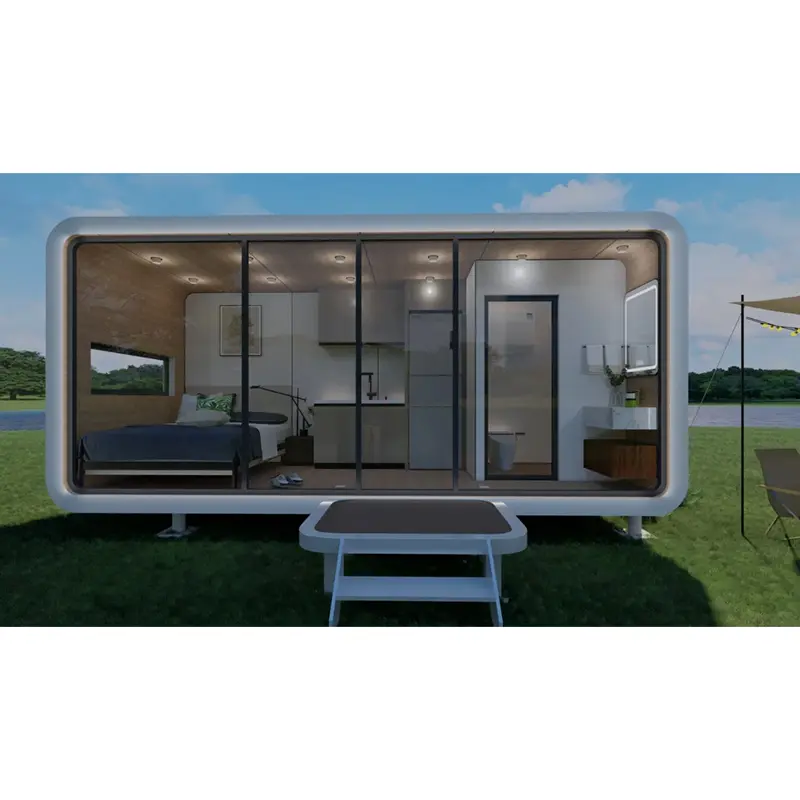
Ante builds the Apple Capsule House around a galvanized steel frame paired with a composite exterior shell. That combination delivers the structural rigidity needed for wind and snow loads while keeping the unit light enough for straightforward transport and placement. The table below summarizes the core specifications that determine weather performance.
| Performance Area | Ante Apple Capsule House Specification | Why It Matters |
|---|---|---|
| Wind resistance | Rated to 120 km/h (approx. Level 12 typhoon) | Withstands gales, typhoons, and exposed coastal sites |
| Snow load | Up to 1.5 kN/m² | Prevents roof deformation in heavy snowfall regions |
| Waterproofing | IP65-rated enclosure with multi-layer seals | Blocks driven rain and wind-blown moisture |
| Thermal range | -30°C to 50°C operating range | Maintains comfort across extreme cold and heat |
| Frame material | Hot-dip galvanized steel | Resists corrosion in humid and salty air |
| Shell | Aluminum composite with UV-stable coating | Limits fading, cracking, and hail impact damage |
Key Durability Advantages of the Apple Capsule House
-
Reinforced structural frame: The galvanized steel skeleton distributes wind and snow loads across the full footprint instead of concentrating stress at anchor points.
-
Sealed envelope: Continuous gaskets and precision-fitted panels stop water ingress during prolonged storms.
-
Corrosion protection: Hot-dip galvanizing and coated aluminum suit coastal and high-humidity environments.
-
Thermal insulation: Composite wall panels reduce heat transfer, lowering energy demand in both winter and summer.
-
Modular anchoring: Ante supplies site-specific foundation guidance so the unit stays fixed in high-wind zones.
How the Apple Capsule House Handles Specific Weather Events
| Weather Event | Ante Apple Capsule House Response | Practical Guidance |
|---|---|---|
| Typhoon or hurricane-force wind | 120 km/h rating with anchored base | Site in exposed areas only with approved foundation |
| Heavy snow | 1.5 kN/m² roof load capacity | Clear snow buildup above rated depth |
| Torrential rain | IP65 enclosure and drainage channels | Inspect seals annually |
| Extreme heat | UV-stable coating and insulated panels | Ventilate during peak sun exposure |
| Freezing temperatures | Insulated envelope rated to -30°C | Use supplementary heating in prolonged cold |
Frequently Asked Questions
Can an Apple Capsule House survive a typhoon?
Yes, the Ante Apple Capsule House carries a 120 km/h wind rating, and correct anchoring to a prepared foundation is essential for performance at that level.
Does snow damage the roof of an Apple Capsule House?
The roof is rated for 1.5 kN/m² of snow load, so typical seasonal snowfall is manageable, though snow should be cleared once it exceeds the rated depth.
How often does an Apple Capsule House need weather-related maintenance?
An annual inspection of seals, drainage, and anchor points keeps the Apple Capsule House performing to specification, with coastal installations benefiting from more frequent checks.
Is the Apple Capsule House suitable for coastal climates?
The galvanized frame and UV-stable coated shell resist salt air and humidity, making coastal placement viable with routine maintenance.
Durability ultimately depends on matching the structure to the site. Ante provides load calculations, foundation recommendations, and installation support so each Apple Capsule House is specified for its local climate rather than a generic average.
Contact us today to request a site assessment and confirm the right Apple Capsule House configuration for your climate and terrain.