

How Does Polyester Non-Woven Fabric Equipment Improve Production Efficiency and Product Quality?
2025-12-10
Polyester Non-Woven Fabric Equipment has become a pivotal component in the textile manufacturing industry, offering high-speed, precision, and consistent quality for non-woven fabric production. This equipment integrates advanced spinning, bonding, and finishing technologies, ensuring that polyester non-woven fabrics meet the strictest industrial standards while catering to diverse applications such as medical textiles, geotextiles, automotive interiors, and hygiene products.
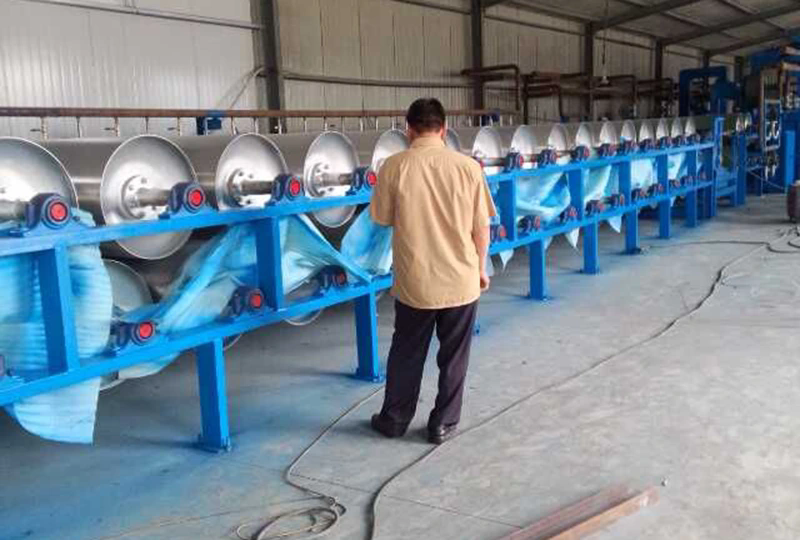
Understanding the Core Functions and Advantages of Polyester Non-Woven Fabric Equipment
Polyester Non-Woven Fabric Equipment is designed to streamline fabric production while maintaining high durability, consistency, and customization flexibility. The primary advantages of this equipment include:
-
High Production Efficiency: Automated feeding, bonding, and winding systems reduce manual labor and increase throughput.
-
Precision and Uniformity: Advanced control systems ensure uniform fiber distribution, resulting in fabrics with consistent thickness and strength.
-
Versatility in Application: Suitable for various industries, from hygiene products to industrial filtration and automotive interiors.
-
Energy Efficiency: Modern machinery consumes less energy due to optimized motor systems and efficient bonding methods.
Key Parameters of Polyester Non-Woven Fabric Equipment
| Parameter | Specification/Detail |
|---|---|
| Fabric Width | 1600–3200 mm |
| Production Speed | 20–120 m/min |
| Fiber Type Compatibility | 100% Polyester, Blends (Polyester + PP/PE) |
| Bonding Method | Thermal, Needle Punch, Hydroentanglement |
| Basis Weight Range | 10–300 g/m² |
| Control System | PLC with touch screen, automatic fault detection |
| Power Requirement | 45–120 kW |
| Working Temperature Range | 20–80°C |
| Finished Fabric Strength | 3.0–12.0 kN/m² |
This specification table demonstrates the equipment’s capability to handle a wide range of production scenarios while ensuring quality control and adaptability to market demands.
Common Question 1: How is Polyester Non-Woven Fabric Equipment Different from Traditional Fabric Machines?
Answer: Unlike traditional weaving or knitting machines, polyester non-woven fabric equipment eliminates the need for yarn interlacing, instead relying on bonding technologies like thermal, needle punch, or hydroentanglement. This allows for faster production speeds, greater fabric uniformity, and the ability to produce fabrics in diverse thicknesses and densities. Additionally, automation reduces labor costs and operational errors compared to conventional methods.
Common Question 2: How Can Manufacturers Optimize Maintenance for Non-Woven Fabric Equipment?
Answer: Regular preventive maintenance is critical. Key actions include monitoring roller alignment, cleaning fiber feeding units, lubricating moving parts, inspecting bonding systems, and updating software for PLC controls. Scheduling periodic checks ensures minimal downtime, consistent production quality, and extends equipment lifespan.
Exploring How Technological Innovations Enhance Polyester Non-Woven Fabric Equipment Performance
Technological progress has greatly influenced the capabilities of polyester non-woven fabric machinery. Innovations in automation, sensing, and bonding methods contribute to higher production efficiency, improved fabric quality, and lower operational costs.
Key Technological Features
-
Automated Fiber Feeding: Ensures even fiber distribution across the web, minimizing variations in fabric density.
-
Advanced Bonding Techniques: Modern equipment employs thermal bonding with precision-controlled temperature zones or hydroentanglement using high-pressure water jets, creating superior tensile strength and flexibility.
-
Integrated Monitoring Systems: PLC-controlled sensors track tension, temperature, speed, and fiber flow, allowing immediate adjustments for optimal fabric quality.
-
Energy-Saving Designs: Intelligent motors and energy recovery mechanisms reduce overall power consumption by up to 15–20%.
Industry Benefits of These Innovations
-
Improved Product Consistency: High precision systems maintain uniform thickness and basis weight.
-
Reduced Waste: Automated feedback loops detect fiber misalignment or defects early, reducing scrap rates.
-
Faster Time-to-Market: Automation and multi-functionality enable manufacturers to switch product specifications without extensive downtime.
Common Question 3: How Do Bonding Methods Impact Fabric Quality and Applications?
Answer: The bonding method determines tensile strength, flexibility, and absorption properties. Thermal bonding produces smooth, stiff fabrics suitable for hygiene products, while hydroentanglement generates softer, drapable fabrics ideal for medical and apparel applications. Needle punching adds robustness for industrial and geotextile applications. Selecting the right method ensures the fabric meets end-use requirements efficiently.
How Future Trends Shape the Polyester Non-Woven Fabric Equipment Market
The global demand for non-woven fabrics is rising, driven by medical, hygiene, automotive, and construction sectors. Understanding future trends helps manufacturers stay competitive.
Emerging Trends
-
Sustainability and Recyclability: Equipment is increasingly designed to handle recycled polyester, reducing environmental impact while complying with regulatory standards.
-
Smart Manufacturing: Integration of IoT-enabled sensors, predictive maintenance algorithms, and AI-driven process optimization is becoming standard.
-
Customization and Miniaturization: Demand for fabrics with precise specifications (thickness, weight, texture) encourages the development of versatile, modular machinery.
-
Global Market Expansion: Rapid industrialization in Asia-Pacific and emerging regions drives the adoption of advanced non-woven machinery.
Impact on Manufacturers
-
Reduced Operational Costs: Smart systems predict maintenance needs and optimize energy consumption.
-
Higher Market Responsiveness: Modular designs allow fast adaptation to market-specific fabric requirements.
-
Enhanced Sustainability Profile: Using recycled materials and energy-efficient systems appeals to eco-conscious clients and regulatory authorities.
Common Question 4: How Can Manufacturers Leverage Technology to Meet Increasing Demand?
Answer: By investing in automated and modular equipment, manufacturers can scale production quickly and efficiently. Real-time monitoring and predictive analytics minimize downtime and reduce defects. Additionally, adopting sustainable fibers and energy-efficient systems ensures compliance with environmental standards while meeting market demand.
How Haiming Polyester Non-Woven Fabric Equipment Sets Industry Standards
Haiming has established itself as a leading brand in polyester non-woven fabric machinery, offering state-of-the-art equipment that integrates precision engineering, automation, and sustainability. Haiming machines are designed to meet diverse production needs—from lightweight medical fabrics to heavy-duty industrial textiles—without compromising efficiency or quality.
Key Advantages of Haiming Equipment
-
Precision Control: Advanced PLC systems with real-time monitoring ensure uniform fiber distribution.
-
Versatile Production Capabilities: Supports multiple bonding methods, fabric widths, and weight ranges.
-
Energy and Resource Efficiency: Intelligent motors, optimized heating zones, and water recycling systems reduce operational costs.
-
Global Service and Support: Haiming provides training, technical support, and spare parts to ensure seamless production.
By adopting Haiming polyester non-woven fabric equipment, manufacturers can achieve higher production efficiency, consistent product quality, and sustainable operations, positioning themselves competitively in the global textile market.
For inquiries about Haiming’s products and to explore customized solutions, contact us to discuss how our advanced machinery can transform your non-woven fabric production process.