
How Does Glass Fiber Non-Woven Fabric Equipment Work?
2026-02-25
Article Summary:
This article delves into the working of Glass Fiber Non-Woven Fabric Equipment, its importance in various industries, and the benefits it offers for efficient fabric production. The article also addresses common challenges faced by manufacturers and provides solutions to improve productivity and reduce operational costs.
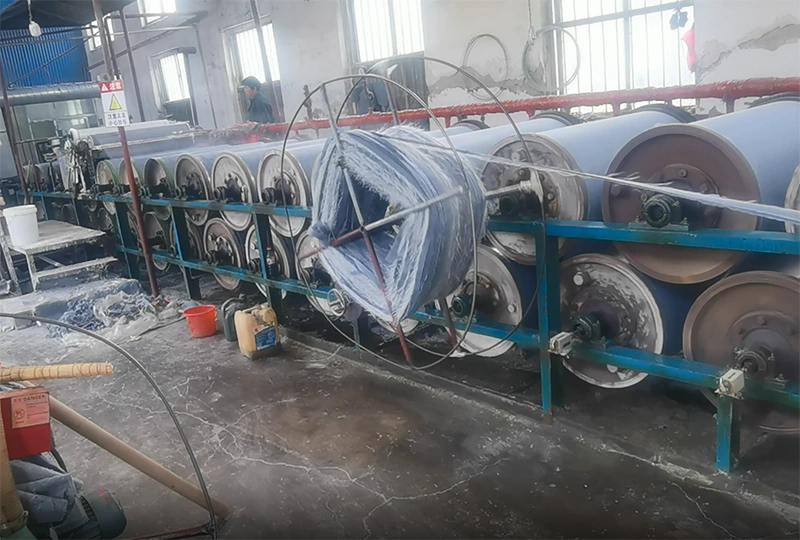
Table of Contents:
- Introduction to Glass Fiber Non-Woven Fabric Equipment
- The Importance of Non-Woven Fabrics in Modern Industries
- How Glass Fiber Non-Woven Fabric Equipment Works
- Key Features of Glass Fiber Non-Woven Fabric Machines
- Benefits of Using Glass Fiber Non-Woven Fabric Equipment
- Common Issues and How to Solve Them
- FAQs
- Conclusion
- Contact Us
1. Introduction to Glass Fiber Non-Woven Fabric Equipment
Non-woven fabrics are a key material in various sectors, such as automotive, healthcare, and construction. Glass fiber non-woven fabric equipment is integral in producing these high-performance materials. These machines work by bonding glass fibers together to create durable, versatile fabrics suitable for diverse industrial applications.
2. The Importance of Non-Woven Fabrics in Modern Industries
Non-woven fabrics have become indispensable in several industries, offering superior performance over traditional fabrics. These fabrics are used in:
- Automotive: For insulation, soundproofing, and filtration systems.
- Medical: In products like surgical gowns, masks, and wound care items.
- Construction: Used for roofing, insulation, and geotextiles.
Glass fiber non-woven fabrics are known for their high resistance to heat and strength, making them ideal for demanding environments.
3. How Glass Fiber Non-Woven Fabric Equipment Works
The equipment operates by forming glass fibers into a web-like structure, which is then bonded through various methods. The process includes:
- Carding: Fibers are opened and laid out in a web-like formation.
- Forming: The fibers are formed into sheets through air-laying or wet-laying methods.
- Bonding: Sheets are bonded using thermal, mechanical, or adhesive bonding techniques.
- Finishing: The fabric undergoes finishing processes, such as treatment for water resistance or flame retardance.
4. Key Features of Glass Fiber Non-Woven Fabric Machines
The following features are crucial when selecting Glass Fiber Non-Woven Fabric Equipment:
| Feature | Description |
|---|---|
| High Production Efficiency | Continuous operation with minimal downtime for increased output. |
| Durability | Built to last under high-stress, high-temperature environments. |
| Flexibility | Adaptable to different types of fabrics and industrial needs. |
| Energy Efficiency | Designed to reduce energy consumption and lower production costs. |
| Automation | Automated functions reduce labor costs and improve production accuracy. |
5. Benefits of Using Glass Fiber Non-Woven Fabric Equipment
The key benefits of using these machines include:
- Cost-Effective: Non-woven fabric production is cheaper compared to traditional methods.
- Customization: Fabrics can be tailored to meet specific requirements like thickness and strength.
- High Output: The equipment allows for large-scale production without compromising quality.
- Quality Control: Consistent and high-quality fabric production is ensured through precise machine control.
6. Common Issues and How to Solve Them
Despite their efficiency, these machines can face issues that may disrupt production. Some common problems and their solutions include:
| Issue | Solution |
|---|---|
| Fiber Breakage | Ensure correct tension settings during the carding process to prevent breakage. |
| Inconsistent Quality | Regular maintenance of bonding and calibration systems is necessary. |
| Overheating | Maintain proper machine ventilation and cleaning to prevent overheating. |
| Increased Downtime | Install automated monitoring systems to catch issues early and reduce downtime. |
7. FAQs
What is the lifespan of Glass Fiber Non-Woven Fabric Equipment?
With proper maintenance, these machines can last between 10 to 15 years, depending on the usage and care provided.
Can the equipment be customized for specific needs?
Yes, many manufacturers offer customization options to meet unique production requirements, such as specific fabric properties.
Which industries benefit from this equipment?
Industries such as automotive, medical, and construction benefit greatly from glass fiber non-woven fabric equipment due to its durability and versatility.
How do I maintain my equipment?
Regular cleaning, component checks, and adhering to the manufacturer's maintenance guidelines will help extend the lifespan of the equipment.
8. Conclusion
Glass Fiber Non-Woven Fabric Equipment is a powerful solution for industries requiring durable, high-performance fabrics. Its efficient production capabilities and flexibility make it a valuable asset to sectors such as automotive, healthcare, and construction. For more details about how these machines can benefit your manufacturing process, explore the products offered by Haiming.
9. Contact Us
Have questions about Glass Fiber Non-Woven Fabric Equipment? For more information or technical support, feel free to contact us. Our team at Haiming is ready to assist with any inquiries you may have. Get in touch today to enhance your production line!