

How Does an Automatic Sheet-Fed Cutter Plotter Compare to Manual Cutting Machines
2026-10-28
In today's fast-paced manufacturing and signage industries, choosing the right cutting equipment directly impacts productivity, precision, and profitability. An Automatic Sheet-Fed Cutter Plotter from SKYCUT represents a significant leap forward compared to traditional manual cutting machines, offering automation, consistency, and speed that manual methods simply cannot match. This comparison explores the key differences to help you make an informed decision for your production workflow.
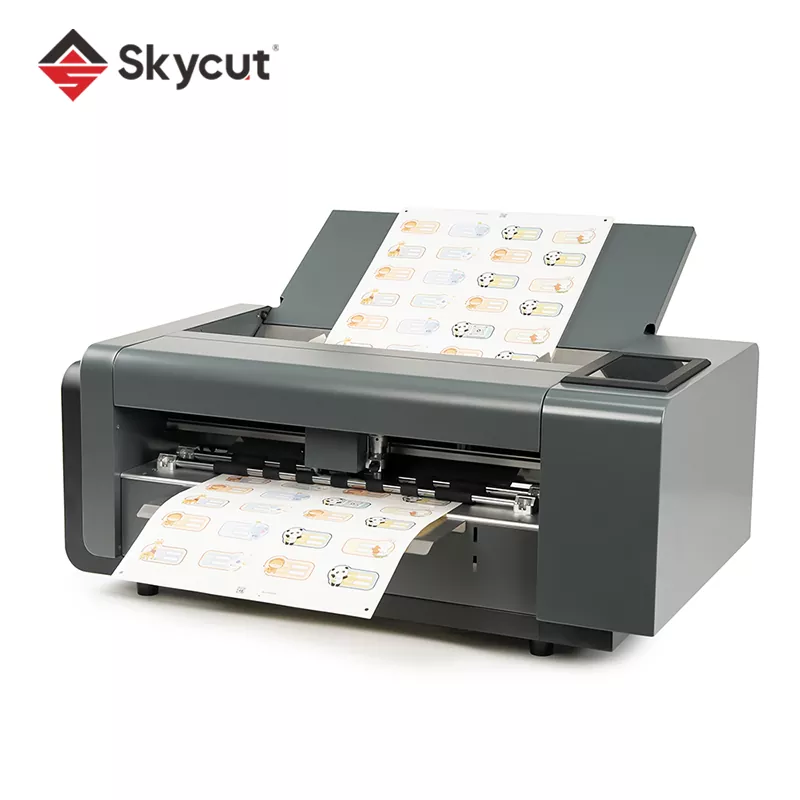
Core Differences at a Glance
The table below summarizes the fundamental distinctions between Automatic Sheet-Fed Cutter Plotter technology and manual cutting machines.
| Feature | Automatic Sheet-Fed Cutter Plotter (SKYCUT) | Manual Cutting Machines |
|---|---|---|
| Cutting Speed | High-speed automated processing | Slow, operator-dependent |
| Precision & Accuracy | Consistent ±0.1mm repeatability | Varies with operator skill |
| Labor Requirements | Minimal supervision required | Skilled operator essential |
| Material Handling | Automatic sheet feeding system | Manual loading and positioning |
| Production Volume | High-volume continuous output | Limited batch capacity |
| Operating Cost | Lower long-term cost per unit | Higher labor-related costs |
| Learning Curve | Intuitive software-driven operation | Requires extensive training |
Key Advantages of Automated Cutting
SKYCUT Automatic Sheet-Fed Cutter Plotter systems deliver measurable advantages across multiple production metrics:
-
Consistency: Digital control eliminates human error, ensuring every cut matches the design file precisely.
-
Throughput: Automated sheet feeding allows continuous operation, dramatically increasing daily output.
-
Material Efficiency: Optimized nesting software reduces waste by maximizing sheet utilization.
-
Scalability: Production capacity can be expanded without proportional increases in labor.
-
Safety: Operators remain clear of cutting areas, reducing workplace injury risks.
Where Manual Machines Still Fit
Manual cutting machines remain relevant for small workshops with low-volume, highly customized work. However, as order volumes grow and precision requirements tighten, the limitations of manual cutting—inconsistent quality, slower turnaround, and higher labor costs—become increasingly difficult to justify.
Return on Investment Analysis
| Cost Factor | Automatic Sheet-Fed Cutter Plotter | Manual Cutting Machine |
|---|---|---|
| Initial Investment | Higher upfront cost | Lower entry price |
| Labor Cost (Annual) | Significantly reduced | High due to skilled operators |
| Waste & Rework | Minimal | Higher rejection rates |
| Payback Period | Typically 12–24 months | Not applicable |
| Long-term ROI | Substantial | Limited |
For businesses processing consistent volumes, a SKYCUT Automatic Sheet-Fed Cutter Plotter typically pays for itself within two years through labor savings and waste reduction alone.
Frequently Asked Questions
Q: What materials can an Automatic Sheet-Fed Cutter Plotter handle?
A: An Automatic Sheet-Fed Cutter Plotter handles a wide range of sheet materials, including vinyl, PVC foam board, acrylic, cardboard, paper, textile, and composite signage substrates. SKYCUT systems are engineered with adjustable cutting force and tool configurations, allowing operators to switch between delicate films and rigid boards without compromising cut quality. This versatility makes a single machine suitable for diverse production requirements across signage, packaging, and display manufacturing.
Q: How difficult is it to train operators on an Automatic Sheet-Fed Cutter Plotter?
A: Training on an Automatic Sheet-Fed Cutter Plotter is generally straightforward because the workflow is software-driven. SKYCUT provides comprehensive onboarding, including machine operation, file preparation, and maintenance procedures. Most operators achieve productive proficiency within one to two weeks, compared to the months of hands-on experience required to master manual cutting with consistent quality. Intuitive interfaces and diagnostic alerts further reduce the learning curve.
Q: What maintenance does an Automatic Sheet-Fed Cutter Plotter require?
A: Routine maintenance for an Automatic Sheet-Fed Cutter Plotter is minimal and predictable. SKYCUT recommends daily cleaning of the cutting surface, weekly inspection of blades and tool holders, and periodic lubrication of mechanical components according to the maintenance schedule. Automated self-diagnostic features alert operators to potential issues before they cause downtime. Compared to manual machines, which depend heavily on operator technique and wear-prone hand tools, automated systems offer more stable long-term performance.
Conclusion
Investing in an Automatic Sheet-Fed Cutter Plotter from SKYCUT transforms production from a labor-intensive process into a streamlined, profitable operation. The combination of precision, speed, and reduced operating costs makes automated cutting the clear choice for businesses ready to scale.
Contact us today to request a personalized consultation and discover how a SKYCUT Automatic Sheet-Fed Cutter Plotter can elevate your production line.