

How Does a Plastic Decorative Plate Vacuum Coating Machine Compare to Traditional Spray Painting
2026-04-15
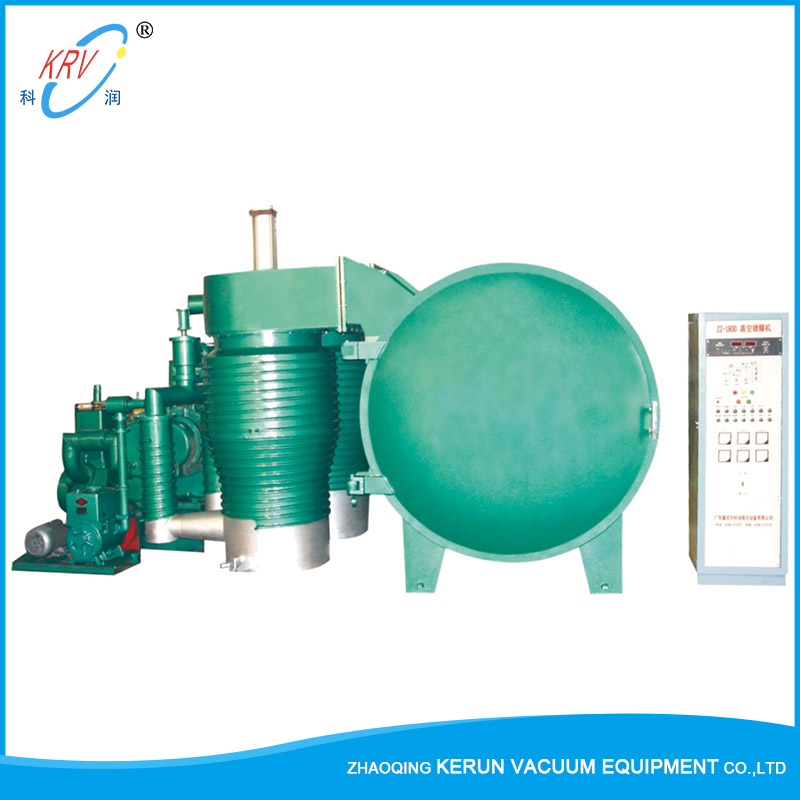
When manufacturers evaluate surface finishing options for decorative plastic components, the choice often comes down to two leading technologies: the Plastic Decorative Plate Vacuum Coating Machine and traditional spray painting. At Kerun, we have observed a steady industry shift toward vacuum deposition methods, driven by performance, sustainability, and cost considerations. This comparison examines both processes from a technical and commercial perspective.
Core Differences at a Glance
| Aspect | Plastic Decorative Plate Vacuum Coating Machine | Traditional Spray Painting |
|---|---|---|
| Coating thickness | 0.1–3 microns | 15–50 microns |
| Material utilization | Over 95% | 30–60% |
| VOC emissions | None | High |
| Adhesion mechanism | Physical vapor deposition | Mechanical bonding with primer |
| Finish uniformity | Nanometer-level precision | Dependent on operator skill |
| Curing time | Instant (in vacuum chamber) | Minutes to hours |
| Suitable for complex shapes | Excellent | Moderate |
Why Vacuum Coating Outperforms Conventional Spraying
The Plastic Decorative Plate Vacuum Coating Machine operates by evaporating metallic or ceramic materials in a high-vacuum environment. These particles condense directly onto the plastic substrate, forming a dense, pinhole-free layer. Traditional spray painting relies on atomized liquid coatings that can pool, drip, or miss recessed areas. Kerun machines consistently achieve mirror-like finishes on injection-molded plates without sanding or priming.
Spray painting typically requires multiple layers: primer, basecoat, and clearcoat. Each layer adds labor, drying time, and risk of dust contamination. In contrast, a single pass in a Plastic Decorative Plate Vacuum Coating Machine delivers a finished product ready for packaging. This eliminates VOC emissions, reduces floor space for drying racks, and lowers energy consumption per part.
Critical Comparison Points
-
Environmental compliance: Vacuum coating produces zero hazardous air pollutants. Spray booths require expensive filtration and solvent recovery systems.
-
Material savings: Over-spray in traditional methods wastes 40–70% of coating material. Vacuum deposition recovers unused material within the chamber.
-
Durability: Vacuum-deposited metal layers exhibit superior scratch resistance and UV stability compared to spray-applied metallic paints.
-
Production speed: Cycle times for a Plastic Decorative Plate Vacuum Coating Machine range from 5–20 minutes per batch, with no post-curing.
Plastic Decorative Plate Vacuum Coating Machine FAQ
What types of plastic can be processed in a Plastic Decorative Plate Vacuum Coating Machine?
Most engineering thermoplastics including ABS, PC, PS, PMMA, PP, and PET are compatible. However, some plastics like untreated polypropylene or polyethylene require surface pretreatment such as plasma activation or flame treatment to ensure adhesion. Kerun systems integrate plasma pre-treatment chambers to handle difficult substrates without external equipment. The key limitation is the plastic’s outgassing rate under vacuum; materials with high moisture or additive content may require pre-drying.
How does the initial investment and operating cost compare to spray painting lines
A professional Plastic Decorative Plate Vacuum Coating Machine typically requires a higher upfront investment (USD 80,000–300,000) compared to a basic spray booth (USD 15,000–50,000). However, operating costs reverse the equation. Vacuum systems consume less coating material (often 90% reduction), eliminate solvent purchases, and reduce labor by 60–70%. Over a three-year period processing 500,000 plates, vacuum coating achieves 40–50% lower total cost per part according to Kerun customer data. Energy costs are comparable or slightly higher for vacuum systems due to pumps, but this is offset by faster throughput.
Can a Plastic Decorative Plate Vacuum Coating Machine achieve the same color variety as spray painting
Yes, with additional flexibility. The machine deposits pure metals (aluminum, chrome, titanium) for brilliant metallic finishes that spray painting cannot replicate due to metal flake orientation issues. For colored finishes, Kerun machines combine reactive gas injection (nitrogen, oxygen) to create nitrides and oxides in any color. Multi-layer deposition allows gradient and two-tone effects in one cycle. However, spray painting retains an advantage for extremely low-gloss matte finishes or very thick textured coatings (above 50 microns). For 95% of decorative applications, including high-gloss, satin, and metallic, vacuum coating matches or exceeds spray painting results.
Final Verdict
The Plastic Decorative Plate Vacuum Coating Machine outperforms traditional spray painting in efficiency, environmental impact, coating uniformity, and long-term cost. Spray painting remains viable only for very low-volume production or extremely thick coating requirements. Kerun systems are engineered for manufacturers seeking to modernize their finishing lines while reducing waste and compliance burdens.
Contact us today to request a cost comparison analysis for your specific plastic decorative plates. Our engineering team provides free sample processing and cycle time estimates tailored to your production volume. Reach Kerun via the website contact form or call our technical sales department to schedule a vacuum coating demonstration.