

How Do You Select the Right Configuration for a Complete Modular Air Handling Unit in Commercial Buildings
2026-06-16
Selecting the right configuration for a Complete Modular Air Handling Unit in commercial buildings directly impacts energy efficiency, indoor air quality, and long-term operating costs. Ecoair provides engineered modular solutions tailored to retail spaces, offices, healthcare facilities, and mixed-use developments. This guide walks through key decision factors, configuration options, and practical examples to help facility managers and consulting engineers make informed choices.
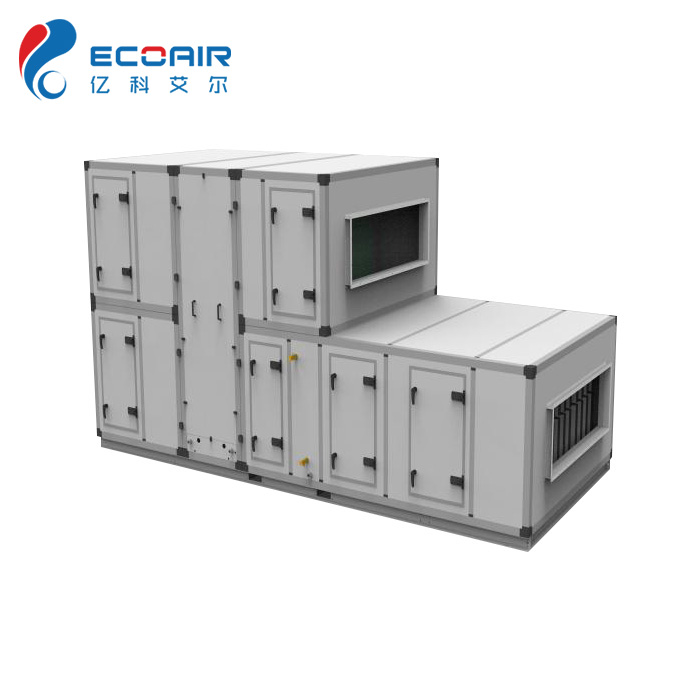
5 Critical Factors for Configuration
| Factor | Key Questions | Why It Matters |
|---|---|---|
| Airflow Capacity | What is the peak and average CFM requirement? | Oversizing wastes energy; undersizing causes comfort complaints. |
| Zoning Needs | How many independent zones must the unit serve? | Directly affects damper, sensor, and actuator layout. |
| Filtration Level | MERV 8, 13, or HEPA pre-filters? | Determines pressure drop and fan motor size. |
| Energy Recovery | Is an enthalpy wheel or run-around coil needed? | Reduces annual HVAC load by 30–50%. |
| Service Access | Which side requires maintenance clearance? | Impacts module arrangement and installation cost. |
Step-by-Step Selection Process
1. Define thermal load profiles
Use building simulation software or historical utility data. A Complete Modular Air Modular Air Handling Unit must handle morning warm-up, part-load operation, and extreme summer/winter peaks.
2. Choose module arrangement
-
Horizontal vs. vertical sections
-
Fan section placement (draw-through vs. blow-through)
-
Mixing box, heating/cooling coils, humidifier, sound attenuator
3. Integrate controls
Ecoair units come with native BACnet or Modbus controllers. Verify protocol compatibility with your building management system (BMS).
4. Plan for future expansion
Modular design allows adding a heat recovery section or higher-grade filters without replacing the entire unit.
Common Configuration Comparison
| Configuration Type | Best For | Typical Modules |
|---|---|---|
| Single-zone constant volume | Small retail, storage | Mixing + coil + fan + disposable filter |
| Multi-zone VAV | Open offices, schools | Mixing + pre-filter + bag filter + cooling + VFD fan + zoning dampers |
| 100% OA with energy recovery | Hospitals, labs, gyms | Intake louver + enthalpy wheel + heating/cooling + supply/return fans |
Complete Modular Air Handling Unit FAQ
Q1: How do I calculate the correct fan static pressure for a Complete Modular Air Handling Unit?
A: Sum the pressure drops of all installed components (coils, filters, dampers, sound attenuator) and add duct system pressure loss (supply + return). Multiply by a 10% safety factor. Ecoair provides certified pressure drop curves for each module, allowing precise fan selection without oversizing.
Q2: Can a Complete Modular Air Handling Unit support both chilled water and direct expansion cooling?
A: Yes. Most modular platforms, including Ecoair, accept either chilled water coils or DX coil inserts with thermostatic expansion valves. For hybrid operation, specify a dual-coil section with separate connections. Changeover can be done in the field if future cooling source changes are anticipated.
Q3: What documentation should I request to verify energy performance claims for a Complete Modular Air Handling Unit?
A: Ask for AHRI Certified performance data, fan array efficiency curves, and leakage test reports (AMCA Class A minimum). For energy recovery, request enthalpy wheel latent + sensible effectiveness at design face velocity. Ecoair publishes third-party verified test reports with every quotation.
Why Configuration Accuracy Matters
Incorrect configurations lead to:
-
Short cycling and humidity control problems
-
Premature filter and belt failures
-
Unreachable commissioning setpoints
Ecoair engineering team offers free configuration reviews using digital twin tools before manufacturing begins.
Ready to specify the right Complete Modular Air Handling Unit for your commercial project? Contact us today for a load-based configuration proposal and 3D BIM model of your selected arrangement.