

How Can Fouling and Maintenance Challenges Be Minimized in Centrifugal-Bladed Wiped Film Evaporator Operations
2026-03-25
Fouling and maintenance remain among the most persistent operational hurdles in thermal separation processes. For engineers and plant managers relying on Industrial Centrifugal-bladed Wiped Film Evaporator systems, these challenges directly translate to unplanned downtime, reduced throughput, and compromised product quality. Hongdinghua has specialized in addressing these pain points through precision engineering and process-intelligent design, ensuring that Industrial Centrifugal-bladed Wiped Film Evaporator units deliver sustained performance even under demanding conditions.
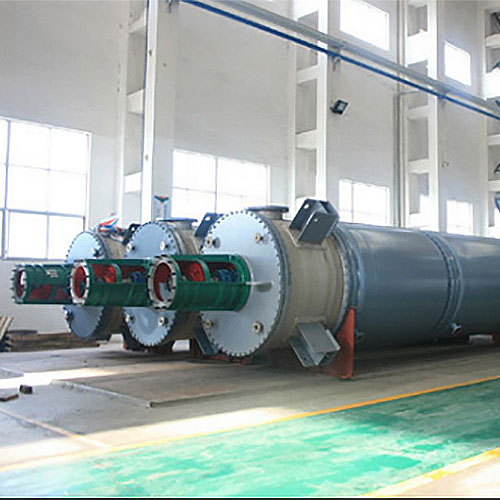
Understanding Fouling Mechanisms in Wiped Film Evaporators
Fouling in wiped film evaporators typically originates from three primary sources: thermal degradation of heat-sensitive materials, deposition of high-viscosity residues, and inadequate film uniformity. The unique advantage of a centrifugal-bladed design lies in its ability to generate high shear forces and maintain a thin, turbulent film, which inherently reduces the residence time and adhesion points where fouling begins. However, without strategic design interventions, even the most robust systems can experience performance degradation.
Key Design Strategies to Minimize Fouling
| Strategy | Implementation | Benefit |
|---|---|---|
| Precision Blade-to-Wall Clearance | Maintain consistent micron-level gap | Eliminates localized hotspots and residue buildup |
| Optimized Rotor Speed Control | Variable frequency drive for blade tip velocity | Balances shear force with minimal mechanical wear |
| Surface Finish Enhancement | Electropolished internal surfaces (Ra ≤ 0.4 μm) | Reduces nucleation sites for deposit formation |
| Modular Blade Assembly | Quick-release blade cartridges | Enables rapid inspection and cleaning cycles |
Hongdinghua integrates these features as standard in its Industrial Centrifugal-bladed Wiped Film Evaporator systems, recognizing that fouling prevention begins with mechanical precision rather than reactive maintenance.
Proactive Maintenance Framework
A maintenance strategy built around predictive indicators rather than fixed intervals yields significant reductions in unplanned downtime. The table below outlines a tiered approach:
| Maintenance Level | Activities | Frequency | Key Metric |
|---|---|---|---|
| Operational Monitoring | Vibration analysis, temperature profiling, pressure differential | Continuous | Real-time deviation >5% triggers inspection |
| Preventive Servicing | Blade alignment check, seal integrity test, lubrication | 800–1,200 operating hours | Torque consistency ±3% |
| Major Overhaul | Rotor disassembly, bearing replacement, surface recertification | 6,000–8,000 hours or annually | OEM clearance specifications |
By adopting this structured approach, operators can extend mean time between failures (MTBF) by up to 40%, a benchmark consistently achieved across Hongdinghua installations.
Industrial Centrifugal-bladed Wiped Film Evaporator FAQ Common Questions
What causes uneven film distribution in centrifugal-bladed wiped film evaporators and how does it accelerate fouling
Uneven film distribution is most often caused by blade tip misalignment, rotor imbalance, or variations in feed viscosity. When the film thickness varies circumferentially, thinner regions experience localized overheating, accelerating thermal degradation and carbonization, while thicker zones suffer from reduced heat transfer efficiency. This unevenness creates preferential fouling paths that rapidly compound into widespread deposits. Hongdinghua addresses this through precision-machined blade assemblies with self-adjusting hinge mechanisms that maintain consistent wall contact even under fluctuating feed conditions, ensuring uniform film thickness across the entire evaporation surface.
How often should blade assemblies be replaced in high-viscosity service applications
Blade assembly replacement intervals are not governed solely by runtime but by a combination of process aggressiveness, feed composition, and operational parameters. In high-viscosity applications exceeding 10,000 cP, blade tip wear accelerates due to increased shear forces. Hongdinghua recommends a condition-based approach: inspect blade edges every 1,500 operating hours using borescopic imaging, and replace when tip clearance exceeds design specification by 0.1 mm or when edge deformation is visually evident. Under standard operating conditions, blade assemblies typically achieve 4,000 to 6,000 hours of service life. For highly abrasive or thermally unstable feeds, upgrading to hardened stainless steel or Stellite-coated blade options can extend life by a factor of two or more.
Can cleaning-in-place be effectively performed on centrifugal-bladed wiped film evaporators without full disassembly
Yes, but the effectiveness depends entirely on evaporator geometry and solvent selection. Hongdinghua engineered its Industrial Centrifugal-bladed Wiped Film Evaporator series with integrated spray nozzles and optimized fluid distribution channels that support CIP protocols. For effective CIP, operators should employ a three-stage sequence: a heated solvent flush to dissolve soluble residues, followed by a caustic recirculation phase (typically 2–4 hours at elevated temperature), and a final rinsing step with demineralized water. Critical success factors include maintaining minimum flow rates of 2.5 m/s within the evaporator body and ensuring the rotor operates at reduced speed during cleaning to distribute cleaning agents uniformly. For heavily carbonized deposits, supplemental manual inspection through quick-access ports remains advisable, though full disassembly is rarely required more than once per production campaign.
Operational Best Practices Summary
Beyond hardware design, operational discipline plays a decisive role in minimizing fouling and maintenance demands. Key practices include:
-
Controlled Feed Pre-treatment: Filtration to 50–100 μm removes particulate matter that can act as nucleation sites for deposits.
-
Gradual Start-up Protocols: Preheating the evaporator body to within 10–15°C of operating temperature before introducing feed prevents thermal shock and uneven film formation.
-
Data-driven Cleaning Triggers: Establishing threshold values for heat transfer coefficient decline (typically 15–20% below baseline) ensures cleaning occurs before productivity is compromised.
Hongdinghua supports clients with detailed standard operating procedures and remote monitoring capabilities that translate raw process data into actionable maintenance intelligence.
Conclusion
Minimizing fouling and maintenance challenges in Industrial Centrifugal-bladed Wiped Film Evaporator operations requires a convergence of precision engineering, proactive maintenance frameworks, and process-aware operational practices. By integrating advanced blade designs, optimized surface finishes, and condition-based maintenance protocols, facilities can achieve sustained thermal efficiency and extended equipment lifespan.
For tailored recommendations specific to your process conditions or to schedule a technical consultation, contact Hongdinghua today to discuss how our engineered solutions can enhance the reliability and performance of your evaporation systems.