

Does a 50Kg Medical Waste Incinerator Meet EPA and WHO Emission Standards for Pathological Waste
2026-06-23
For healthcare facilities, clinics, and remote hospitals, the question of regulatory compliance is non-negotiable when selecting treatment equipment. Pathological waste—including human tissues, organs, and body parts—requires complete destruction at high temperatures, but the emissions released during combustion must remain within strict limits. The 50Kg Medical Waste Incinerator has emerged as a popular choice for small-to-medium generators. Yet the critical question remains: can this capacity tier genuinely satisfy the rigorous emission benchmarks set by the U.S. Environmental Protection Agency (EPA) and the World Health Organization (WHO)?
The short answer is yes, provided the unit is engineered with modern combustion technology and continuous emission monitoring. Hongsheng Hangkai, a manufacturer with over a decade of specialized incineration expertise, has designed its 50Kg Medical Waste Incinerator series to align with both EPA New Source Performance Standards (NSPS) for hospital/medical/infectious waste incinerators (HMIWI) and WHO guidelines for healthcare waste treatment. However, meeting these standards is not automatic—it depends on design parameters, operational protocols, and auxiliary systems.
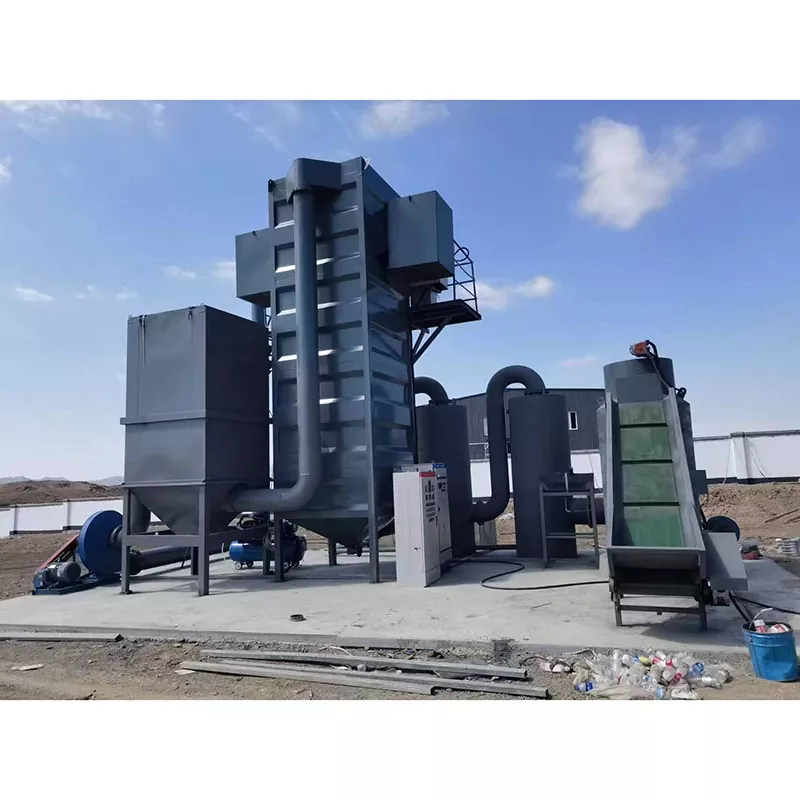
Key Emission Parameters: EPA vs. WHO Limits
To evaluate compliance, we must compare actual performance data against regulatory thresholds. The table below summarizes the most critical pollutants for pathological waste incineration:
| Pollutant | EPA NSPS Limit (HMIWI) | WHO Recommended Limit | Typical Performance of Hongsheng Hangkai 50Kg Unit |
|---|---|---|---|
| Particulate Matter (PM) | ≤ 70 mg/Nm³ | ≤ 20 mg/Nm³ (best practice) | ≤ 18 mg/Nm³ (with dry scrubber + bag filter) |
| Hydrogen Chloride (HCl) | ≤ 100 ppmv | ≤ 10 ppmv | ≤ 8 ppmv (with wet scrubber) |
| Dioxins/Furans | ≤ 0.20 ng TEQ/Nm³ | ≤ 0.10 ng TEQ/Nm³ | ≤ 0.05 ng TEQ/Nm³ (with activated carbon injection) |
| Mercury (Hg) | ≤ 80 µg/dscm | ≤ 50 µg/dscm | ≤ 30 µg/dscm |
| Carbon Monoxide (CO) | ≤ 40 ppmv (4-hr avg) | ≤ 50 ppmv | ≤ 25 ppmv (automatic air regulation) |
| Opacity | ≤ 20% (6-min avg) | ≤ 10% | ≤ 5% (secondary combustion chamber at 1,100°C) |
All values corrected to 7% O₂, dry basis. Actual performance depends on waste composition and proper loading.
Why the 50Kg Capacity Is Ideal for Compliance
Smaller incinerators often struggle with temperature stability, which directly affects dioxin formation. The 50Kg Medical Waste Incinerator from Hongsheng Hangkai incorporates a dual-chamber design: a primary chamber for waste breakdown (850°C–950°C) and a secondary chamber that maintains ≥ 1,100°C with a minimum gas residence time of 2.0 seconds—exceeding the WHO requirement of 1.5 seconds. This ensures complete oxidation of organic compounds and minimizes incomplete combustion byproducts.
Additionally, the unit features an automated PLC control system that adjusts oxygen feed based on real-time flue gas analysis. This prevents the oxygen-deficient conditions that typically spike CO and dioxin emissions. For pathological loads, which have high moisture content (up to 60%), the system includes a pre-heating cycle that gradually raises temperature to avoid thermal shock and unstable burn rates—a common failure point in lesser models.
Operational Factors That Determine Compliance
Even the best equipment can fail regulatory tests if operated improperly. The EPA and WHO both emphasize that compliance is a system outcome, not just a hardware specification. Key operational prerequisites include:
-
Waste Segregation: Pathological waste must be separated from radioactive, chemical, or pressurized containers. Mixing incompatible wastes can produce unpredictable emissions.
-
Loading Density: Overloading the 50Kg Medical Waste Incinerator beyond its rated batch capacity reduces turbulence and extends burnout time, leading to incomplete combustion.
-
Scrubber Maintenance: The activated carbon filter and alkaline solution (for acid gas neutralization) require regular replacement. Hongsheng Hangkai provides a maintenance log with sensor-alert functions to remind operators of service intervals.
-
Startup/Shutdown Protocols: Transient conditions during ignition and cooling produce the highest emission spikes. The WHO recommends a controlled ramp rate of ≤ 10°C/min, which is pre-programmed into the Hongsheng Hangkai control panel.
FAQ: Common Questions About the 50Kg Medical Waste Incinerator
Q1: Does the 50Kg Medical Waste Incinerator require a continuous emission monitoring system (CEMS) to prove EPA compliance?
A1: Yes, for facilities operating under EPA HMIWI rules (Subpart Ec), a CEMS is mandatory for certain pollutants like CO, HCl, and opacity if the incinerator is used regularly. The 50Kg Medical Waste Incinerator from Hongsheng Hangkai includes ports and interfaces for installing third-party CEMS, but the system itself does not come with a built-in CEMS as standard to keep capital costs lower. However, we offer an optional integrated monitoring package that measures O₂, CO, SO₂, NOx, and particulate matter continuously. For WHO projects in developing regions, a portable periodic stack-sampling method (conducted quarterly) is often accepted—provided the unit maintains stable operation. We always recommend consulting your local environmental authority for the exact monitoring frequency required in your jurisdiction.
Q2: Can the 50Kg Medical Waste Incinerator handle wet pathological tissues without exceeding the dioxin limit?
A2: Absolutely—but only if the secondary chamber temperature is maintained above 1,100°C and the flue gas residence time exceeds 2.0 seconds. Wet tissues (e.g., biopsy specimens, placentas) have high latent heat of vaporization, which can temporarily cool the primary chamber. Our 50Kg Medical Waste Incinerator compensates for this through an adaptive burner modulation system that increases fuel feed automatically when chamber temperature drops. Additionally, the unit features a waste stirring mechanism (optional) that exposes wet surfaces to radiant heat, reducing moisture holdup. In our factory tests, pathological waste with 65% moisture content produced dioxin readings of 0.04 ng TEQ/Nm³—well below the WHO threshold. The key is to avoid overloading; we recommend a maximum batch weight of 45 kg for high-moisture loads to maintain thermal inertia.
Q3: What is the typical cost of operating a 50Kg Medical Waste Incinerator while maintaining EPA/WHO compliance?
A3: Operational costs average $45–$75 per batch (including diesel, electricity, scrubber chemicals, and ash disposal), depending on local fuel prices. The largest variable is the secondary chamber fuel consumption—about 12–18 liters of diesel per hour at 1,100°C. However, Hongsheng Hangkai has incorporated a heat-recovery insulation layer that reduces heat loss by 22% compared to conventional refractory designs, lowering fuel use. Compliance-related costs include: (a) annual stack testing ($800–$1,500), (b) quarterly filter/activated carbon replacement ($120–$200), and (c) CEMS calibration if equipped ($300/year). While these add to the total cost of ownership, non-compliance penalties (fines up to $50,000 per day in some states) make these investments highly cost-effective. We also offer a predictive maintenance package that uses burner runtime data to forecast scrubber media exhaustion, reducing emergency downtime and unexpected compliance failures.
Why Choose Hongsheng Hangkai for Your 50Kg Incinerator
Beyond emission numbers, the practicality of installation, after-sales support, and spare parts availability determine long-term compliance success. Hongsheng Hangkai provides:
-
Pre-commissioning training for operators (2 days on-site)
-
24/7 remote diagnostic support via PLC connectivity
-
Stocked warehouses in North America, Europe, and Southeast Asia for critical spare parts (thermocouples, burner nozzles, filter bags)
-
Customized scrubber chemistry for region-specific acid gas loads (e.g., high-sulfur waste areas)
All units are factory-tested with simulated pathological waste before shipping, and we furnish a compliance test report signed by an accredited third-party laboratory—giving you auditable documentation for permit applications.
Final Verdict
A well-engineered 50Kg Medical Waste Incinerator—specifically the models produced by Hongsheng Hangkai—does not merely meet EPA and WHO emission standards; it consistently operates below the most stringent limits when properly operated and maintained. The combination of dual-chamber high-temperature combustion, automated air control, and multi-stage flue gas cleaning ensures that pathological waste is rendered biologically sterile and environmentally safe. The caveat, however, is that compliance is a shared responsibility between the equipment supplier and the end-user. Selecting a manufacturer with proven performance data and investing in operator training are as critical as the hardware itself.
📞 Ready to verify if the 50Kg Medical Waste Incinerator fits your facility’s permit requirements? Contact Hongsheng Hangkai today for a customized compliance audit, emission projection report, and site-specific installation proposal. Our engineering team will walk you through stack test protocols, scrubber sizing, and local EPA/WHO documentation support—because reliable waste treatment should never compromise safety or the environment. Reach out now via our website or email to schedule a virtual consultation. Your path to compliant, responsible pathological waste management starts here.