
Can a Stainless Steel Desiccator Cabinet Maintain Ultralow Humidity Without Frequent Desiccant Regeneration
2026-04-17
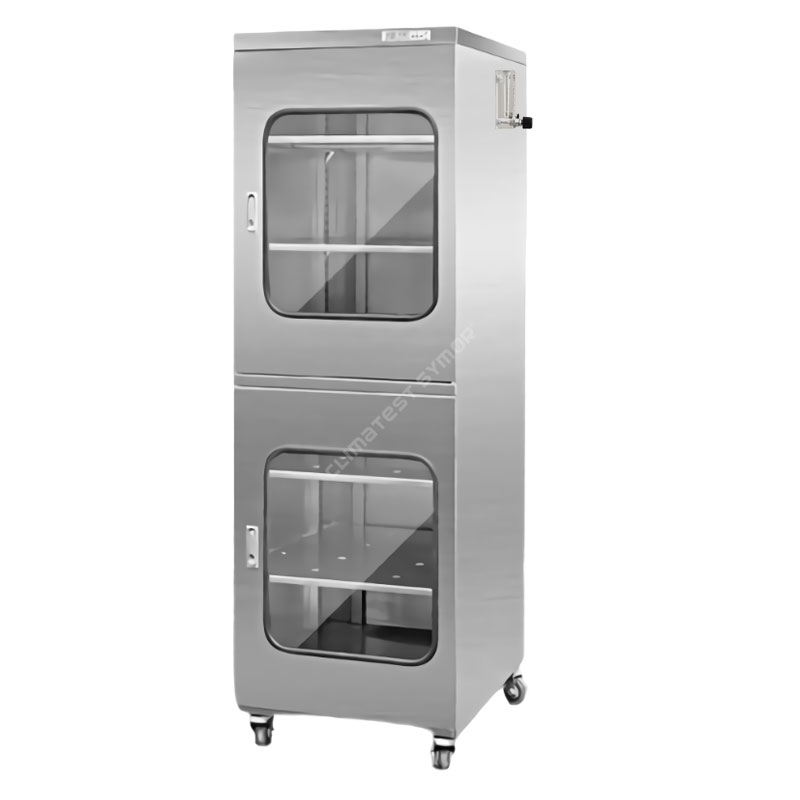
Moisture control is a critical challenge in laboratories, pharmaceutical storage, and electronic manufacturing. For professionals seeking reliable long-term protection against humidity, the Stainless Steel Desiccator Cabinet has emerged as a preferred solution. A common concern is whether such equipment can sustain ultralow humidity levels—typically below 10% RH—without requiring constant desiccant regeneration. Symor has engineered advanced Stainless Steel Desiccator Cabinet systems that address this question with proven performance.
How Ultralow Humidity Is Achieved and Sustained
The ability to maintain ultralow humidity without frequent regeneration depends on three factors: cabinet airtightness, desiccant quality, and monitoring precision. A well-designed Stainless Steel Desiccator Cabinet uses welded seams and silicone gaskets to minimize external moisture ingress. Unlike plastic alternatives, stainless steel does not outgas or absorb water, preserving internal stability.
Symor integrates high-capacity molecular sieve desiccants that absorb moisture more efficiently than silica gel. Regeneration intervals extend from days to months based on usage patterns. The table below compares common desiccant types in a Stainless Steel Desiccator Cabinet:
| Desiccant Type | Typical Regeneration Frequency | Moisture Capacity (g/kg) | Best Application |
|---|---|---|---|
| Silica Gel | Every 3-7 days | 150-200 | General purpose |
| Molecular Sieve (3A/4A) | Every 4-8 weeks | 220-280 | Ultralow humidity (<5% RH) |
| Activated Alumina | Every 2-4 weeks | 180-240 | High-temperature stability |
| Symor Hybrid System | Every 6-10 weeks | 300-350 | Continuous low-maintenance operation |
Why Regeneration Frequency Is Reduced
Symor cabinets feature a dual-chamber design that isolates saturated desiccant from active material. When humidity sensors detect a rise above 8% RH, a manual valve redirects airflow to a secondary chamber. This allows the primary desiccant to regenerate offline without opening the cabinet. Users report regeneration intervals of 6 to 10 weeks even with daily access.
Stainless Steel Desiccator Cabinet FAQ
Question 1: How often does a stainless steel desiccator cabinet need desiccant regeneration under normal laboratory conditions
Answer: Under typical conditions (25°C, 50% ambient RH, opened 5 times per day), a Stainless Steel Desiccator Cabinet with Symor molecular sieve technology requires regeneration every 6 to 8 weeks. If the cabinet remains unopened, regeneration can extend beyond 12 weeks. Frequent door openings increase moisture load; using an internal humidity indicator helps optimize regeneration scheduling.
Question 2: Can I use a stainless steel desiccator cabinet for storing moisture-sensitive samples without a vacuum pump
Answer: Yes. A Stainless Steel Desiccator Cabinet does not require vacuum to achieve ultralow humidity. Symor cabinets rely on passive adsorption via sealed desiccant cartridges. Vacuum is only necessary for applications below 1% RH or for rapid degassing. For most biological reagents, electronic components, and hygroscopic powders, passive desiccant alone maintains stable humidity between 2% and 10% RH.
Question 3: What maintenance does a stainless steel desiccator cabinet require to prevent humidity spikes
Answer: Minimal maintenance is needed. Inspect the silicone door gasket every 30 days for cracks or debris. Calibrate the built-in hygrometer quarterly using a saturated salt test (e.g., NaCl for 75% RH). Replace or regenerate desiccant only when humidity exceeds 10% RH after 48 hours of no door opening. Symor cabinets include a regeneration indicator light, reducing manual checks by 70%.
Best Practices for Extended Regeneration Intervals
-
Use dry nitrogen purge when opening the cabinet in high-ambient-humidity environments.
-
Store only pre-dried materials to avoid introducing moisture.
-
Log humidity trends weekly; a gradual rise suggests gasket wear rather than desiccant saturation.
Contact Us for Your Humidity Control Needs
Achieving ultralow humidity without frequent desiccant regeneration is not only possible but practical with a high-performance Stainless Steel Desiccator Cabinet from Symor. Contact Symor today for a free storage assessment and customized cabinet configuration. Our team provides technical specifications, regeneration cycle calculators, and onsite humidity mapping to ensure your sensitive materials remain perfectly dry. Reach out via the contact page on the Symor official website.