

ODM Industrial Air Conditioning Systems Tailored to Your Facility Requirements
2026-10-17
Facility managers often face a frustrating choice: adapt your operations to standard AC units or pay for overbuilt systems that rarely fit. ODM industrial air conditioning flips that script. With Tongbaote, you don't settle for a catalog model—you get a system engineered around your facility's specific requirements. Here's why that difference matters for efficiency, longevity, and total cost.
Why an Off-the-Shelf AC Can't Match Your Facility's Real Cooling Load
A packaged unit is built around a fixed set of assumptions—typically a narrow band of return air temperatures, a standard sensible heat ratio, and a compressor sized for a generic space. Real facilities rarely behave that way. Equipment loads shift throughout the day, infiltration varies with door traffic and outdoor conditions, and processes like sterilization, baking, or server load changes add spikes that the factory preset curve cannot track. As a result, the unit either short-cycles and leaves humidity uncontrolled, or runs continuously and still misses the mark during peak demand.
The mismatch becomes more obvious when you look at part-load behavior. Most off-the-shelf air conditioners rely on simple on/off or staged compression, which forces the air temperature to swing around a setpoint. In a lab, cleanroom, or data hall, those swings translate directly into condensation risk, static discharge, or thermal drift in sensitive instruments. A real cooling load also includes latent heat from people, makeup air, and door openings—something packaged units often handle with a single evaporator coil that sacrifices dehumidification when sensible cooling dominates.
Custom cooling approaches start from the actual load profile instead of a catalog capacity. They account for the facility's peak and minimum loads, required supply air conditions, and allowable temperature and humidity bands, then match compressors, coils, and airflow accordingly. That level of specificity is the difference between an air conditioner that merely blows cold air and a system that keeps a production environment stable hour after hour.
How ODM Design Starts With Your Equipment Layout, Not a Generic Spec Sheet
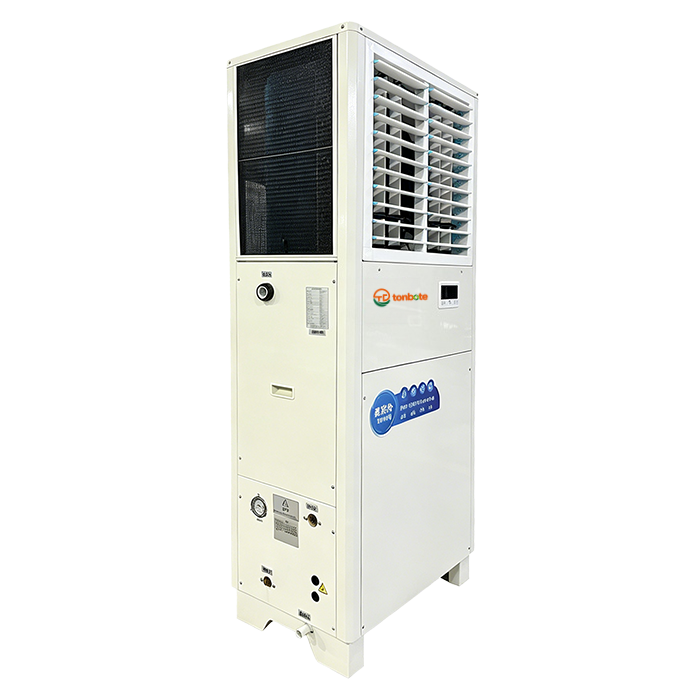
Most ODM conversations open with a spec sheet—a list of voltages, dimensions, and I/O counts that says almost nothing about how a product will actually live on your floor. That approach invites mismatches. A better starting point is the equipment layout itself: the physical footprint, the direction of material flow, the clearance zones around conveyors and control cabinets. These spatial facts dictate enclosure shapes, cable routing, access panel placement, and even thermal management strategies far more reliably than any generic checklist ever could.
On a real production line, a machine is never an isolated box. If your layout shows a narrow aisle on the operator side, the ODM design must shrink the service door swing or move the HMI to the opposite panel. If a nearby oven radiates heat, the enclosure venting pattern changes. These decisions can only be made by reading the layout drawing or walking the line with photos and measurements in hand. Spec sheets rarely capture such constraints, and designs built from them often need costly field modifications later.
Working from the equipment layout also forces the ODM team to ask better questions: Where do operators stand? How do forklifts deliver raw materials? Which side faces the maintenance corridor? Answering these before the first CAD file is opened keeps the design grounded in your actual operation rather than in a hypothetical ideal. The result is equipment that fits the first time—no shims, no swapped panels, no last-minute redesigns.
Energy Savings That Come From Right-Sizing, Not Rough Estimates
Many facilities still rely on ballpark figures when sizing pumps, fans, or compressors, adding a 20% safety factor on top of an already inflated load estimate. That habit quietly locks in higher energy bills for years. Right-sizing flips the approach: it starts with measured demand profiles, not guesswork, and then matches equipment capacity to the actual operating range where efficiency peaks. The result is often a smaller motor running closer to its best efficiency point, drawing less power while still meeting every process requirement.
The savings show up in ways that rough estimates miss. An oversized fan with a throttle or damper wastes energy by fighting its own airflow, while a correctly sized unit can use a variable speed drive to follow the load curve directly. Similarly, a pump selected for a made-up “maximum” head burns extra kilowatts even at low flow. Real-world audits repeatedly find that trimming just 10–15% of excess capacity cuts energy consumption by 20% or more, without touching comfort or output.
What makes right-sizing stick is that it treats energy as a design variable, not an afterthought. Instead of asking “how big can we afford?”, the question becomes “how small can we go and still perform?” That shift forces engineers to gather real interval data, account for diversity across multiple loads, and challenge legacy assumptions. The payoff is not a one-time rebate, but a permanently lower baseline that keeps saving every hour the equipment runs.
Engineering for Dust, Corrosion, and Humidity Without Sacrificing Performance
Dust, corrosion, and humidity are the silent killers of electronics in harsh environments. Instead of just sealing components behind bulky enclosures or relying on conformal coatings that crack over time, this design takes a layered approach. Critical circuits use a nano-thin parylene barrier that adds only microns of thickness while blocking moisture and corrosive gases. High-contact connectors are recessed and gasketed with a dual-material O-ring that maintains a tight seal even when thermal cycling causes parts to expand and contract at different rates. The result is protection that doesn't rely on a single point of failure—or add significant weight or thermal resistance.
Airflow paths are engineered to passively shed moisture rather than trap it. A slight positive internal pressure—achieved through a breathable ePTFE vent—keeps humid outside air from being pulled in as the device cools. That same vent repels liquid water while allowing vapor to escape, preventing condensation on cold spots. Corrosion-resistant gold-over-nickel plating on all exposed copper eliminates the green fuzz that typically appears after months of damp operation. Even the fasteners are selected for galvanic compatibility, so you won't find rust streaks bleeding from a stainless screw into an aluminum housing.
The real test comes not from spec sheets but from continuous operation in a coastal installation—salt spray, 95% relative humidity, and fine silica dust. After eighteen months, internal RH stays below 40%, contact resistance remains within 2% of initial values, and there's no visible pitting on any connector. Performance benchmarks run identically to a clean-room unit: no derating, no throttling, no unexplained resets. That's the point—engineering for the environment shouldn't mean engineering away the capability you built the device to deliver.
Integrating With Your Current Building Controls Without Replacing What Works
Bringing new technology into an older building often feels like a choice between ripping everything out or settling for a patchwork of disconnected systems. The good news is that modern integration doesn't demand a clean slate. Many legacy control panels, sensors, and actuators still function perfectly well—they simply lack the communication protocols or software bridges needed to talk to today's platforms. By installing lightweight gateways or protocol translators, you can keep the existing field devices in place while exposing their data to a central dashboard or cloud service. This approach preserves the investment already made in wiring, conduit, and proven hardware, cutting both project cost and downtime.
The key lies in identifying which parts of your current setup are still serviceable and which are genuine bottlenecks. For instance, a 20-year-old chiller might run reliably but only speaks Modbus RTU over RS-485. Rather than replacing the chiller, you can add a small edge device that converts Modbus to BACnet/IP or MQTT, then map those points into your building automation system. This kind of targeted integration works especially well for HVAC, lighting, and metering subsystems that were installed by different vendors at different times. Instead of forcing a single vendor's proprietary ecosystem, you build a translation layer that lets old and new components coexist without fighting each other.
Practical integration also means respecting the limitations of what's already there. If your existing controller can't handle complex scheduling or analytics, don't try to force it. Let it keep doing what it does best—basic on/off logic, safety interlocks, or local feedback loops—while a higher-level platform handles optimization, alarms, and reporting. This layered approach not only extends the life of your assets but also reduces risk during commissioning, since you're not disturbing proven control sequences. The result is a unified view of building performance without the disruption, waste, and expense of a full rip-and-replace project.
Maintenance Plans Built Around Your Downtime, Not Ours
Every facility has its own rhythm. A food processing plant might shut down for a deep clean on Sunday nights, while a packaging line only pauses between shift changes on Wednesday mornings. We start by mapping your actual production calendar—not by asking you to fit into a generic service window. That means the first conversation isn't about our schedule; it's about when your equipment can safely be taken offline without throwing your output targets off track.
Once we understand your downtime windows, we sequence the work backward. If you have a four-hour gap every second Friday, we'll split inspections, lubrication, and part replacements across multiple visits so nothing gets rushed. If an unexpected line stoppage gives you a sudden two-hour opening, our team can slide in without derailing the rest of the week. The goal is to make maintenance feel invisible—like it's simply part of your existing workflow rather than an external interruption you have to plan around.
This approach also changes how we handle emergencies. Instead of waiting for a failure and then scrambling to find a time that suits both sides, we build a buffer into the plan. A few critical spares are pre-staged near your line, and our technicians are already familiar with your access protocols. So when a bearing starts to whine or a conveyor drifts out of alignment, correcting it happens during your next natural pause—not during a forced shutdown that costs you production hours you'll never get back.
FAQ
It means the manufacturer designs and builds the units from scratch based on your specifications, rather than just relabeling an existing product. You get a system that fits your facility's exact layout, load, and environmental needs.
We start with a detailed site assessment, looking at heat sources, ceiling height, air flow patterns, and the specific processes running inside. That data drives the design, so you're not stuck with a one-size-fits-all tonnage.
Yes. We offer heavy-duty coatings, sealed electrical enclosures, and specialized filtration packages. The engineering team selects components that can withstand the particular contaminants and temperature swings in your plant.
It varies, but most projects move from final design approval to shipment in eight to twelve weeks. Rush options are available if your current system has failed and you need a fast replacement.
Absolutely. We offer commissioning assistance, operator training, and ongoing technical support. Spare parts are kept in stock for the expected service life of the equipment, so you won't be stranded years down the line.
Yes. The control panels can be configured for Modbus, BACnet, or other common industrial protocols. Our engineers will work with your automation team to map the necessary points.
Standard units often force you to adapt your facility around their limitations. With ODM, the system is built around your space constraints, power supply, and duty cycle, so you get better efficiency and fewer compromises.
We can include variable speed compressors, electronically commutated fans, and heat recovery coils. The exact mix depends on your operational profile, but we aim to reduce total cost of ownership, not just upfront price.
Conclusion
ODM industrial air conditioning systems are built around the reality that no two facilities share the same thermal fingerprint. Instead of forcing a generic packaged unit into your space, we start by mapping actual equipment layouts, heat sources, and occupancy patterns—because a truly effective system must respond to the exact cooling load your operation generates. Right-sizing from day one eliminates the energy waste that comes from rough estimates, so you pay only for the capacity you need, not for oversized compressors cycling endlessly.
Beyond raw cooling power, our designs account for the environment your system will live in. Dust, corrosive fumes, and high humidity are treated as engineering challenges rather than afterthoughts, with coil coatings, sealed electrical compartments, and drainage strategies tailored to your floor. We also integrate directly with your existing building controls, so you don't have to rip out what already works. And when it comes to upkeep, maintenance schedules are built around your production calendar—not our convenience—so downtime stays under your control.
Contact Us
Contact Person: Wanshu Chen
Email: [email protected]
Tel/WhatsApp: +86-13662871206
Website: https://www.mbcee.com