

Export Concrete Batching Plant Rotary Concrete Reclaimer for Superior Aggregate Recovery
2026-09-17
Ask any plant manager what happens to returned concrete and washout slurry, and you will hear about disposal costs, wasted aggregate, and clogged settling ponds. A rotary concrete reclaimer offers a cleaner path. For export concrete batching plants where uptime and material efficiency matter, Sinou designs rotary reclaimers to deliver superior aggregate recovery—so what used to be waste becomes tomorrow’s batch.
How Rotary Reclaimers Turn Waste Concrete into Reusable Aggregate
Rotary reclaimers handle returned concrete by loading it into a horizontal drum that turns at a steady speed. Inside, lifters and spiral blades keep the material moving from one end to the other while controlled water sprays wash away cement fines. The rolling action breaks down the soft paste, leaving clean sand and stone particles suspended in the slurry.
Separation happens as the drum rotates. Coarser aggregate drops out through a discharge opening near the far end, while the finer sand is carried further and settles in a separate compartment or dewatering screen. The recovered stone and sand come out damp but ready for reuse, and the cement-laden water is typically routed to settling tanks or recycled back into the wash process.
On busy concrete plants this becomes a compact, closed-loop system. Trucks can wash out directly into the reclaimer instead of dumping waste on the ground. The plant gets back a steady supply of washed aggregate, cuts disposal costs, and avoids piles of hardened concrete building up in the yard.
Design Features That Help Export-Grade Reclaimers Stand Out
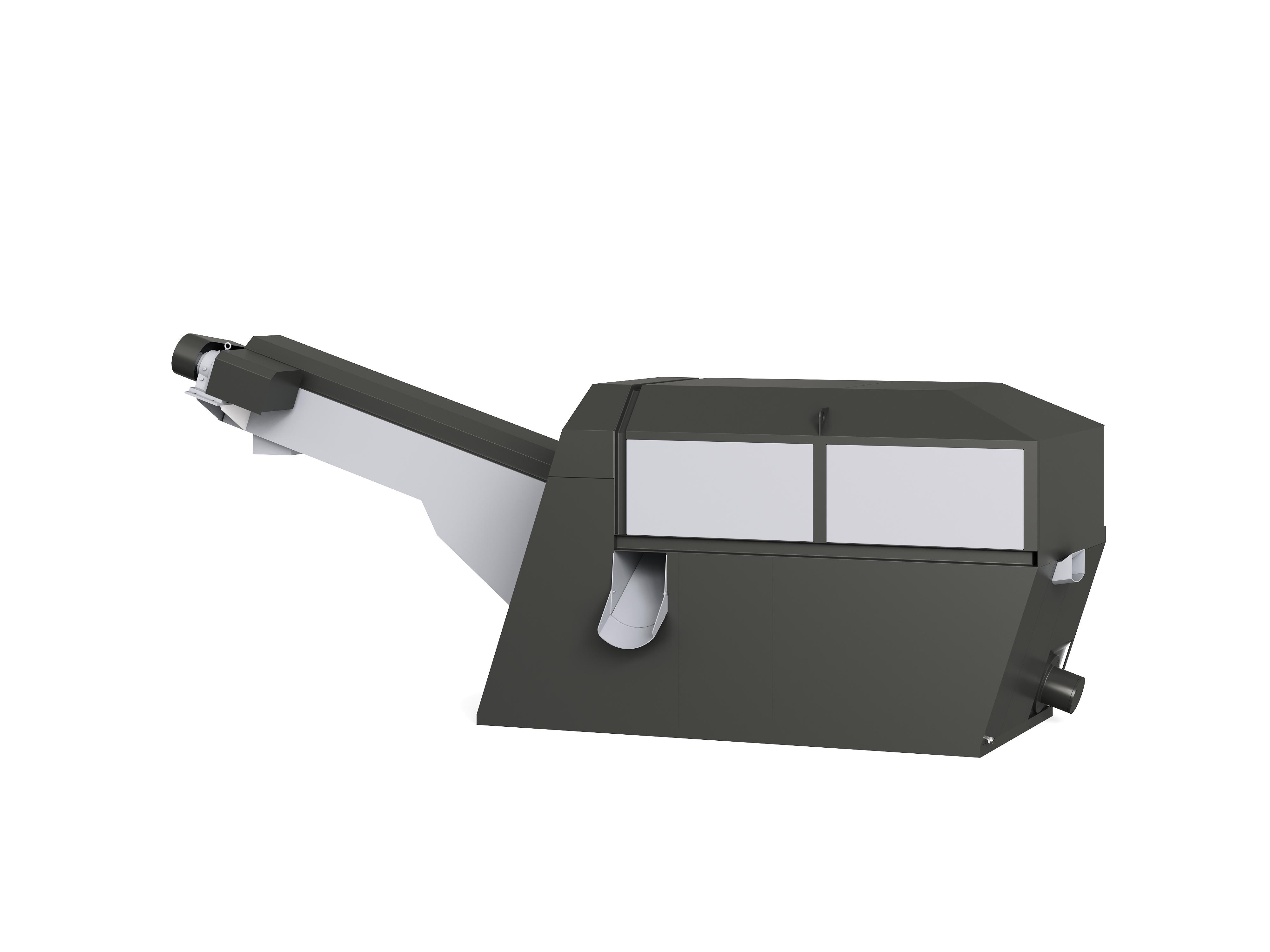
The first thing you notice on a reclaimer built for export is how quickly it breaks down for containerized shipping. Instead of welding everything into a single massive frame, manufacturers use bolt-on outriggers, hinged conveyors, and removable control cabins. That might sound like a small detail, but it cuts freight costs by allowing the machine to fit a standard high-cube container without costly flat-rack or breakbulk handling.
Another differentiator is the electrical and hydraulic architecture. Top-tier export models avoid proprietary connectors and sealed black boxes. Field technicians in remote markets can trace a fault with a basic multimeter, swap in locally sourced fittings, and bleed the system without a laptop from the factory. This design philosophy shows up in color-coded hose routings, oversized service access panels, and a control system that gives plain-language fault codes instead of numeric gibberish.
Materials and protective treatments also set serious export reclaimers apart. Look for galvanized or powder-coated structural members, stainless steel pivot pins, and sealed-for-life bearings on the milling rotor. In humid coastal or high-dust environments, these choices reduce corrosion and extend component life. Smart design includes dual-stage air filtration, reversible cooling fans, and fine mesh screens over hydraulic breathers—details that are easy to overlook until you are running a machine 500 kilometers from the nearest parts depot.
Aggregate Quality and Recovery Rates You Can Actually Expect
The numbers you see in sales brochures rarely match what happens on a real job site. Aggregate quality depends on the source rock, how it's crushed, and whether fines and dust are removed before the material reaches the stockpile. Recovery rates — the share of usable material that survives processing — drop fast when feed stock contains clay, organic matter, or oversized boulders that jam the crusher.
In most operations, a clean limestone or granite deposit can deliver 85 to 92 percent recovery after primary and secondary crushing, with losses tied to screening rejects and unavoidable spillage. Recycled concrete and asphalt fall lower, often between 70 and 80 percent, because rebar, wood, and brittle particles create more waste. If you're planning around a quarry or recycling yard, ask for recent test results rather than a single "best day" sample.
Moisture changes everything. Wet material clogs screens, slows conveyors, and turns fines into paste, cutting both throughput and quality in ways lab tests miss. A realistic plan should assume variability: expect batch-to-batch shifts in gradation, sharpness of fractured faces, and dust content, and set aside storage space for off-spec material until it can be blended or reworked.
Seamless Integration with Mobile and Stationary Batching Plants
A single control platform handles both trailer-mounted and fixed plants, so operators see the same batch screen whether they are at the main yard or on a remote pour. Recipes, aggregate moisture corrections, and admixture doses stay in one place, and the system adjusts the sequence automatically when a mobile unit comes online. This cuts out re-entering mix designs and keeps everyone working from the same set of numbers.
Load cells, flow meters, and moisture probes feed data through the same communication protocol, which means a mobile plant can be dropped into an existing site network without rebuilding the PLC logic. The batching routine does not care if the mixer is charged by a skip hoist, a belt, or a loading bucket—the same target weights and tolerances apply. Calibration files can also be copied from a stationary plant to a mobile twin, so the first batch is accurate instead of requiring a day of trial mixes.
Because every ticket and raw material consumption record is stored in one database, managers can compare production from a temporary mobile plant against the main facility without merging spreadsheets. Traceability stays intact when a mobile unit covers a breakdown or a sudden spike in demand, and the quality team can pull the same reports for any plant that ran on a given day.
What Buyers Should Know About Operating Costs and Maintenance
A mortgage payment is only the starting point. Property taxes, insurance, utilities, and any HOA or condo fees can add hundreds to the monthly bill. Ask the seller for copies of recent utility statements and tax assessments before making an offer, and factor those numbers into your budget rather than guessing.
Maintenance costs are easy to underestimate until something breaks. A common rule is to set aside one to three percent of the home's value each year for repairs and replacements. Pay attention to the age of the roof, furnace, water heater, and appliances—if several are nearing the end of their expected lifespan, your first few years of ownership could get expensive quickly.
Energy efficiency plays a bigger role than many buyers expect. Drafty windows, old insulation, or an inefficient HVAC system can quietly raise monthly operating costs even when nothing is visibly wrong. When you tour a property, look past the cosmetic updates and ask about utility averages, insulation depth, and the condition of mechanical systems. A thorough home inspection is worth the money and often reveals which costs are realistic and which are hidden surprises.
Matching the Right Reclaimer to International Project Needs
Choosing a reclaimer for an international project starts with the local material stream, not the machine spec sheet. A model that handles high RAP percentages in one country may choke on the aggregates or binder types common elsewhere. Project engineers often start by sampling the actual millings or reclaimed asphalt, then look at moisture levels, fines content, and how the local climate affects cold feed behavior. This ground-up approach prevents the costly mistake of shipping equipment that works well in temperate conditions but struggles in tropical humidity or desert heat.
Another factor that gets overlooked is the variation in emissions and safety standards across regions. A burner package that passes one country's air quality rules might need significant retrofitting to meet another's. The same goes for electrical systems: 50 Hz versus 60 Hz, voltage differences, and plug standards can turn a straightforward install into a prolonged site headache. Matching the reclaimer means checking not just the engine tier but also the availability of replacement filters, control modules, and wear parts in the destination country. If a critical component takes three weeks to clear customs, the machine's uptime promise means little.
Operator experience also shapes the right choice. In some markets, crews are used to fully automated controls and expect touchscreen diagnostics. In others, a simpler relay-based panel with clear mechanical overrides will keep the project moving because local technicians can fix it without waiting for a factory specialist. International projects demand that the reclaimer be matched to the people who will run it every day, not to a hypothetical ideal crew. This means offering control interfaces in the local language, providing training materials that respect different learning styles, and designing maintenance points that are reachable without specialized tools.
FAQ
It is built with a compact footprint and reinforced frame, so it handles long-distance shipping without compromising alignment or performance on arrival.
The rotating drum continuously lifts and tumbles the returned concrete, separating sand and stone more thoroughly while wash water stays in suspension for reuse.
Yes. It is sized to process the full return flow of a batching plant after truck and mixer washout, recovering coarse and fine aggregates in one pass.
Routine greasing of drum rollers, checking the spray bar nozzles, and occasional inspection of the drive chain keep it running reliably without frequent downtime.
Recovered sand and stone are washed free of cement slurry, so many plants blend them back into production at controlled ratios without sacrificing concrete strength.
Confirm the local power supply, available water pressure for the spray system, and whether the discharge height matches the aggregate stockpile or conveyor setup.
It captures returned concrete and wash water, reducing solid waste sent to landfill and allowing process water to be recycled into the plant's water system.
Not usually. It is designed as a standalone unit that connects to a slurry pit and aggregate discharge chute, so most plants can add it without major civil works.
Conclusion
Rotary reclaimers work by feeding leftover concrete from mixer washout and batching plant spillage into a rotating drum, where high-pressure water jets break the material into sand, gravel, and cement slurry. The aggregate is then discharged and can be stockpiled for reuse in fresh concrete, while the slurry is either settled out or returned to the water system. This changes waste handling from a disposal cost into a material recovery step. Export-oriented machines typically include heavy-duty drum liners, stainless steel components in wet zones, and variable-speed drives that keep throughput steady even with sticky or fast-setting mixes. On well-adjusted units, recovery of coarse aggregate often exceeds 90%, and fine sand recovery sits around 80–85%, with washed material meeting most standard gradation requirements after basic screening.
Fitting a reclaimer into an existing plant is rarely a bottleneck: skid-mounted and trailer-based designs serve mobile batching setups, while stationary plants can use bolted foundation frames. Control wiring generally ties into the plant PLC with simple dry contacts or Modbus, so operators see wash cycles without a separate interface. Running costs stay manageable if buyers pay attention to liner wear, nozzle clogging, and pump seals—all easy to inspect during a five-minute daily flush. Because water loops back to the wash system, freshwater consumption drops sharply. When matching a unit to international projects, factors like ambient temperature, available voltage, and local aggregate standards matter more than headline capacity. Cold climates need heated spray bars; arid regions benefit from higher water-recovery designs; tight gradation specs may call for an extra vibrating screen. Modular drum extensions and multi-voltage motors give export buyers room to adapt without replacing the whole reclaimer.
Contact Us
Contact Person: HaiYan
Email: [email protected]
Tel/WhatsApp: +86 18957325588
Website: https://www.senyoubeton.com/