

Connection Fasteners Wholesaler: Choosing the Right Supplier for Your Project
2026-10-26
Fasteners are the unsung heroes of any build—until one fails. Choosing a wholesaler for connection fasteners isn't about grabbing the cheapest catalog; it’s about aligning with a supplier who understands your tolerances, deadlines, and QC standards. That’s where BOYIKUN steps in, offering a procurement experience built on traceability and consistent stock. Before you lock in a supplier, here’s what really matters.
Inside a Fastener Supplier's Quality Playbook
A real fastener quality playbook doesn't start with slogans. It starts with a receiving dock that treats every incoming lot as suspect until the paperwork and the measurements agree. Mill certs get checked against the heat number on the box, not just filed away. A good supplier will pull samples from multiple layers of a pallet, not just the top row, because plating thickness and thread form can drift between batches without warning.
Beyond the dock, the playbook leans on process control that sounds boring but catches expensive mistakes. Thread plugs and rings are calibrated on a schedule, not when someone remembers. Hardness testers get verified against reference blocks at the start of each shift. Dimensional layouts happen before the first production run, and then again after any tool change or coating line adjustment. The goal is to catch a drift at 50 pieces, not 50,000.
Traceability is where most suppliers quietly fail. A strong playbook ties every box back to a lot number, every lot back to raw material, and every raw material back to a heat and a supplier audit. If a customer finds one bad bolt in a bin, the supplier should be able to pull the entire affected lot in under an hour, not after a week of searching through blended inventory. That kind of discipline is unglamorous, but it is what separates a dependable source from a convenient one.
Material Certifications You Should Never Have to Ask For
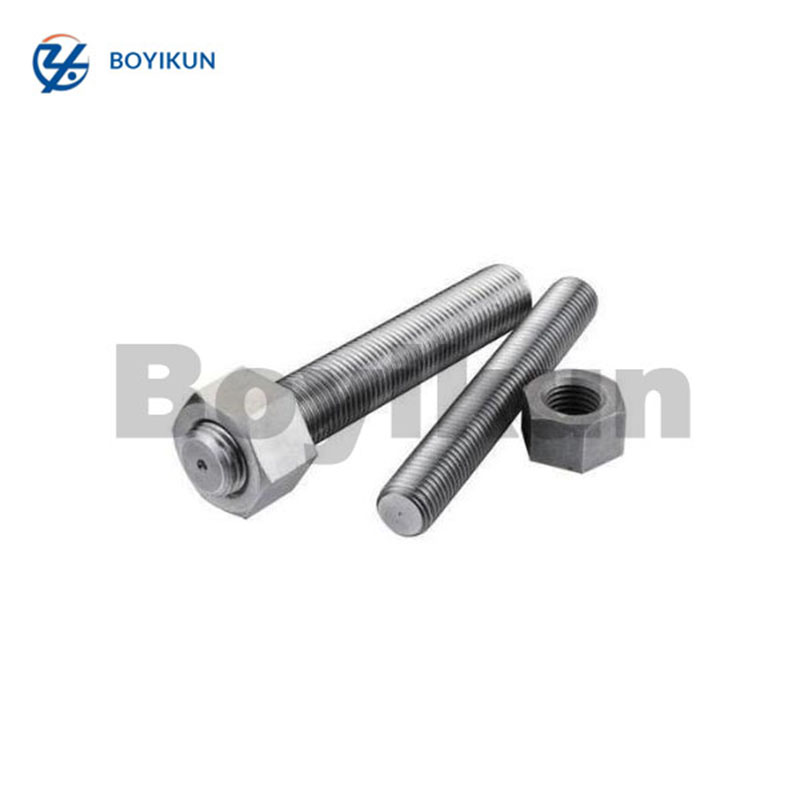
A trustworthy material supplier doesn't wait for you to request proof. Certifications covering composition, restricted substances, and country of origin arrive with the shipment or are accessible in a portal before you place an order. If a vendor treats these documents as an inconvenience, that's a signal their internal traceability is weak.
The best suppliers understand that certs are not paperwork burdens but part of the product itself. RoHS, REACH, Prop 65, and conflict mineral declarations should be current, dated, and specific to the batch or lot you're receiving. Generic PDFs from five years ago don't count. You shouldn't have to remind anyone to update them.
When you never have to ask, it means the supplier has already done the due diligence. That saves you time and reduces risk in your own supply chain. Any vendor who makes you chase certifications will likely make you chase other things later. Choose partners who treat transparency as standard practice.
The Warehouse Metric That Predicts Your Downtime
Most warehouse managers track throughput, order accuracy, and labor costs. But there's one number hiding in your WMS that correlates more strongly with unplanned downtime than any of those: dock-to-stock cycle time variability. When this metric starts swinging wildly—say from 4 hours on Monday to 18 hours on Thursday—it's rarely a receiving problem. It's a signal that upstream processes are about to buckle. Pallets stack up in staging, forklift traffic jams ripple through aisles, and suddenly your outbound sortation line sits idle not because demand dropped, but because the right inventory never made it to the right pick face.
Here's why the metric works as an early warning. Dock-to-stock time measures the lag between a trailer door opening and the goods being available for picking. In a healthy warehouse, that lag stays within a tight band regardless of volume. When the band widens, it usually means one of three things: your receiving team is understaffed for the current mix of LTL and full truckloads, your putaway logic is routing items to overflow locations instead of primary slots, or your dock scheduling system has lost synchronization with actual arrival times. None of these failures announce themselves with an alarm. They show up as slow, creeping delays that eventually hit the picking floor as stockouts—and stockouts are just downtime with a different name.
Tracking the raw average isn't enough. You need to watch the coefficient of variation on a rolling 30-day window. A warehouse that averages 6 hours but swings between 2 and 20 hours will have far more downtime than one with a steady 8-hour average. Break the metric down by vendor, by dock door, and by shift. You'll often find that one chronically late carrier or one poorly trained second-shift crew accounts for 80% of the variability. Fix that root cause, and you'll see uptime improve without adding a single piece of automation. The metric itself doesn't predict downtime; the variance does.
Custom Fastener Requests Without the Runaround
When you need a fastener that isn't sitting on a shelf somewhere, the usual process can feel like a maze of back-and-forth emails and vague promises. We take a different approach. You tell us what you're trying to achieve—whether it's a specific alloy, an unusual thread pitch, or a head style you sketched on a napkin—and we get to work on the actual feasibility, not just a canned quote.
Our team handles custom requests directly, with engineers who can look at your drawing or description and give you real answers about tolerances, coatings, and lead times. No layers of sales reps guessing at what manufacturing can do. If something won't work, we'll say so early and suggest practical alternatives that still meet your performance requirements. That way, you're not waiting three weeks just to find out the original idea was never buildable.
What you end up with is a straightforward path from concept to prototype or production run. We keep the communication tight, the pricing transparent, and the next steps clear. You'll know exactly who to call if you have a question mid-project, and you won't have to chase down status updates. Just a custom fastener, made the way you need it, without the usual runaround.
Delivery Windows That Actually Match Your Schedule
Pick a two-hour slot that fits around school runs, meetings, or that one quiet afternoon you've been guarding all week. We don't expect you to camp at home from dawn to dusk. The window you choose is the window we show up in—no vague all-day estimates or last-minute surprises.
Life shifts, and your delivery should too. If something comes up after checkout, you can move your slot up to a few hours before the driver heads out. The tracking page gives you a live countdown, so you can decide whether to finish that errand or wait by the door with a cup of tea.
We also keep the small stuff in mind: drivers call when they're ten minutes away, and if you're not home, they'll follow your backup instructions instead of leaving things to chance. The goal isn't just a package on your doorstep—it's a delivery that slips into your day without rearranging it.
What Small Orders Reveal About a Wholesaler's True Character
A wholesaler who treats a five-piece order with the same care as a five-hundred-piece order tells you something important. They double-check packaging, reply to emails at odd hours, and never make you feel like a nuisance for buying small. That consistency is rare, and it’s usually a sign they’re building relationships, not just chasing volume.
Small orders also expose operational habits. Watch how they handle backorders, substitutions, or a simple address correction. Do they call to confirm? Do they pack like they’d want to receive it themselves? These details get skipped when margins are thin, so the ones who still get them right are worth keeping.
FAQ
Look at their material sourcing and testing habits. A supplier that regularly shares mill certificates and batch-level inspection data tends to hide fewer surprises down the line.
Ask for samples from the exact production line that would handle your order, not from a demo batch. Then run your own torque and tensile checks. Cheap fasteners often fail in plating thickness or thread consistency, so compare those specifics rather than the headline price.
MOQs reveal a wholesaler's flexibility. If they only push container-sized orders and you need smaller mixed lots, that gap will cause storage headaches or forced compromises. Find a supplier whose order thresholds match your actual consumption pattern.
It depends on the application. For structural work, look for ISO 898-1 compliance or equivalent regional standards. For corrosion-prone environments, check salt spray test results. Don't just count logos—ask which specific product lines those certificates cover.
Dig into their recent order history for clients in your region. Ask for a realistic lead time range, not a best-case promise. A supplier that quotes buffer days openly is usually planning production more honestly than one that always says 'no problem.'
A genuine partner owns or directly controls sourcing and can make quick adjustments to coating, packaging, or thread specs. A pure middleman often freezes when you ask for a custom packing list or a small design tweak.
If your order volume justifies the travel cost, yes. Walk the production floor, check how they store raw wire and how they calibrate dies. A short visit reveals more about consistency than a polished spec sheet ever will.
Packaging and traceability. Labels that survive transit and lot codes that trace back to a heat number save enormous time during recalls or site inspections. Many buyers ignore this until a mixed pallet causes a project delay.
Conclusion
Choosing a fastener wholesaler goes beyond price lists and catalog availability. The suppliers worth keeping are the ones who treat quality as an internal discipline, not a customer-facing checkbox. Their material certifications sit on file before you ask, traceable to heat numbers and mill origins, so you never waste a week chasing paperwork. Equally telling is how they run the warehouse: real-time stock accuracy, bin-level visibility, and order-picking metrics that quietly predict whether your production line gets parts on time or stalls waiting for a backorder nobody mentioned. A supplier that measures downtime risks from their own floor is already solving problems you haven't seen yet.
The same attentiveness shows up when you need something non-standard. A solid wholesaler handles custom fastener requests with clear drawings, honest lead times, and a single point of contact—no endless forwarding, no “let me check with engineering” loops that kill momentum. Delivery windows should match your build schedule, not the supplier's shipping convenience, and they should hold up even when volumes shift. Perhaps the clearest signal is how they treat small orders. A wholesaler that gives a box of two hundred specialty bolts the same care as a pallet order is the one you can trust when your project hangs on a single missing part.
Contact Us
Contact Person: Xianchen Hu
Email: [email protected]
Tel/WhatsApp: 86-13248645200
Website: https://www.hexnb.com/