

China Pasteurizer Manufacturer: Key Factors for Selecting High-Quality Dairy Processing Equipment
2026-10-13
Choosing the right pasteurizer can make or break your dairy production line—and with so many China-based manufacturers claiming top performance, how do you separate genuine quality from marketing noise? This guide cuts through the confusion by highlighting the critical factors that truly matter: material integrity, temperature precision, energy efficiency, and after-sales support. As a leading name in the industry, INTOP Machinery exemplifies how smart engineering and rigorous testing translate into reliable, long-lasting equipment. Whether you're upgrading an existing facility or building a new one, understanding these essentials will help you invest wisely and avoid costly downtime. Let's dive into what separates a high-performance pasteurizer from the rest.
Defining Your Dairy's Pasteurization Window
A pasteurization window rarely comes down to a single temperature time pairing pulled from a chart. At the plant level, it is a working range bounded on one side by the minimum thermal destruction needed for the target pathogens in your raw milk, and on the other by the point where heat begins to degrade the very components you are trying to protect. Many dairies inherit a nominal 161°F for 15 seconds and treat it as a fixed rule, but that ignores variation in holding tube geometry, pressure drops, seasonal shifts in somatic cell counts, and even the age of plate seals. Defining your own window means replacing that borrowed number with evidence collected from your line.
Start by mapping your coldest, fastest-moving milk through the holding section under normal and worst-case flow conditions, then verify with an injected tracer or a biological indicator rather than relying solely on the recorder chart. The lower boundary of the window should reflect enough lethality to handle the most heat-resistant organism of concern, typically Coxiella burnetii or certain strains of Listeria, with a margin that accounts for thermocouple drift and valve timing. The upper boundary is less often discussed but just as important. Pushing time or temperature too high can trigger denaturation of whey proteins, accelerate fouling, flatten fresh flavor, and shorten the run time between cleanings, all of which eat into margin quietly.
A practical pasteurization window is never set once and forgotten. It gets re-tested when you change homogenizer pressure, install a new holding tube, switch from one milk silo to another with different fat standardizing practices, or notice your diversion valve cycling more often. Keep the window narrow enough to protect public health and product identity, but wide enough that normal oscillations in steam supply, pump speed, and sensor response do not force unnecessary divert events. The best operators treat the window as a living boundary—written into the pasteurizer program, revalidated on a schedule, and understood by every line worker who watches the recorder trace.
Material Traceability from Steel Mill to Final Skid
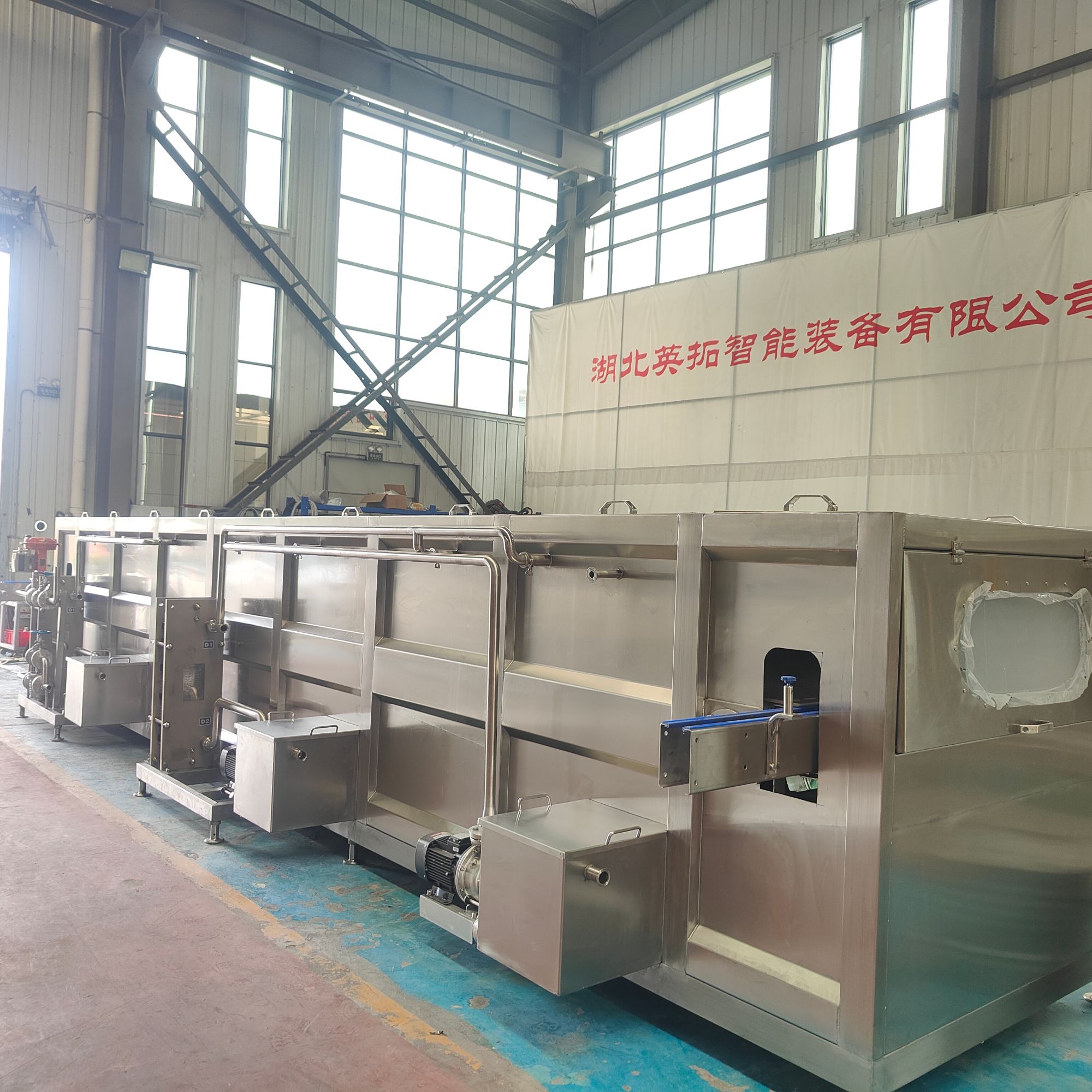
Traceability starts at the steel mill, where each heat is assigned a unique number and accompanied by a mill test report detailing chemical composition and mechanical properties. These records travel with the raw material and are entered into the fabricator's tracking system before any cutting begins.
During cutting, drilling, and welding, the original heat number must stay connected to the pieces that become part of a skid. Shops typically use hard stamping, paint marking, or durable tags to carry the identification forward, because a cut beam can easily lose its painted mill marking. Each component is logged against the parent heat so the chain remains unbroken.
Once the skid is assembled, all component-level traceability is consolidated under a single skid serial number. That serial number links back to every steel heat used in the structure, allowing a quick reverse lookup from final product to mill certificate. This level of traceability is critical when a project requires material verification for pressure-containing or load-bearing service.
Validating Temperature Uniformity Across the Holding Tube
Ensuring even heat distribution inside the holding tube starts with mapping actual temperature profiles under normal operating conditions. Rather than relying solely on the control system's readout, technicians place multiple calibrated probes at strategic points along the tube's cross-section and length. The goal is to catch cold spots near the walls or dead zones behind fittings where product can linger longer than intended. Comparing these readings against the set point reveals whether the tube's design truly delivers the required lethality throughout the entire volume, or if adjustments to flow rate, insulation, or tube geometry are necessary.
One practical approach is to perform a step-change test using hot water or a food-safe tracer fluid. By abruptly raising the inlet temperature and logging how quickly each probe responds, you can visualize the thermal lag and dispersion pattern inside the tube. A narrow spread between the fastest and slowest responding sensors indicates good radial mixing and minimal stratification. If some probes consistently lag by more than a few degrees, that section likely experiences laminar sublayers or insufficient turbulence, which directly undermines the pasteurization or sterilization claim.
Beyond spot checks, periodic validation should include worst-case scenarios such as maximum viscosity, minimum flow rate, and start-up or shutdown transitions. Recording data over several production batches helps separate normal variation from gradual equipment degradation like scale buildup or worn static mixers. Only when the measured temperature uniformity meets the predefined acceptance criteria across all these conditions can the holding tube be signed off for routine use, with the validation report stored as part of the plant's food safety documentation.
Separating Meaningful Compliance from Paperwork Theater
Real compliance changes how work gets done; paperwork theater just creates more files. The first sign of meaningful effort is when teams adjust their daily habits because a rule demands it—not because an auditor is coming. If a safety procedure only exists as a signed checklist that nobody reads until an inspection, that's theater. If workers actually stop and verify equipment before each shift because they understand the risk, that's compliance doing its job.
Ask one simple question: who benefits from this document? If the answer is only the compliance department or a future defense attorney, you're probably dealing with theater. Meaningful compliance protects people, data, or the environment in a way that would still make sense even if no one ever asked to see the evidence. A fire drill that leads to shorter, calmer evacuations is real. A binder full of attendance sheets for a drill nobody remembers is noise.
The difference often shows up in how exceptions are handled. Paperwork-driven teams hide mistakes or create workarounds to keep the record clean. Compliance-driven teams surface problems early, even when it means more work, because the goal is to fix the system rather than decorate it. Watch where energy goes when something goes wrong—toward updating the binder, or toward changing the behavior.
Spare Parts Availability and Field Service Realities in China
Walk into any plant in Jiangsu or Guangdong and the story repeats itself: a critical component fails on a Tuesday, the OEM quotes eight weeks for a replacement, and the local market has three grey-market options of uncertain pedigree. Maintenance managers learn quickly that 'available' doesn't mean 'in the warehouse' — it means reachable within a production window that won't bleed the quarter dry. That gap between catalog promise and floor-level reality drives most of the improvisation you see, from cannibalizing sister machines to keeping unofficial supplier networks on speed dial.
Field service, meanwhile, operates on a rhythm of its own. Technicians dispatched from Shanghai to a site in inland Anhui might spend more time navigating logistics than turning wrenches. A simple seal replacement can stretch into three days when the nearest courier hub is four hours away and the spare arrives with a damaged lip. The best-run operations we've observed treat field service as a supply chain problem disguised as a technical one: they pre-position wear parts near high-failure assets, and they give their service engineers the authority to source locally within strict quality bounds rather than waiting for a central ERP to bless every purchase.
Then there's the data layer, which is thinner than most headquarters assume. Asset histories are often locked in paper logbooks or in the memory of a retiring technician. Without reliable failure patterns, inventory planning defaults to guesswork, and guesswork means either overstocking expensive parts or understocking the ones that fail every 300 hours. The operators who thrive are those who treat field truth as the primary system of record — logging every repair, every substitute part, every backorder delay — and use that to rewrite their own spare parts strategy instead of waiting for the manufacturer to fix it.
Total Cost of Ownership Beyond the Initial Quote
When evaluating a purchase, the sticker price rarely tells the whole story. For physical assets like industrial equipment or vehicles, ongoing expenses such as energy consumption, routine maintenance, and spare parts can quietly add up to several times the original cost. A machine with a lower upfront quote may demand more frequent servicing or consume significantly more power, erasing any initial savings within the first year of operation. Buyers who focus only on the invoice miss these compounding costs until they appear in monthly operating reports.
Software and subscription services present a different but equally important set of hidden costs. Implementation fees, data migration, staff training, and integration with existing systems often dwarf the monthly license fee. Over a five-year period, a platform that costs twenty percent less per user might end up costing far more if it requires custom development or locks you into expensive add-ons. Forward-thinking organizations now map out the full lifecycle, including exit costs such as data extraction and contract termination penalties, before signing any agreement.
A practical approach is to build a simple total cost model before comparing vendors. List every cost category: acquisition, installation, training, energy, maintenance, downtime risk, upgrades, and disposal. Assign realistic estimates for each over a three-to-five-year horizon, then calculate the annualized figure. This method often reveals that the cheapest initial quote is actually the costliest long-term choice. It also empowers negotiation, as you can ask vendors to address specific cost drivers—like a guaranteed uptime clause or included maintenance—rather than simply discounting the purchase price.
FAQ
Look beyond flashy brochures. A dependable manufacturer will share detailed engineering drawings, let you visit the workshop, and explain how their control logic handles temperature deviations. Ask about their repeat clients in dairy processing—long-term relationships often signal stable quality and honest communication.
Request a trial run with your actual product, not just water. Milk, cream, and yogurt behave differently under heat. A manufacturer that asks about your fat content, protein level, and flow rate before quoting is already more serious than one offering a one-size-fits-all unit.
Plate geometry affects how gently milk is heated and cooled. Narrow gaps and high turbulence improve heat transfer but can increase shear. For sensitive products like cream or infant formula, a wider gap with lower pressure drop protects texture and avoids burnt-on deposits.
Good automation doesn't just record temperatures. It should adjust flow diversion automatically when pasteurization temperature drops, log every batch for traceability, and alert operators before a small drift becomes a failed batch. Manual overrides still matter, but the core loop should be self-correcting.
Ask for a written response-time commitment and test it by contacting their service line before purchase. Also check if spare parts are standard off-the-shelf items or custom-machined. Local agents help, but direct access to factory engineers often resolves issues faster when something unusual breaks.
All product-contact surfaces should be 316L stainless steel, not 304, because of better chloride resistance during cleaning. Gaskets need to be food-grade EPDM or PTFE, and any sensors or fittings in the product path must carry 3-A or EHEDG certification. Cheaper alloys will corrode after repeated CIP cycles.
Yes, but only if the design allows flexible plate configuration. Some manufacturers offer modular frames where you can add or remove plates as production grows. That avoids buying a second machine later. Clarify the minimum and maximum flow rates and whether the control system can handle frequent recipe changes.
A well-designed regeneration section can recover 90% or more of the heat, cutting steam and chilled water use dramatically. Compare the regeneration rate claimed by different suppliers, and ask for actual utility consumption data from a running installation. Lower upfront price often hides higher energy bills for years.
Conclusion
A reliable pasteurizer from a Chinese manufacturer starts with correctly defining your dairy's thermal kill step—viscosity, particle size, target microorganism, and desired shelf life all shift the required time-temperature combination. Too many buyers copy a competitor's specs instead of running their own heat penetration study on the actual product. Once that window is fixed, insist on full material traceability for every wetted surface. Ask for mill certificates that track the stainless steel from the original coil to the final skid; a lower quote often hides 304L where 316L was specified, and that substitution will show up later as pitting corrosion or weld decay. On the thermal side, do not accept a single-point temperature reading as proof of pasteurization. Request a residence time distribution test with multiple thermocouples along the holding tube. A well-built unit will show less than 1°C variation across all sensors at the target flow rate, while a poorly designed one will have cold zones near bends or fittings that never reach lethal temperature.
Compliance paperwork means little if it is not backed by sensor logs and automatic diversion records. Ask the manufacturer to walk you through a real batch file with timestamps, flow, and temperature curves—not just a glossy certificate. In China, spare parts availability varies dramatically between factories. A serious supplier will have regional warehouses stocked with plate gaskets, pump seals, and control boards, and will commit to a 24-hour dispatch for critical items; a weak one will tell you to wait two weeks for an import. Finally, calculate total cost of ownership using actual energy per liter, CIP chemical consumption, and expected gasket life. Visit an existing installation that has run for at least 5,000 hours, talk to the maintenance crew, and ask what failed first. The cheapest quote almost never survives that conversation.
Contact Us
Contact Person: Laura
Email: [email protected]
Tel/WhatsApp: +86 13957758832
Website: https://www.intopmachinery.com